The Government Office recently conveyed Deputy Prime Minister Le Thanh Long's conclusions from a meeting on 2/2 concerning the implementation of Decree 46/2026. This decree, which imposes stricter food management requirements, has faced initial difficulties, particularly with imported fresh agricultural products and fresh food.
The Deputy Prime Minister highlighted the urgent need for comprehensive guidance and organized state inspections under Decree 46. This measure aims to ensure practical implementation, timely and smooth customs clearance, and prevent any trade bottlenecks.
He directed the Ministry of Agriculture and Rural Development, the Ministry of Industry and Trade, the Ministry of Finance, the Ministry of Justice, and the Ministry of Science and Technology to actively contribute specific input to the Ministry of Health. This collaboration is crucial for the Ministry of Health to finalize and issue implementation guidance by 2/2. Additionally, the Ministry of Agriculture and Rural Development and the Ministry of Industry and Trade are tasked with reviewing and issuing separate guidance for specific areas.
The Deputy Prime Minister also proposed that on the afternoon of 2/2, the Ministry of Health, Ministry of Agriculture and Rural Development, and Ministry of Industry and Trade co-chair a hybrid conference (in-person and online) with other ministries, sectors, and localities. This conference will aim to clarify new regulations, address emergent issues, and promptly resolve any obstacles to ensure consistent and effective implementation. Furthermore, all relevant ministries and sectors must establish hotlines and assign staff to promptly receive and address feedback from local authorities and businesses.
Provinces and cities are also urged to immediately assign state food safety inspection responsibilities. Localities must designate food testing facilities with adequate capacity to support state management efforts.
Relevant ministries and sectors are to continue closely monitoring and proactively reviewing all sub-law documents. The Deputy Prime Minister emphasized that if necessary, guiding circulars must be amended, supplemented, or newly issued through expedited procedures, with completion targeted before 5/2.
The Ministry of Health has been assigned to compile a comprehensive report on the situation for the regular January government meeting. It is also responsible for making recommendations and proposals to the Prime Minister for any issues exceeding its jurisdiction.
Regarding Decree 46, the Deputy Prime Minister noted that its issuance followed extensive research, thorough policy evaluation, and broad consensus among ministries and sectors. The decree aims to enhance food safety management effectiveness and safeguard public health.
"The decree fulfills management requirements, clearly outlining the content, sequence, and implementation procedures," the Deputy Prime Minister affirmed. He urged relevant ministries, agencies, and provincial People's Committees to meticulously study these regulations, especially the new provisions, and ensure their thorough and effective implementation.
The Deputy Prime Minister acknowledged and commended the Ministry of Health, Ministry of Agriculture and Rural Development, Ministry of Industry and Trade, Ministry of Finance, the Government Office, and local authorities for their proactive efforts. Their dedication, including working through holidays, and their appropriate, timely solutions were highlighted.
By yesterday afternoon, the Ministry of Health had received feedback from businesses and localities, subsequently organizing inter-ministerial meetings and issuing guidance documents. The Ministry of Industry and Trade established a dedicated task force and a channel for business feedback. This ministry also published a list of inspection agencies and testing facilities under its purview on its website, facilitating easy access for businesses.
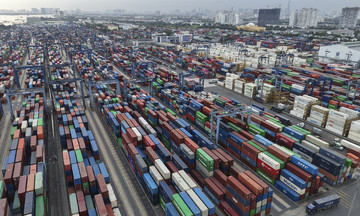
Earlier reports from the Ministry of Agriculture and Rural Development highlighted that Decree 46's implementation, lacking detailed guidance and transitional mechanisms, created challenges for businesses. Many shipments now require additional physical inspections and sample testing, extending result waiting times to 5-7 days. Inadequate warehousing and storage at border gates, particularly land crossings, increased spoilage risks and operational costs. Moreover, current regulations fail to clarify testing criteria and standards for fresh agricultural products, causing confusion for both inspection agencies and businesses.
The Ministry also identified another hurdle: the requirement for food safety inspection registration dossiers for fresh agricultural products and goods not subject to conformity declaration to include a product standard document. This new requirement lacks specific guidance on forms and content, complicating the dossier appraisal process for both businesses and agencies.
The pressure is intensified as the decree's implementation coincides with the Lunar New Year, a period of heightened demand for imported fresh agricultural products. Border gate storage facilities are often insufficient for proper preservation. Current regulations also prohibit businesses from moving goods to their private warehouses while awaiting testing results, further increasing the risk of economic losses.
By Phuong Dung