In a notice dated 26/2, Prime Minister Pham Minh Chinh instructed ministries, agencies, especially the Airports Corporation of Vietnam (ACV), to review the remaining workload for phase 1 of the Long Thanh International Airport project.
Concurrently, all parties must develop a detailed plan and implement logical, scientific construction methods to ensure the project's completion in the first half of 2026.
Relevant units are responsible for the project's progress, quality, and safety. The notice stated the principle of strictly penalizing violations and preventing any stagnation during project implementation.
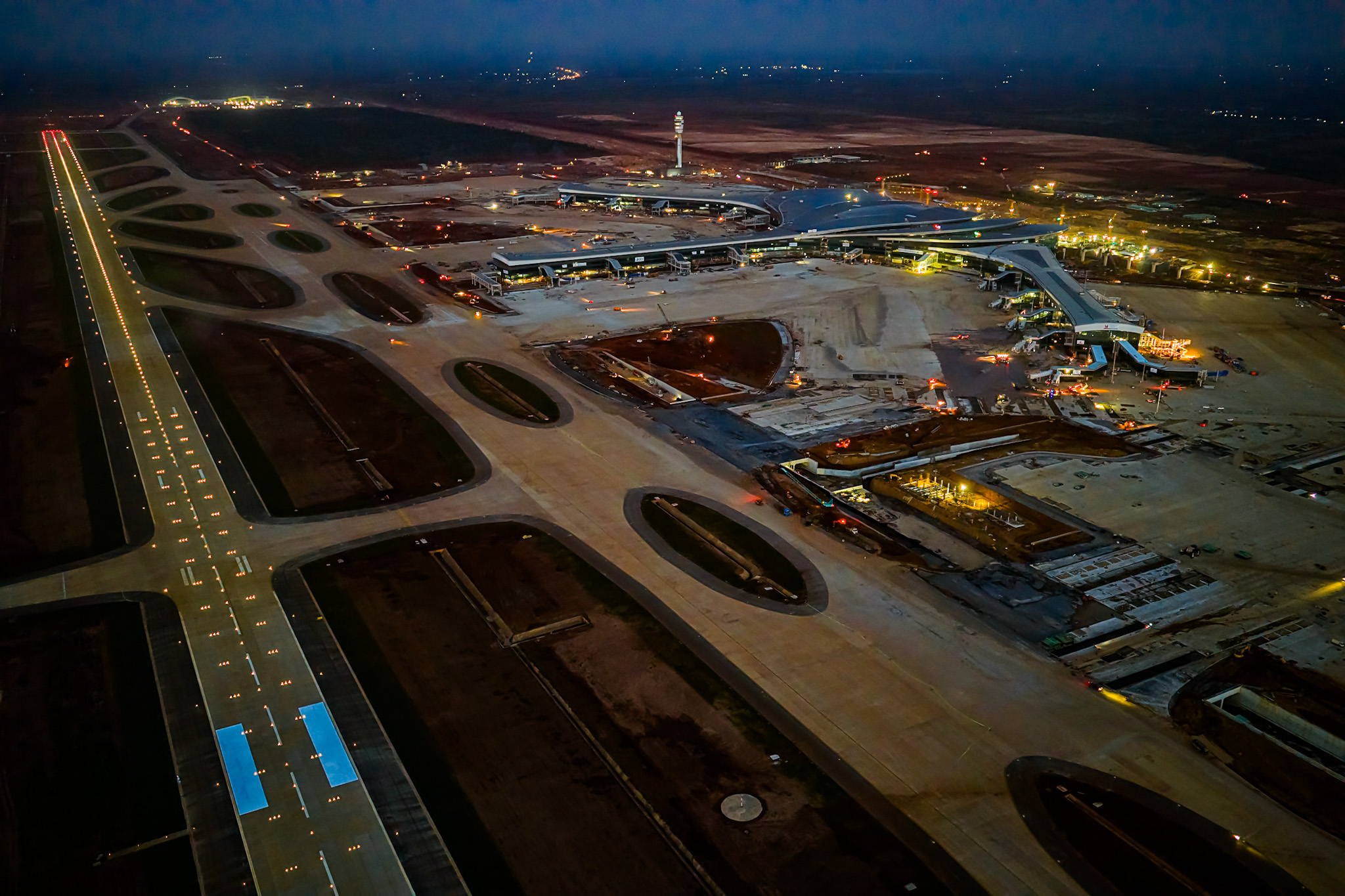 |
Long Thanh International Airport. Photo: Phuoc Tuan |
Long Thanh Airport is a national key project, spanning approximately 5,000 hectares with a total investment nearing 337 trillion VND (about 16 billion USD). Phase 1 involves two runways and one terminal designed for a capacity of 25 million passengers. Some components were completed late last year and are expected to commence commercial operation mid-year.
According to the investment policy, phase two includes a third runway, passenger terminal 2 with a capacity of 25 million passengers annually, and synchronized infrastructure. ACV, an enterprise with over 95,41% state capital, serves as the investor for both phases.
ACV's charter capital exceeds 35,828 billion VND, with the Ministry of Finance representing the state capital, holding 95,41%. According to the consolidated financial report for QIV/2025, ACV recorded work-in-progress construction costs for Long Thanh Airport at 34,190 billion VND by late last year, an increase of over 21,400 billion VND from the beginning of the year.
In addition to Long Thanh Airport's phase 1, the country achieved significant infrastructure milestones last year. This included completing and opening to traffic 3,345 km of expressways and 1,701 km of coastal roads. Across 34 provinces and cities, 564 projects were inaugurated, commenced, or technically opened, representing a total investment exceeding 5,14 million billion VND.
Furthermore, Prime Minister Pham Minh Chinh urged ministries and localities to accelerate progress and synchronously complete infrastructure, bringing more expressways, airports, and seaports into operation. For example, Hanoi and Bac Ninh were directed to expedite approval of the feasibility study report for the Gia Binh airport link project in february to allow for early construction. An Giang was tasked with instructing investors to accelerate the expansion and upgrade of Phu Quoc Airport.
For projects under investment preparation, the prime minister assigned the Ministry of Construction, relevant localities, VEC, and investors to review and propose investment plans for upgrading and completing existing and ongoing expressway routes. Provinces such as Cao Bang, Phu Tho, Son La, Dien Bien, and Lai Chau are to finalize procedures for approving investment policies for expressway projects in their areas within QI.
Regarding ongoing projects, TP HCM, Can Tho, Tuyen Quang, Lang Son, Quang Ngai, Gia Lai, Dak Lak, Lam Dong, Dong Nai, An Giang, and Ca Mau must resolve all outstanding issues to hand over the remaining land for key projects in their localities in february.
Localities are also required to accelerate land clearance for renovation and expansion projects at important seaports such as Cai Mep - Thi Vai, Lach Huyen, and Lien Chieu. Similarly, renovation and expansion projects for airports like Quang Tri, Phu Cat, Con Dao, and Tho Chu must meet deadlines, be brought into operation promptly, and ensure quality and flight safety.
Phuong Dung