The Ministry of Finance is currently seeking feedback on a draft National Assembly Resolution concerning personal income tax and corporate income tax reductions for business households, individual businesses, and enterprises.
According to the draft, resident business households and individual businesses with total annual revenue up to 10 billion VND in 2026 and 2027 will receive a 30% reduction in their payable personal income tax for each year.
Similarly, enterprises with total annual revenue up to 10 billion VND will also receive a 30% reduction in their payable corporate income tax during these two years.
The policy specifically targets micro-enterprises that have an average of fewer than 10 social insurance-contributing employees annually. Additionally, to qualify, an enterprise's capital must not exceed 3 billion VND. Maximum revenue thresholds are set at 3 billion VND for the agriculture-forestry-fishery, industry, and construction sectors, and 10 billion VND for the trade and service sectors.
The drafting agency plans to submit the proposal to the Government, which will then present it to the National Assembly for consideration and approval of the Resolution during its second session in October. If approved, the policy will apply to the 2026 and 2027 tax periods.
The Ministry of Finance highlights that this policy proposal comes as many business households continue to face difficulties. A survey by the Vietnam Chamber of Commerce and Industry (VCCI) found that 59,3% of business households and individual businesses struggle with volatile input costs. Approximately 43,8% encounter consumer market issues, while 32,6% lack resources like capital and personnel. Micro-enterprises face similar challenges.
The Ministry believes that tax reductions will help business households and individual businesses retain a portion of their income for reinvestment, operational expansion, and accumulation. Similarly, micro-enterprises will see a significant reduction in payable taxes, thereby enhancing production and business efficiency, improving recovery capacity, and boosting competitiveness.
In practice, a 30% reduction in payable taxes has been implemented during past difficult economic periods, such as in 2008, 2012, and during the Covid-19 pandemic. It is estimated that the national budget will experience a revenue reduction of over 6,700 billion VND over two years if the policy is approved.
However, policymakers expect that as business households and enterprises develop, revenue will return to the budget and become more stable in the long term.
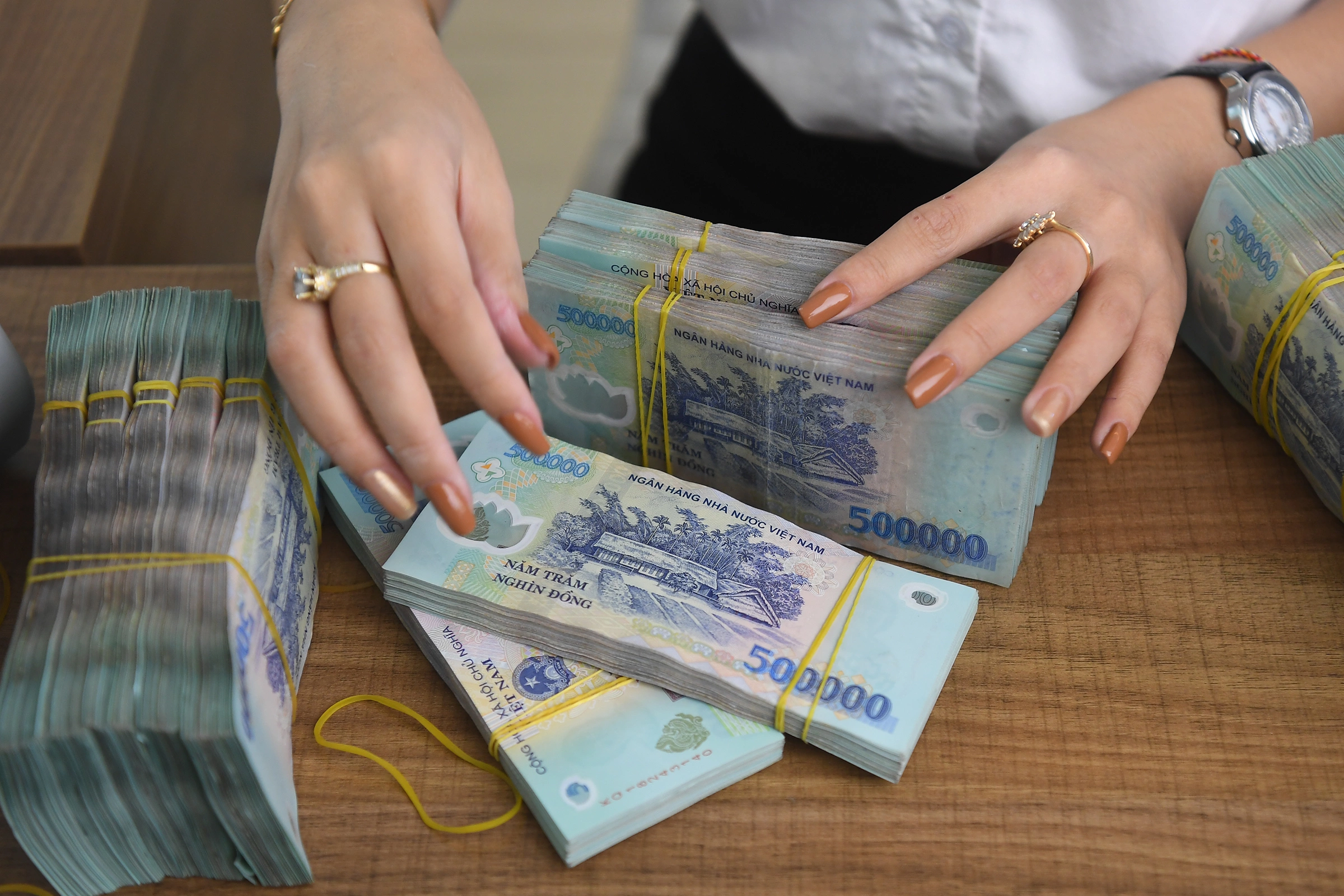 |
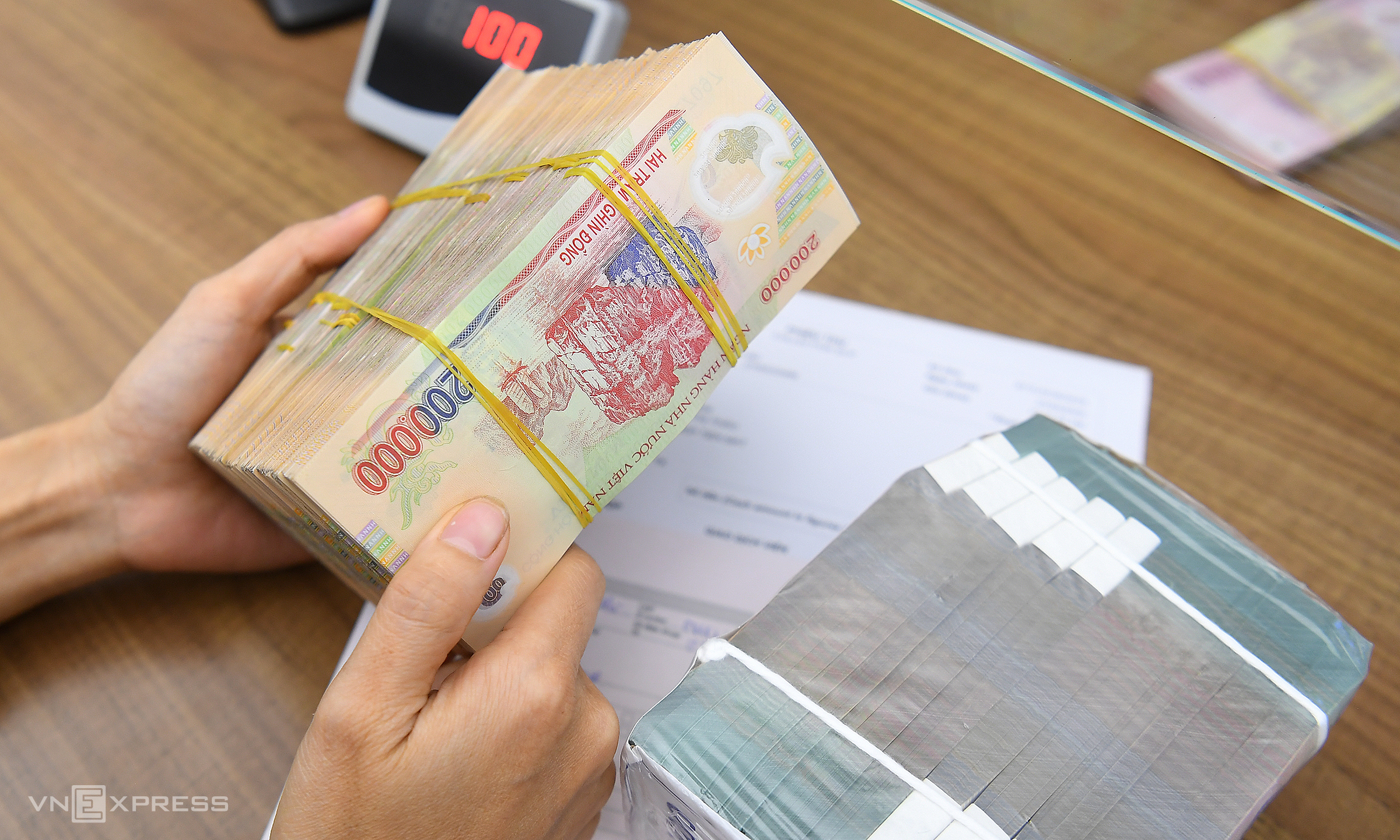
Cash transaction at a bank. Photo: Giang Huy |
To mitigate the impact on the budget balance, the Government plans to enhance revenue management, broaden the tax base, and combat revenue loss, transfer pricing, and tax evasion. Central and local budgets are also required to continue reviewing and cutting unnecessary expenditures. Should global crude oil prices rise, budget revenue could also increase, thereby offsetting some of the revenue reduction from this policy.
Phuong Dung