According to Verification Opinion Statement number GPCF 846660 issued by BSI on 21/9, the product carbon footprint report for Phu My Fertilizer Plant, covering the period from 1/1 to 31/12/2025, has undergone an independent assessment with reasonable assurance and a materiality level of 5%.
This result follows BSI's verification of PVFCCo-Phu My's 2025 greenhouse gas inventory report in accordance with ISO 14064-1:2018. While a greenhouse gas inventory provides a comprehensive overview of organizational emissions, carbon footprint assessment delves deeper, measuring emissions linked to each specific product.
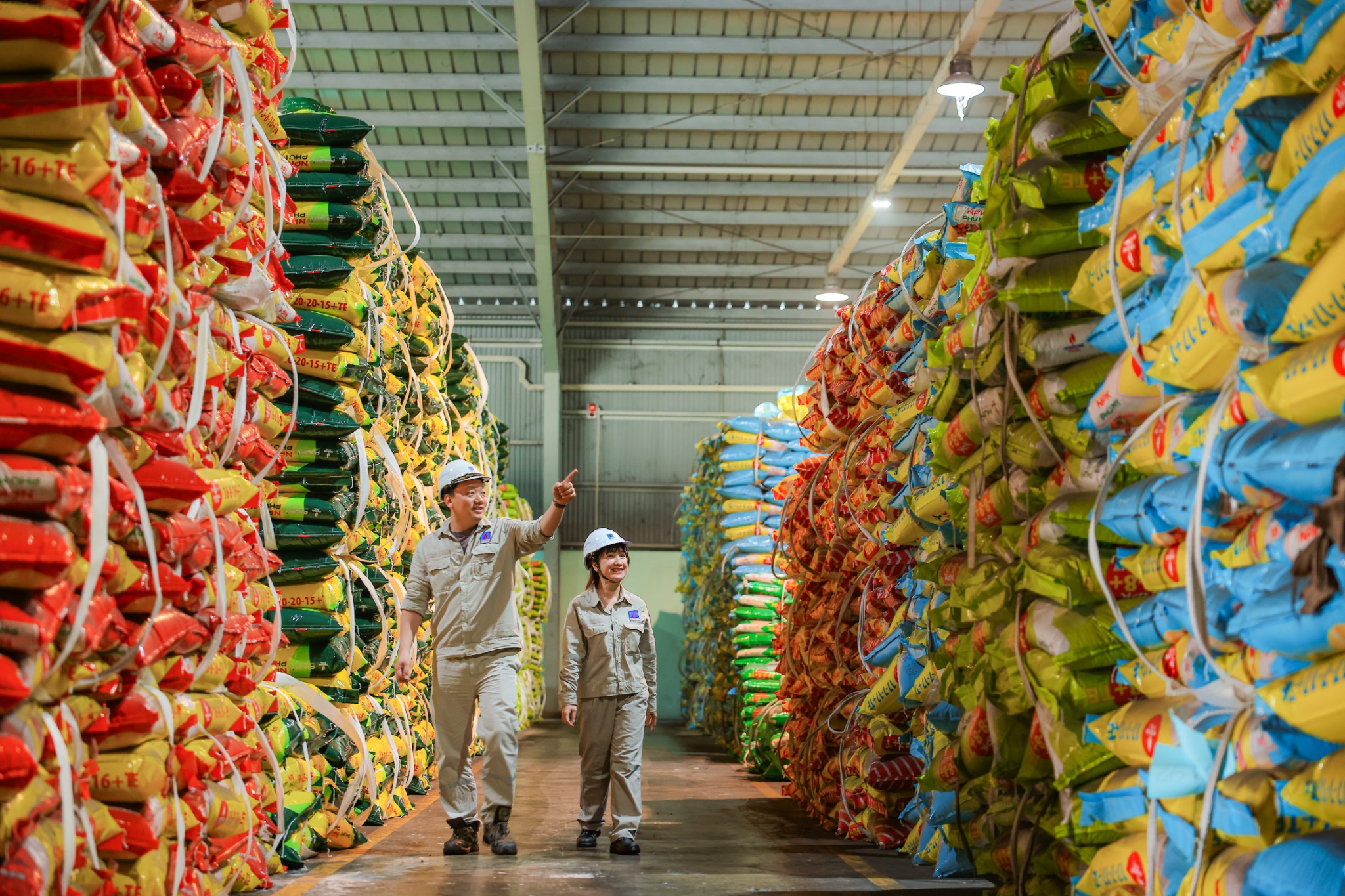 |
PVFCCo-Phu My measures its carbon footprint to enhance the green value of its products. *Photo: PVFCCo-Phu My* |
This marks an advancement in the company's carbon management process. Product-level emissions data provides the general corporation with a better basis for identifying emission sources and exploring opportunities to optimize raw materials, energy, and technology. It also addresses the growing demand from customers and partners for emissions information and product carbon traceability.
With growing interest in environmental requirements and emissions transparency in international trade, proactively developing carbon footprint data according to international standards helps the company gradually build a foundation to adapt to new market standards and demands.
A product carbon footprint is the total greenhouse gas emissions associated with a product unit during defined life cycle stages, converted to carbon dioxide equivalent (CO2e). This indicator helps the company understand the emissions linked to each product unit, thereby identifying priority stages for emission reduction.
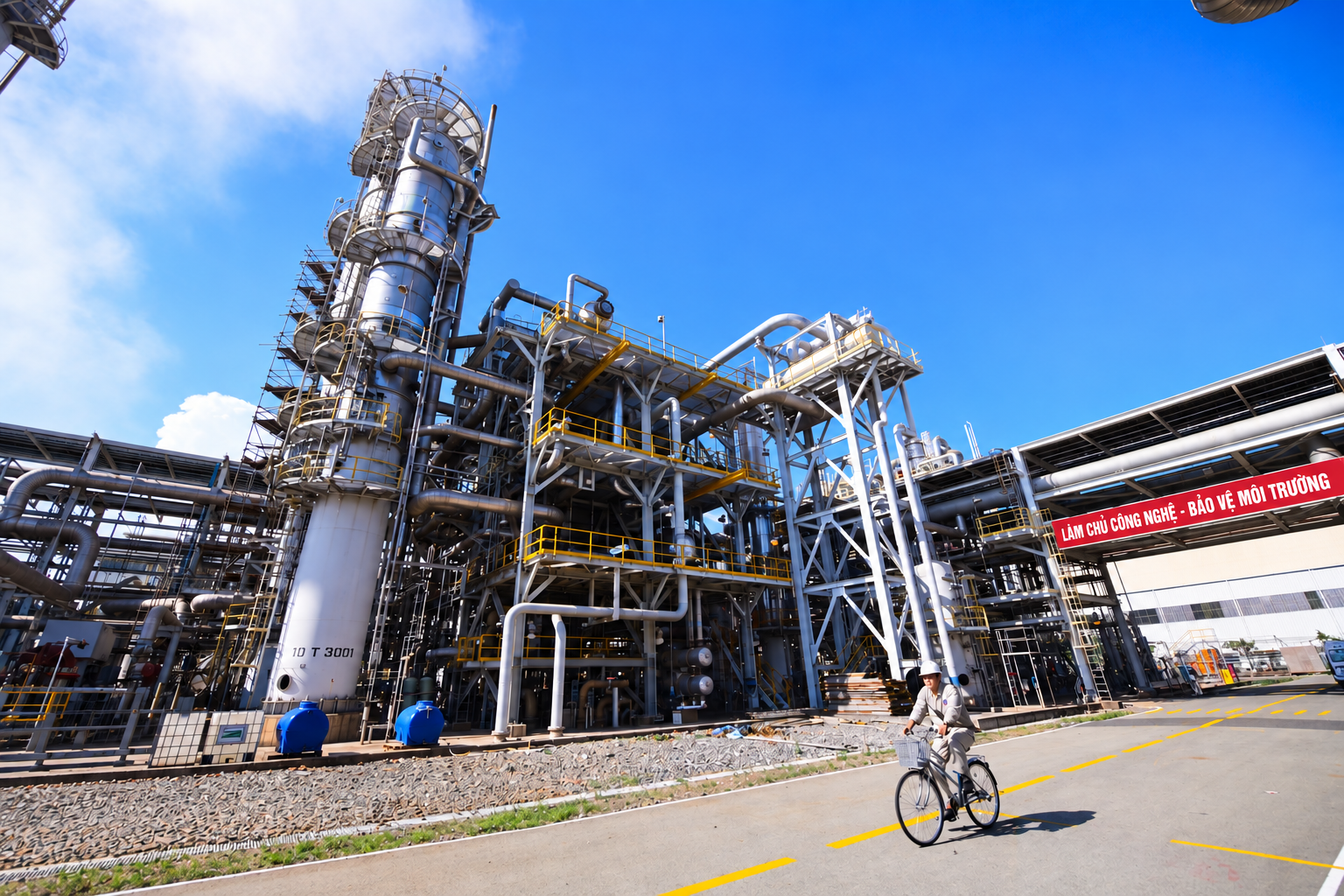 |
Phu My Fertilizer Plant boosts emissions management and production optimization, gradually increasing the green value of Phu My products. *Photo: PVFCCo-Phu My* |
ISO 14067:2018 is an international standard that specifies principles, requirements, and guidelines for quantifying and reporting the carbon footprint of products. For Phu My Fertilizer Plant's products, the assessment scope follows the "Cradle to Gate" principle, encompassing raw material extraction to the factory gate. This includes three main stages: raw materials, transportation, and production. This scope does not yet cover distribution, product use, and end-of-life treatment.
To develop the 2025 product carbon footprint report, Phu My Fertilizer Plant defined the calculation scope for each product line, with the unit of measurement being one tonne of unpackaged product. The plant collected emissions data across the raw materials, transportation, and production stages, utilizing internationally recognized methodologies and databases. BSI experts then independently assessed the report according to ISO 14067:2018 and related standards.
To reduce emissions effectively, measuring them is the first step. By understanding the emissions linked to each product and their primary sources, PVFCCo-Phu My gains a stronger basis for optimizing raw material and energy usage, technology, and operational efficiency.
Beyond its value for production activities, carbon footprint data is increasingly significant for customers and the market. The ability to provide independently verified data, developed according to international standards, enhances transparency and creates a foundation for the company to meet customer and partner demands for product carbon information and traceability.
The product carbon footprint (CFP) verification results for each product line help the general corporation better identify emission sources within its value chain, providing a basis for developing appropriate improvement solutions. This data also contributes to enhancing emissions transparency and the ability to meet increasingly stringent market environmental requirements.
Previously, Phu My Fertilizer Plant had implemented a greenhouse gas inventory since 2022. Moving from enterprise-level inventory to product-level carbon footprint assessment, PVFCCo-Phu My is gradually building a measurable, traceable, and verifiable emissions data system. This system will form the basis for long-term production optimization and emission reduction goals.
The Dan