In a recent letter to investors, Petri Deryng, Portfolio Manager of PYN Elite Fund (Finland), noted that inflation expectations and market liquidity conditions remain challenging, impacting stock market performance. He added that rising interest rates have prompted investors to sell stocks. "Exchange rates, liquidity, trade balance, inflation expectations, and interest rates are all closely related," Deryng said.
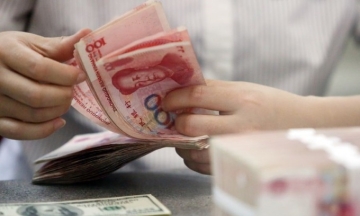
Indeed, since the beginning of the year, deposit interest rates have continuously climbed. According to VnExpress statistics, the 12-month deposit interest rate is now commonly around 7-8% annually. Some small and medium-sized banks even offer negotiated interest rates, with actual yields potentially exceeding 9%.
Increased deposit interest rates typically pressure the stock market by influencing both capital flows and asset valuation. As saving becomes more attractive, some capital may shift from stocks to deposits, thereby reducing demand for equities. Concurrently, rising capital costs can pressure the profits of businesses that use significant leverage. From a valuation perspective, higher interest rates also increase the required rate of return for investors, narrowing the valuation they are willing to pay for stocks, especially for growth companies or those with distant future cash flows.
In mid-August, SGI Capital — manager of The Ballad Fund open-ended fund — also noted that the financial market faced difficulties as government bond yields neared their 2022 peak and banks quietly intensified the race to raise deposit interest rates. Consequently, the stock market entered a correction phase, creating short-term challenges. SGI Capital warned, "investor sentiment is gradually shifting from concern and apprehension to denial, and will move into a fear phase if deposit interest rates exceed 10% per year in the near future."
This trend was evident in July when the VN-Index dropped over 124 points, equivalent to 6,68%. In August, the overall index rebounded by more than 96 points. However, the market began to fluctuate under selling pressure in the latter half of the month, often experiencing a "green on the outside, red on the inside" situation, where indices appear positive but many stocks are declining. This indicates that the upward momentum is not sustainable.
Concurrently, transaction values have remained low. Since late June, liquidity on the HoSE has not reached 30,000 billion VND, a threshold typically indicating sufficient capital flow in the stock market to support a sustained increase. PYN Elite Fund also noted that low liquidity has caused stock prices to only "creep up slowly" despite strong earnings growth from listed companies. A previous report by Thien Viet Securities (TVS) highlighted how rising interest rates make savings more attractive than the stock market. Furthermore, the market's excessive reliance on blue-chip stocks reduces diversification and diminishes investor interest.
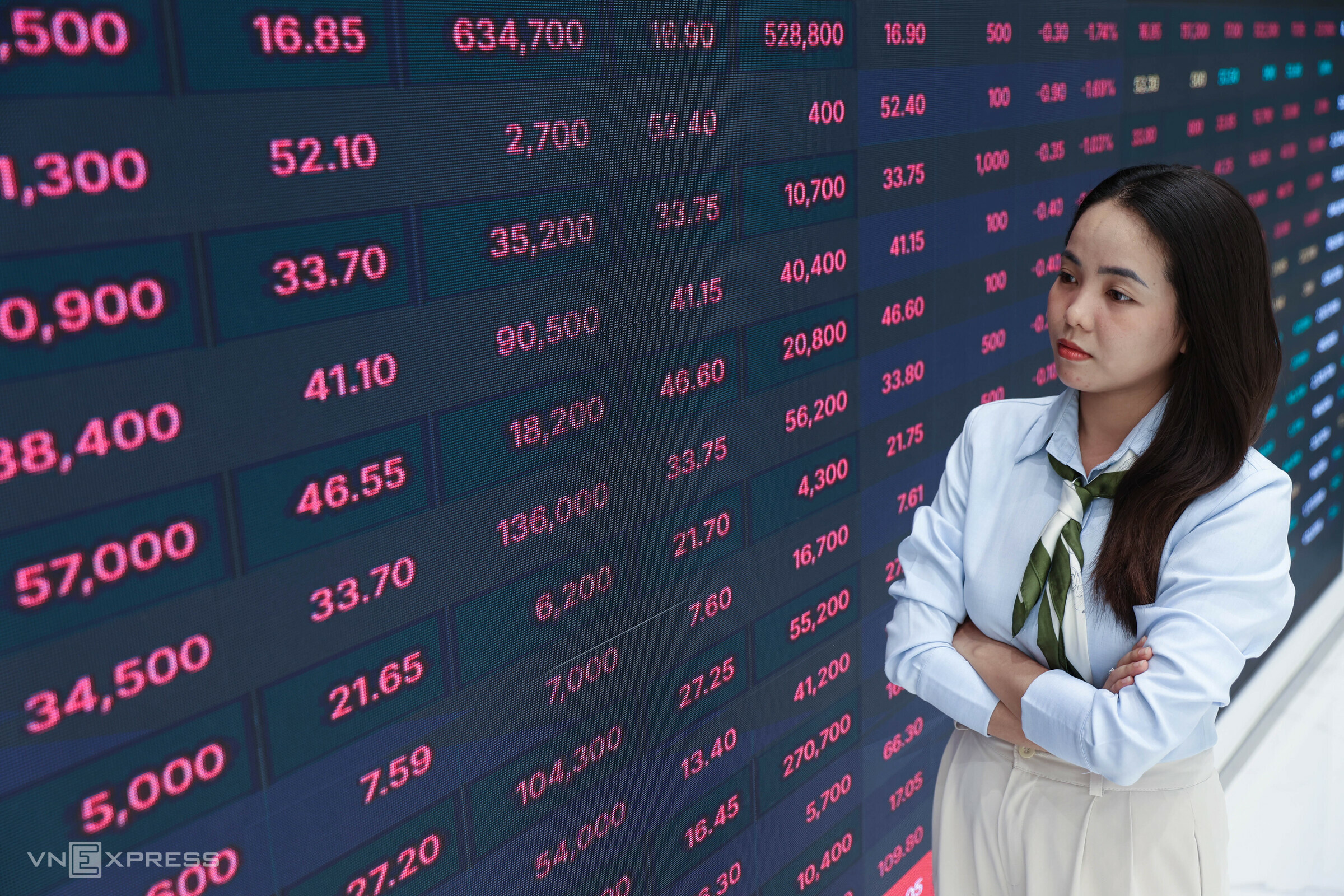 |
Investors observing the price board at a securities company in TP HCM. Photo: Quynh Tran
However, many experts maintain that interest rates may have no further room to increase in the near future, but immediate adjustment is unlikely. At the August investor conference, Le Anh Tuan, CEO of Dragon Capital, stated that interest rates in the coming period are "unlikely to reach new high levels" because the State Bank has many supportive measures. However, given significant credit demand and a widening gap between lending and deposit rates, a scenario of sharply falling interest rates is also unlikely; instead, a slow decline is more probable.
Tat Dat