Late last month, amid escalating US-Canada trade tensions, President Trump announced plans to impose a 50% import tariff on all automobiles, trucks, and parts, effective 1/1/2027.
However, experts warn that Japanese automakers will bear the greatest losses. According to Barclays analysts, automobiles produced in Canada account for nearly 25% of Honda's sales in the US and 17% of Toyota's, the highest among major automakers.
Consequently, they risk being most affected by Trump's plan to double the current tariff from 25% to 50%. The two Japanese automakers declined to comment.
The Canadian automotive industry produces about 1,2 million vehicles annually. Toyota and Honda account for more than three-quarters of this output. Toyota ships its RAV4 model to the US, while Honda exports the CR-V. Both are among the best-selling SUVs in the US.
Julie Boote, an automotive analyst at Pelham Smithers Associates in London, warned that the two companies might be forced to close some production lines if the 50% tariff takes effect from 1/1. "If you really want to destroy the Canadian automotive industry, you can do that with these tariffs", she stated.
The US is the largest market for Toyota and Honda. Crucially, it is also a market where Chinese rivals like BYD are not yet permitted to operate. Currently, the two Japanese automakers face significant competitive pressure from affordable Chinese electric vehicles in markets such as Southeast Asia, Europe, and Latin America.
If the 50% tariff takes effect, Toyota and Honda would likely seek to relocate their Canadian production lines elsewhere to manufacture and ship vehicles to the US. However, analysts believe this would not be easy.
Vehicles sold in the US are typically designed according to the specific demands and regulations of that market. Furthermore, other factories are already operating near full capacity. "That would create a significant change compared to before", noted Seiji Sugiura, a senior analyst at Tokai Tokyo Intelligence Laboratory.
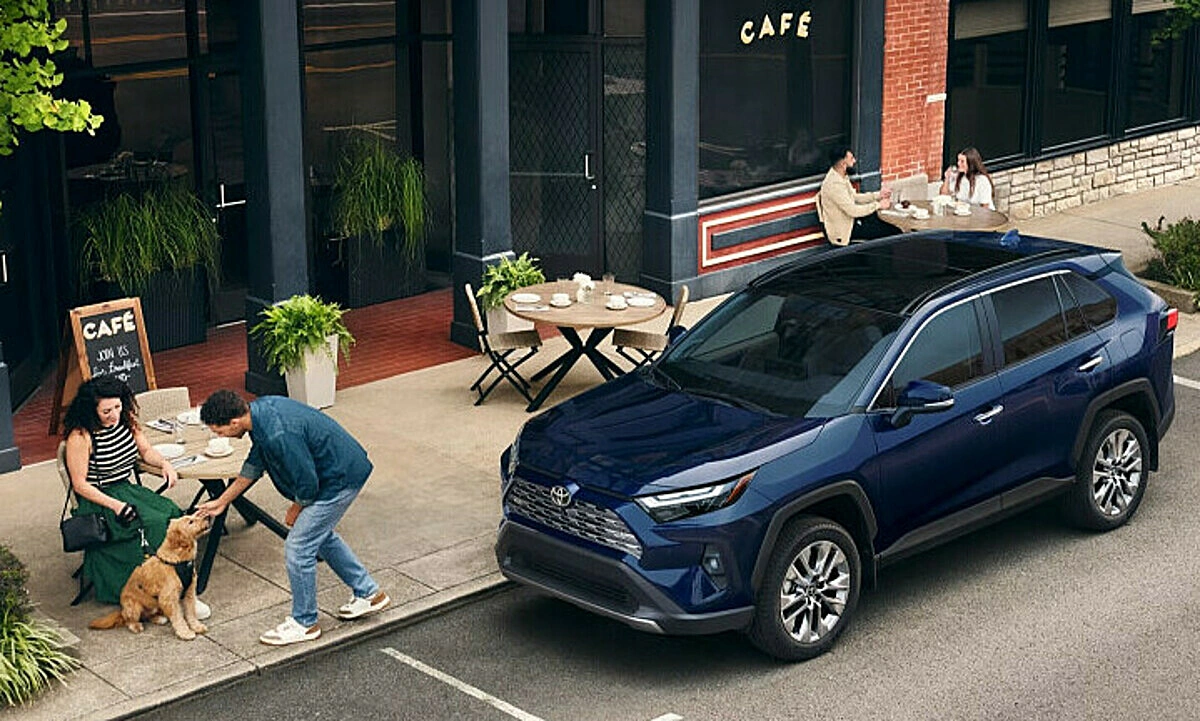 |
Toyota's RAV4 model. *Photo: Toyota of Oakland* |
Two Japanese automotive suppliers stated that it is unclear what will happen next. They are currently almost unable to plan, as it is uncertain whether the proposed tariffs will actually be implemented. "We are trying not to overreact", said one supplier executive.
The intention to impose a 50% import tariff on automobiles from Canada is the latest example of the global automotive industry struggling to adapt to President Trump's trade policies. For many years, American, European, Japanese, and South Korean automakers, along with their supplier networks, have built production chains spanning across North America.
They leveraged cross-border trade agreements and low labor costs in Mexico. However, the situation has now changed drastically. US tariffs caused Toyota losses of approximately 1,400 billion yen (8,8 billion USD) in the past fiscal year.
Toyota has planned to invest up to 10 billion USD over five years to expand its operations in the US. Meanwhile, Honda is striving to revive its loss-making automotive division. A senior Honda executive recently stated that the company might not build an 8th assembly plant in North America if the USMCA free trade negotiations between the US, Canada, and Mexico are not renewed.
The USMCA is a revised version of the 1994 North American Free Trade Agreement (NAFTA) and has been in effect for six years. On 1/7, Trump declared he would not extend the agreement, requiring it to be reviewed annually. In 2025, Hyundai also stated it had to postpone investment decisions due to the uncertain future of USMCA.
Phien An (according to Reuters)