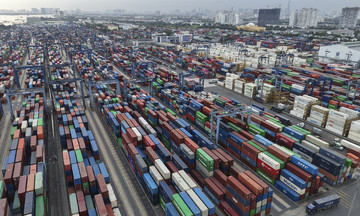
Since last weekend, thousands of cargo containers have been "stuck" at border gates and seaports due to difficulties in implementing Decree 46. At the regular government meeting on 4/2, Prime Minister Pham Minh Chinh stated that ministries and sectors must be receptive and listen to the opinions of people and businesses. The prime minister noted that management should not be abrupt, and specific transitional provisions are needed when issuing legal documents.
He directed Deputy Prime Minister Le Thanh Long to continue chairing meetings with ministries and relevant agencies to develop and submit a resolution to the government today to resolve issues with Decree 46. This aims to alleviate and prevent prolonged goods congestion.
As of 4/2, according to statistics from the Ho Chi Minh City Customs Department, Cat Lai port had over 1,800 containers awaiting clearance. Most businesses had not yet opened customs declarations because they had not completed specialized inspection registration or obtained licensing notifications related to quarantine and food safety.
One reason for the goods congestion at ports and border gates is that Decree 46 became effective immediately upon its issuance on 26/1, but it lacked detailed guidance and a transitional mechanism for state inspection of imported goods. Many units stopped issuing quarantine and food safety certificates, leaving businesses without sufficient documentation for customs clearance. Additionally, changing inspection methods without ready infrastructure also contributed to the goods backlog.
Several associations and businesses have proposed that the government consider suspending the application of Decree 46 until 31/3 to reassess the suitability of the new regulations. They also recommended simplifying or exempting conformity declarations for raw materials whose nature remains unchanged, and recognizing test results from reputable international organizations. Authorities also need to clarify the transitional mechanism for previously approved dossiers.
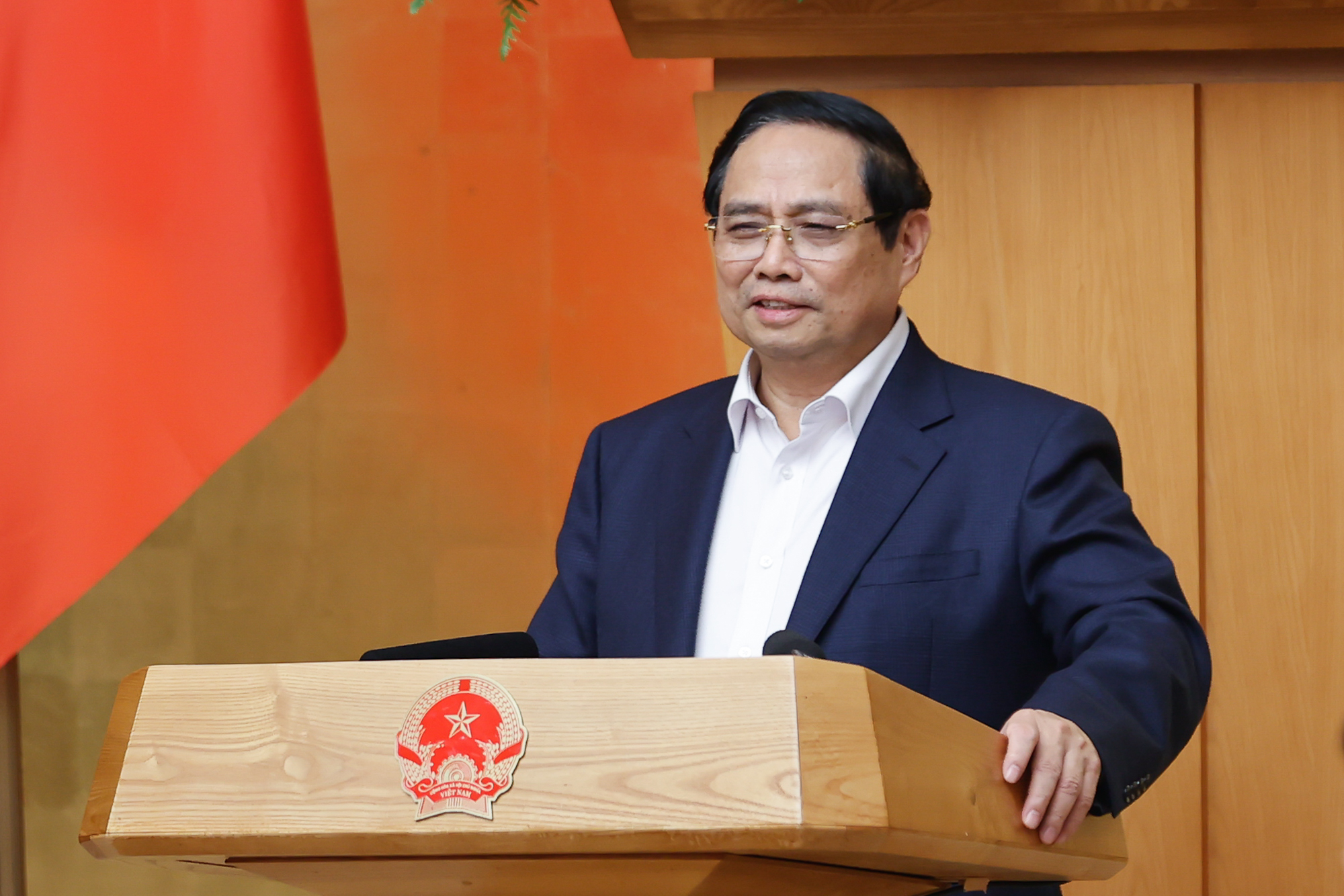 |
Prime Minister Pham Minh Chinh speaking at the regular government meeting on 4/2. *Photo: VGP*
Also at today's government meeting, the prime minister directed several ministries and sectors towards achieving two-digit growth targets. The prime minister called for focusing on macroeconomic stability and inflation control. Specifically, the State Bank of Vietnam is to manage interest rates, exchange rates, and foreign exchange appropriately to ensure the value of the Vietnamese dong. Credit capital must be directed towards business production, priority sectors, growth drivers, social housing, infrastructure, digital technology, and the production, processing, and consumption of agricultural products.
The Ministry of Finance has been tasked with striving to ensure state budget revenue in 2026 exceeds last year's performance by at least 10%. This agency must enhance management and promote the stable, safe, and efficient development of the stock market and corporate bonds.
Ministries and localities are to implement solutions to manage and stabilize markets and prices, while also combating smuggling, trade fraud, and counterfeit goods. Regulatory agencies are expected to soon operationalize a gold exchange, pilot a crypto asset exchange, and establish real estate and land use rights trading centers.
Additionally, the Ministry of Industry and Trade must ensure a sufficient supply of electricity, petroleum, essential goods, and raw materials for business production, and review issues related to FIT prices for resolution in February. The Ministry of Construction is to accelerate the development of the real estate market, including social housing, housing for middle-income individuals, and commercial properties.
According to the Ministry of Finance, the socio-economic situation in January continued its positive trend. For example, the Consumer Price Index (CPI) for January increased by nearly 2,6% year-on-year. State budget revenue was estimated at 370,700 billion VND, an increase of 20,4%.
In the first month of the year, newly registered foreign direct investment (FDI) capital reached nearly 1,5 billion USD, a higher growth rate than last year. The number of newly established businesses and those resuming operations totaled 48,700, an increase of 76,2% compared to the previous month.
Phuong Dung