On the afternoon of 21/8, the National Assembly held a group discussion on the draft resolution to reduce personal income tax and corporate income tax for individuals and businesses.
The government previously proposed a 30% reduction in personal income tax for the 2026-2027 tax periods, applicable to individuals with business income not exceeding 10 billion VND annually. Similarly, businesses with total annual revenue up to 10 billion VND could also receive a 30% tax reduction during the same timeframe.
During discussions at the Ho Chi Minh City delegation, National Assembly member Tran Hoang Ngan expressed his support for the tax reduction policy benefiting individuals, business households, and companies. However, he advocated for expanding the scope of tax relief beyond the current limit for businesses with revenue up to 10 billion VND, which are classified as micro-enterprises.
Ngan highlighted that global economic volatility, coupled with rising logistics and energy costs, places significant pressure on domestic production. Consequently, small and medium-sized enterprises (SMEs) also require substantial support.
He argued that policymakers possess sufficient fiscal capacity to broaden the tax reduction, given that budget revenue in the first seven months reached approximately 1,350 trillion VND, a 16% increase compared to the previous year. This 250 trillion VND increase, Ngan suggested, could be allocated to further tax reductions, providing additional assistance to businesses.
A government report indicated that the budget is projected to experience a revenue shortfall of approximately 3,191 billion VND this year and 3,510 billion VND in 2027 if the 30% tax reduction for individuals and businesses is implemented.
Tran Hoang Ngan proposed considering tax reductions for small businesses in specific sectors: those in agriculture with revenue under 50 billion VND, and those in trade and services with revenue under 100 billion VND annually. These groups could receive tax reductions of 20% and 10% respectively, corresponding to their revenue levels.
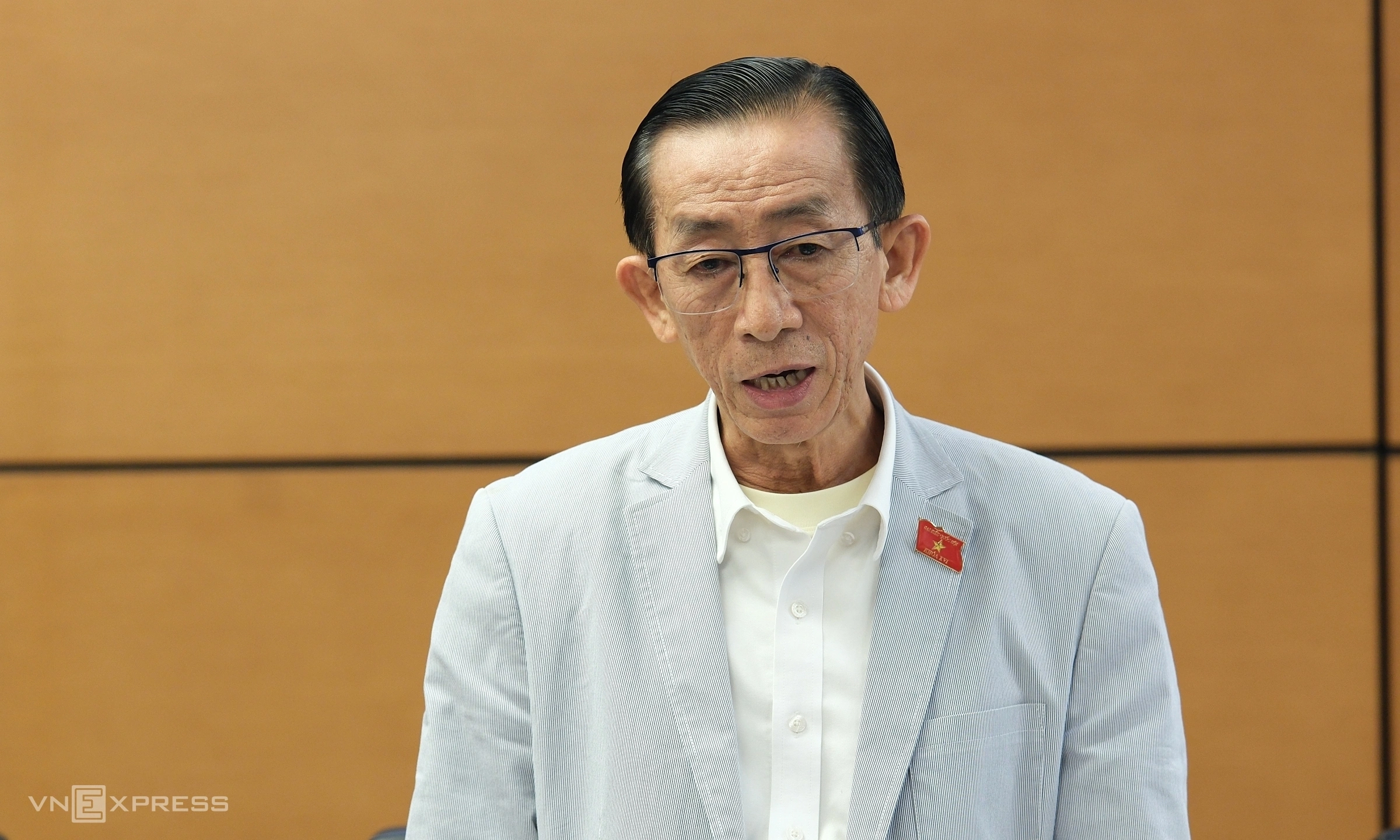 |
Associate Professor, Dr. Tran Hoang Ngan speaks at the group discussion on the afternoon of 21/8. Photo: Anh Tu |
Associate Professor, Dr. Tran Hoang Ngan speaks at the group discussion on the afternoon of 21/8. Photo: Anh Tu
Conversely, some National Assembly members suggested implementing a transitional mechanism and even cautioned against further tax reductions. Nguyen Van Than, Chairman of the Small and Medium-sized Enterprise Association, stated that an abrupt tax cut for all small and medium-sized businesses is not beneficial "as it could easily create a habit".
In the long term, Than emphasized that businesses must strive for self-reliance to achieve robust growth, thereby avoiding a dependency on continuous support that could diminish their motivation. "Implementing a widespread tax reduction policy requires careful consideration", Than concluded.
Meanwhile, National Assembly member Nguyen Duy Thanh, a member of the Economic and Finance Committee, requested the government to provide a clearer rationale for selecting the 10 billion VND annual revenue threshold for tax reductions. He also urged policymakers to devise a transitional mechanism for businesses exceeding this threshold, ensuring they do not immediately forfeit the entire reduction due to a minor increase in revenue.
According to Thanh, the current Corporate Income Tax Law mandates a 17% tax rate for businesses with revenue ranging from 3 billion to 50 billion VND. If businesses in this category receive a 30% reduction, their effective tax rate would be approximately 11,9%. However, if their revenue merely surpasses the 10 billion VND mark, they would instantly become subject to the full 17% tax rate.
"The scale of operations might remain almost unchanged, yet the tax obligation would shift significantly", the National Assembly member stated. He added that a 10 billion VND revenue figure carries different implications across various industries. For instance, trade and distribution businesses might achieve substantial revenue but operate with very low profit margins, whereas service-sector businesses with the same revenue often yield considerably higher profits.
The National Assembly will hold a plenary discussion on the resolution concerning personal and corporate income tax reductions for individuals and businesses tomorrow, with consideration and approval scheduled for 24/8.
Anh Tu