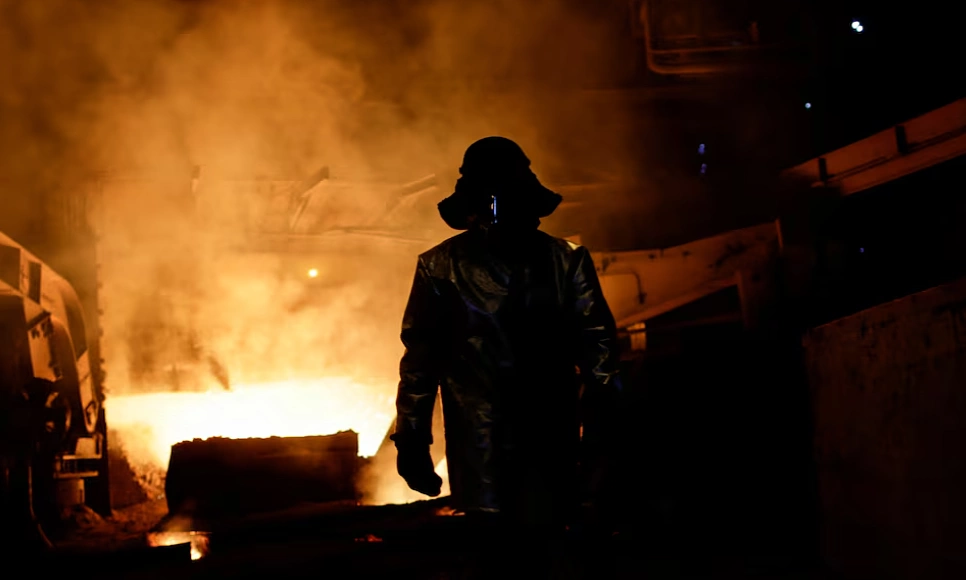
Hong Kong (China) imported 112,7 tons of Russian gold in the first seven months of this year, according to calculations by precious metals investment company BullionVault, based on data from the Hong Kong Census and Statistics Department. This figure significantly surpasses last year's record of 92,1 tons. Before the Russia-Ukraine conflict, Hong Kong's imports from Russia amounted to only 3,3 tons in 2021.
This surge indicates a redirection of Russian gold after Western markets ceased purchases. Hong Kong has emerged as a vital hub for Russia-China trade since the conflict began. Vita Spivak, a senior advisor at Gatehouse Advisory Partners, told CNBC, "Most of the precious metal is transferred to mainland China, as the country does not sanction Russian gold."
Beyond its non-sanctioning stance, Hong Kong offers another key advantage. Spivak emphasized, "The city serves as a direct gateway to the world's largest gold consumer market."
The London Bullion Market Association (LBMA) delisted all 6 Russian gold and silver refineries from its Good Delivery list in March 2022. This list comprises companies whose products meet LBMA standards and are approved for trading in the London market. The United States, the United Kingdom, and other Western countries also imposed restrictions on Russian gold, effectively closing off a key export market for Russia.
Prior to the conflict, Russia's gold industry heavily relied on London. BullionVault data shows that precious metal exports to the UK from 2019 to 2021 accounted for over 70% of Russia's mining output.
Adrian Ash, Director of Research at BullionVault, stated, "Official Hong Kong figures clearly show a significant increase in gold imports from Russia, reflecting bilateral trade and support between Russia and China."
Hong Kong is considered a natural alternative for this redirected gold flow. The city has long served as a gateway for gold into mainland China, the world's largest consumer market for the precious metal. The special administrative region is also rapidly expanding its storage and trading infrastructure.
Rhona O’Connell, head of market analysis for Europe, Middle East, Africa, and Asia at StoneX, noted, "Hong Kong is racing with Singapore for the position of a leading hub and is currently about six months ahead in terms of infrastructure."
The influx of gold from Russia coincides with China's increased purchases, as it identifies gold as a "strategic mineral" and encourages households to hoard it.
The People's Bank of China (PBOC) has also been consistently buying gold for its reserves. According to S&P Global data, Beijing's reserves increased over 40 times in the first half of this year, an amount double the purchases during the same period last year.
By Ha Thu (via CNBC)