According to the Vietnam Association of Seafood Exporters and Producers (VASEP), this growth indicates a continued recovery for the seafood industry, though market performance shows clear differentiation.
Mainland China and hong kong emerged as the strongest growing markets, with seafood imports from Vietnam reaching 1,2 billion USD, a 40,5% increase year-on-year. This heightened demand for shrimp, pangasius, crab, mollusks, and some high-value items helped offset declines in several other major markets.
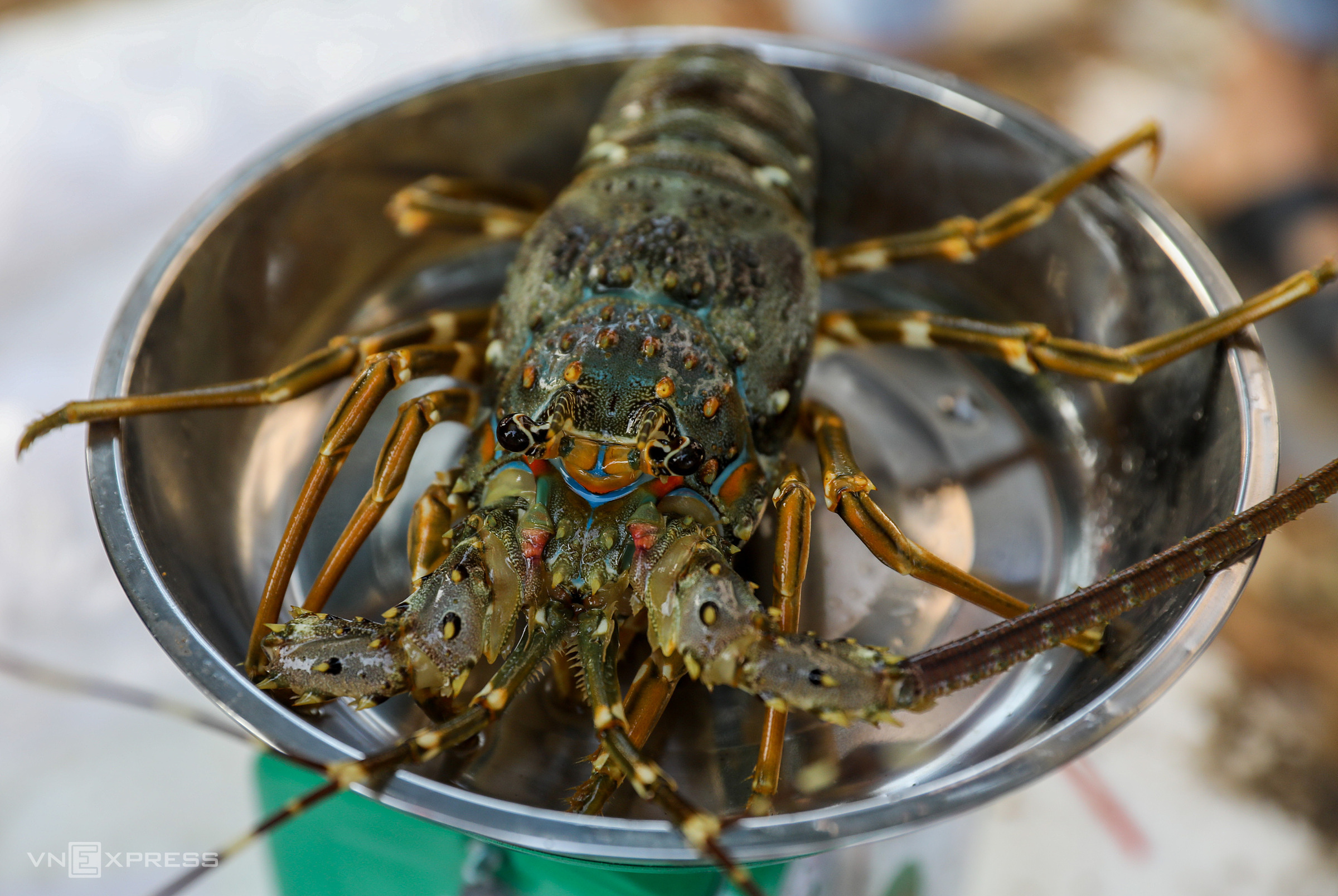 |
Lobster is a favored item in China. Photo: Quynh Tran
Conversely, exports to the United States decreased by 10% to 689 million USD, and to the European Union by 2,2% to 435,6 million USD. Meanwhile, exports to ASEAN countries rose by 16,8%, South Korea by 4%, and japan saw a slight increase of 0,4%, contributing to market diversification for businesses.
By product, shrimp and pangasius remain the two primary growth drivers for the industry. Shrimp led with a turnover of 1,9 billion USD, an 11,5% increase, accounting for approximately 40% of total seafood exports. This surge was fueled by recovery in some asian markets, demand for processed products, and lobster exports to China.
Despite this, the shrimp sector faces several challenges. Many farmers are shifting to larger shrimp sizes to increase product value, while some markets are seeing increased demand for smaller sizes. Additionally, vietnamese shrimp continues to face price competition from Ecuador, India, and Indonesia, alongside trade defense measures in the United States.
Pangasius exports reached 905 million USD in the first five months, marking a 12,6% increase compared to the same period last year, thanks to its competitive pricing and stable supply. Amid a global decline in whitefish supply, particularly reduced pollock output and rising raw material prices, vietnamese pangasius has found new opportunities to expand its market share in China, ASEAN, the Middle East, and other emerging markets.
In contrast, tuna exports declined by 6% to 372 million USD, primarily due to raw material shortages and increasingly stringent traceability requirements. Other seafood products maintained robust growth: squid and octopus exports reached 304 million USD, an 18% increase; crab and other crustaceans hit 160 million USD, up 19%; and shelled mollusks achieved 122 million USD, a 22,8% rise.
VASEP notes that future growth potential in China will depend heavily on the ability to meet increasingly strict import standards. This market is tightening requirements for quality, food safety, and traceability, especially following the implementation of Order 280 from 1/6.
VASEP forecasts that seafood exports in 2026 could increase by 8-10%, potentially exceeding 12 billion USD. This optimistic outlook hinges on several factors: continued positive demand from China, pangasius maintaining its competitive pricing, improved competitiveness for the shrimp sector, and the gradual resolution of issues related to illegal, unreported, and unregulated (IUU) fishing, raw material certification, and traceability for marine products.
However, challenges such as raw material shortages, logistics costs, compliance requirements, and trade defense measures could slow growth in the second half of this year. This is particularly true for sectors like shrimp, tuna, squid, octopus, crab, and exploited marine products. These factors will ultimately determine whether the industry can achieve its 12 billion USD export target this year.
Thi Ha