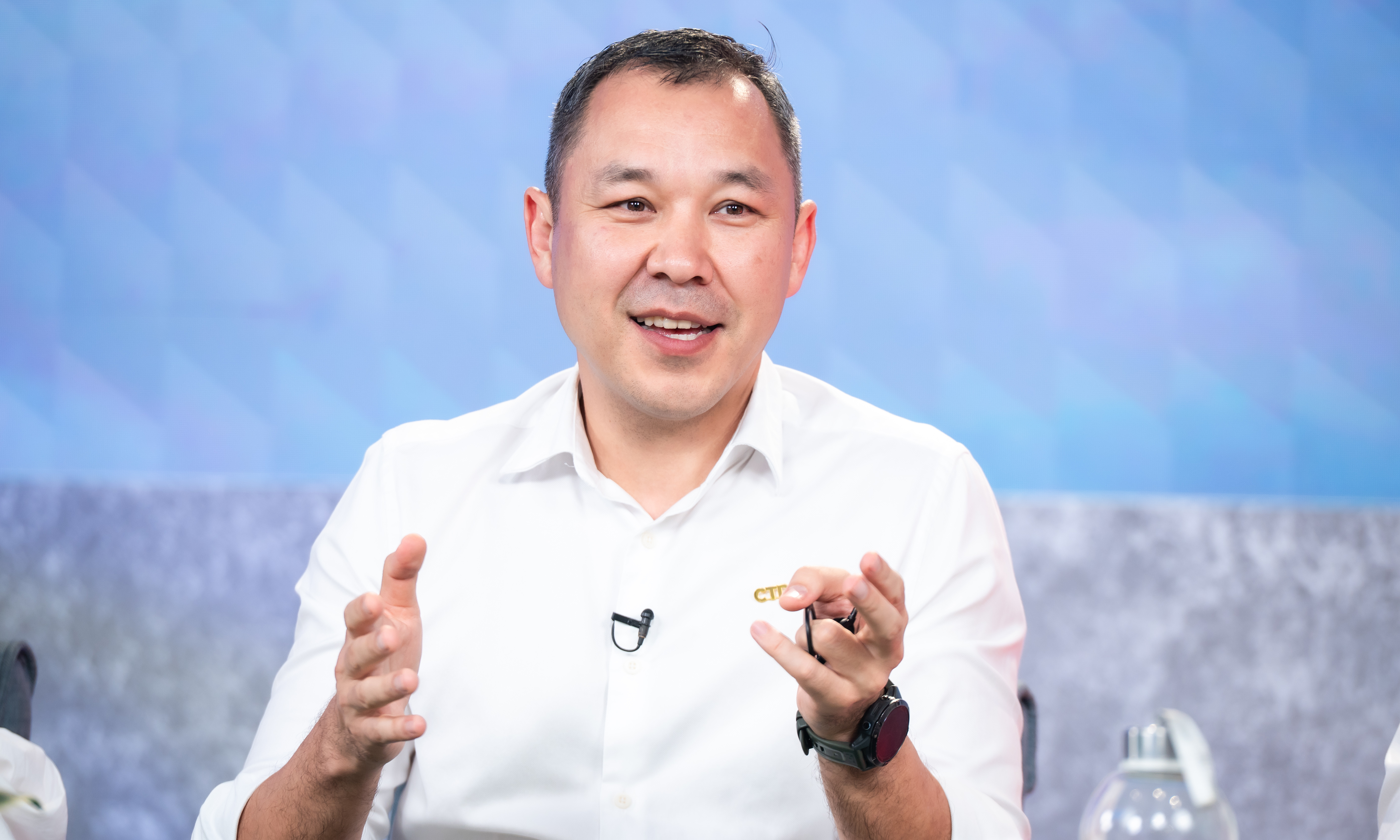
On monday, 22/4, Tesla CEO Elon Musk announced a plan to increase spending by $25 billion on artificial intelligence (AI), robotics, and chips by 2026. He made the announcement during a Q1 earnings call with analysts.
This new forecast significantly raises previous projections. In january, the company anticipated spending around $20 billion this year, up from $9 billion in 2025. Musk stated this decision is an investment in the future. "I believe it's entirely reasonable in exchange for a massive increase in future revenue streams," he said. He also noted similar trends among other leading technology companies, adding, "Tesla is not the only company planning to increase capital expenditure."
According to Reuters, Tesla is undertaking one of its most expensive "bets" in company history. The $25 billion investment aims to advance its robotaxi segment, powered by AI, and humanoid robots. A significant portion of Tesla's current $1,450 billion market capitalization relies on this vision.
Musk's plan involves using these resources to prepare for the mass production of Cybercab, a fully autonomous vehicle without a steering wheel or pedals, starting this year. Initial production will be slow but is expected to accelerate by year-end. The company is also rolling out its robotaxi service using the Model Y in Dallas and Houston, expanding its presence in the US after launching in Austin last year. Further expansion of robotaxi services to five other cities in Arizona, Florida, and Nevada is also underway.
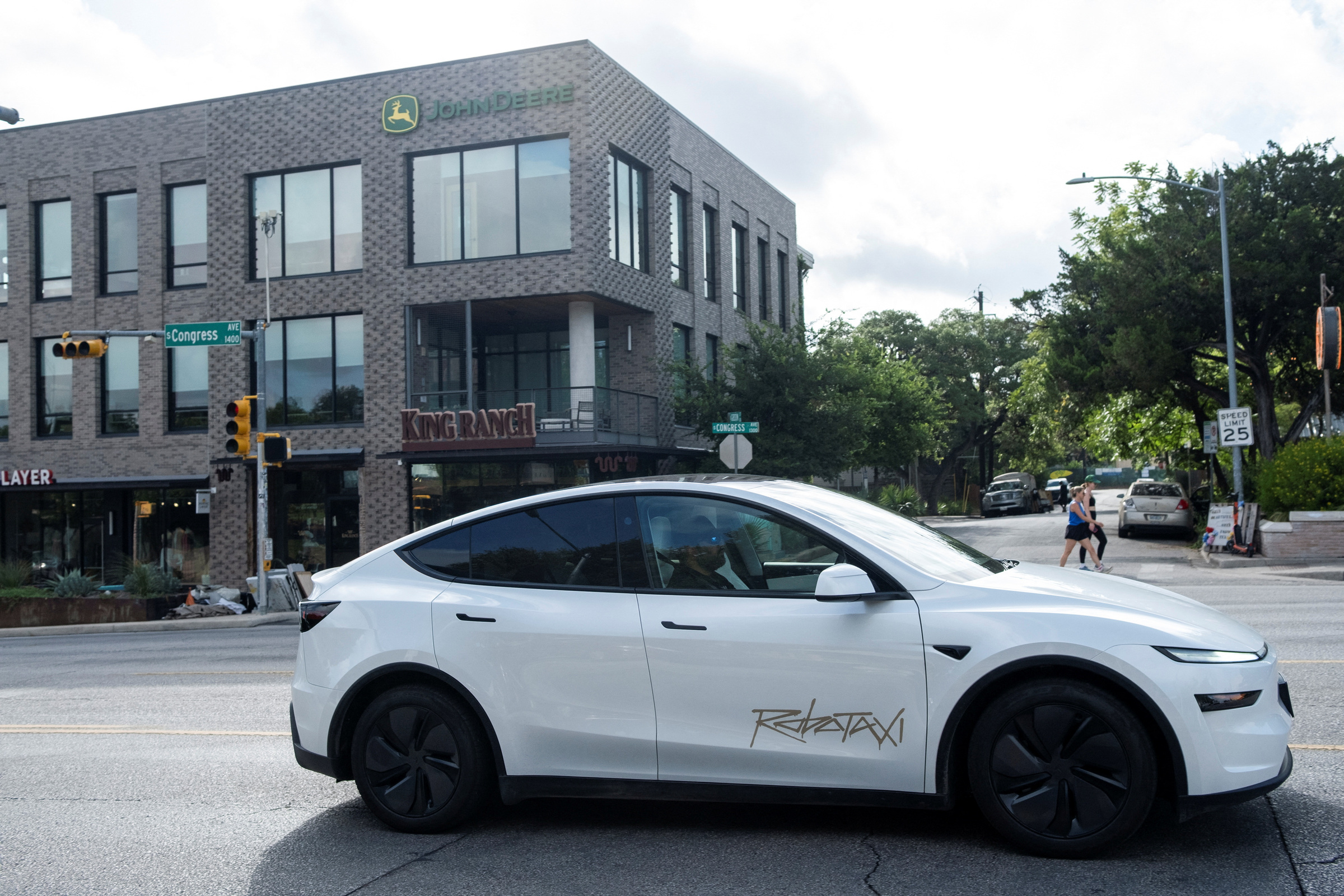 |
A Tesla robotaxi in Austin, Texas, on 22/6/2025. Photo: Reuters
The Tesla CEO expects the robotaxi service to be available in about a dozen states by the end of this year. Musk has consistently downplayed challenges in the core electric vehicle sales business, emphasizing that Tesla's future lies in attracting people to use its vehicles as robotaxis. The company reported that robotaxi miles traveled in Q1/2026 doubled compared to Q4/2025. Internationally, the Dutch Vehicle Authority (RDW) informed the European Commission about plans to seek EU-wide approval for Tesla's full self-driving (FSD) driver assistance program.
Tesla also aims to produce robots for homes and businesses. In january, the company announced it would cease production of the Model S and X vehicles, repurposing its Fremont, California, factory to build Optimus humanoid robots. Musk stated that preparations for the first large-scale Optimus factory will begin in Q2, with a goal of producing one million robots annually for the first-generation line. Musk's electric vehicle company first announced its research into humanoid robots in august 2021 and showcased a prototype in september 2022. It now faces competition from Unitree (Trung Quoc), Boston Dynamics, Agility Robotics, Apptronik, and other companies.
When asked about plans to demonstrate the upcoming Optimus version, Musk noted that competitors closely analyze and copy everything the company does. He intends to introduce the humanoid robot closer to its production start, anticipated around late july or august.
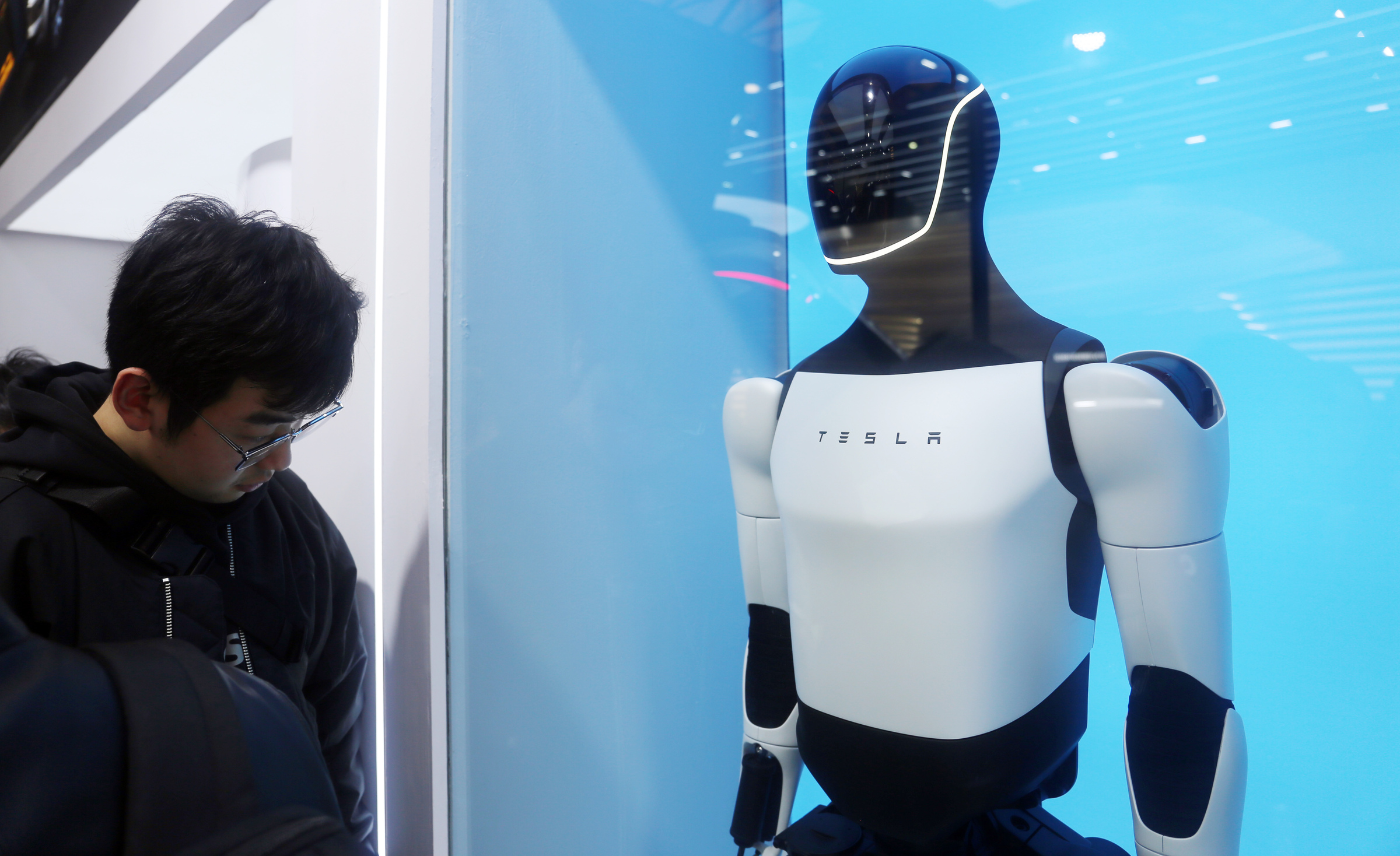 |
Tesla's Optimus Gen 3 humanoid robot displayed in Shanghai, Trung Quoc on 15/3. Photo: Reuters
With this ambitious investment, Tesla CFO Vaibhav Taneja projects the company will record negative free cash flow for the remainder of 2026. In january, Tesla surprisingly reported a positive free cash flow of $1.44 billion, contrasting with LSEG's forecast of negative $1.43 billion. "We are entering a very large capital investment phase, starting now and extending over several years," he explained.
Investors are increasingly focused on whether Elon Musk will deliver on his promises to commercialize self-driving technology and robotics. However, the announcement of the $25 billion spending plan, coupled with Musk's warning of a "very significant increase" in future expenditures, surprised the market, causing Tesla's stock to drop 2.4% after the news. Analysts at Morgan Stanley predict Tesla is nearing the 10 million FSD operational miles mark. "This symbolic milestone reinforces Tesla's leadership in automation, but as capital expenditure doubles and free cash flow turns negative, investors will need clearer evidence that unsupervised full self-driving technology is imminent to justify the stock's valuation," the bank's report stated.
Garrett Nelson, an analyst at CFRA Research, believes Tesla's spending plans are causing "headaches" for investors. "Investors are concerned the company has not quantified the expected returns from these projects, raising the risk that Tesla may be acting imprudently," he said. The expert suggested the company should provide clearer details on investment returns to reassure the market. Year-to-date, the company's stock has declined over 11.5%.
In its core business, Tesla had a strong first three months. The company delivered fewer vehicles than Wall Street expected but still saw a 6.3% increase in deliveries compared to Q1/2025. "We observed continued demand growth in Asia-Pacific and South American markets, and a recovery in Europe, the Middle East, Africa, and North America," Tesla stated. The Austin, Texas-based electric car manufacturer reported revenue of $22.39 billion for the three months ending 31/3, slightly below analysts' average estimate of $22.6 billion. Profit reached $477 million, a 17% increase year-over-year, surpassing Wall Street expectations and demonstrating effective cost control amid a challenging global environment.
Tesla is developing an all-new, smaller, and more affordable electric SUV, with plans for production in Trung Quoc and potential expansion to the US and Europe. However, the project remains in its early stages and is not expected to enter production soon. To date, Tesla's car business continues to face pressure as competitors launch new models, often at lower prices. Last year, the company lost its position as the world's largest electric vehicle manufacturer to BYD (Trung Quoc). In the US, the expiration of electric vehicle tax incentives also adds pressure.
Phi An (according to Reuters, AP, AFP)