In 2025, China's economy shows a strong recovery. According to Xinhua, with gross domestic product (GDP) increasing by 5.2% in the first three quarters, the world's second largest economy is on track to meet its annual target of around 5%.
Recently, the International Monetary Fund (IMF) raised its growth forecast for China from 4.8% to 5%. IMF Managing Director Kristalina Georgieva noted that despite major shocks, China's economy has demonstrated strong resilience.
Bright spots in China's economy include breakthroughs in artificial intelligence (AI) development and exports. In the first 11 months of the year, exports generated 3.4 trillion USD for China, with increased shipments to Southeast Asia and Europe offsetting declines in the US market. Beijing has also avoided a full-scale trade war with the world's largest economy.
Simultaneously, the Chinese government is promoting "high-quality growth," redirecting investment and policies to encourage advanced industries. China currently has over 500,000 high-tech enterprises and holds 60% of global AI patents.
"The world's second largest economy is undergoing a 'great transformation,' gradually moving away from traditional growth drivers of the past three decades," stated Lynn Song, Chief Economist for Greater China at the Dutch investment bank ING.
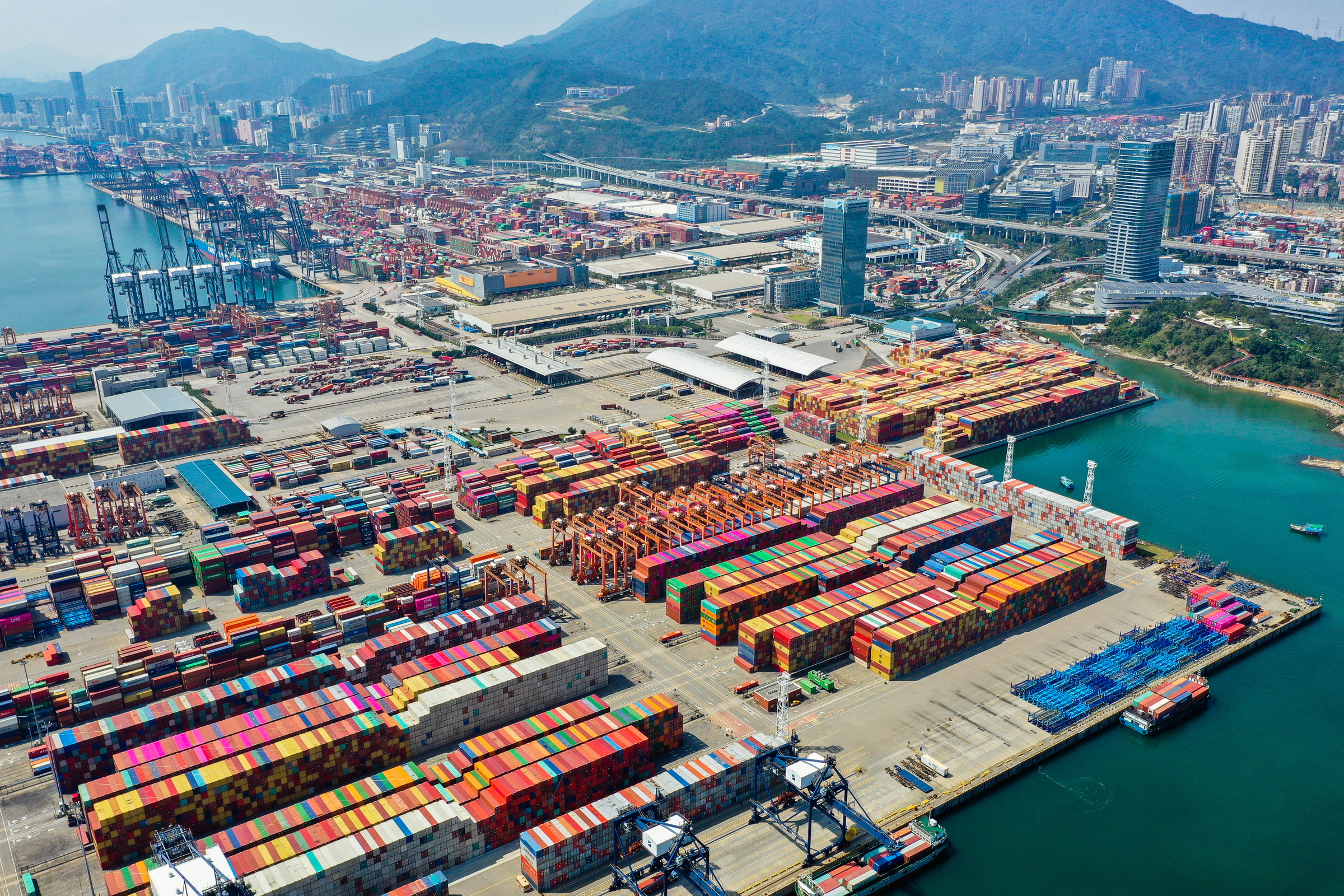 |
Container at a berth of Shenzhen Port, Guangdong province on 22/2/2019. Photo: Reuters
This wave of innovation is also revitalizing interest from foreign investors. According to the World Bank (WB), approximately one-third of new foreign direct investment (FDI) into China flows into high-tech sectors. For instance, Porsche, the luxury sports car manufacturer owned by Volkswagen, established its first research and development (R&D) center outside Germany in Shanghai. Pharmaceutical group AstraZeneca built a 2.5 billion USD R&D center in Beijing.
Xu Yang, President of Danfoss China, noted that advancements in areas such as data centers, shipbuilding, and building renovation have created new growth momentum for the company's business. He referred to China as the Danish engineering group's "second home market," affirming long-term commitment and unwavering confidence.
However, the world's second largest economy also faces weaknesses. Similar to the situation in the US, the AI boom in China has boosted stock prices but has not directly created a wealth effect for most citizens, according to Lynn Song.
"Many citizens do not feel this growth momentum," he remarked. Retail sales increased by only 1.3% in November compared to the same period in 2024, slower than the 2.9% recorded the previous month. Fixed asset investment fell by 2.6%.
Xiao Feng, owner of a billiards hall in Beijing, described the business situation as "very difficult." "It seems the rich have no time, and ordinary people have no money to spend," he observed. After deducting all costs, including rent, labor, utilities, Xiao barely breaks even.
Previously, Xiao contributed about 100,000 yuan (14,250 USD) annually to his family of three, including his wife and 10-year-old son. "But I have had no income for about 6 consecutive months," he recounted. As a result, Xiao's wife has become the main breadwinner thanks to her stable income as a nurse.
HSBC reported that household disposable income growth has been lower than pre-pandemic levels and "returns from real estate have almost vanished." Zhang Xiaoze, a commercial real estate broker in Beijing, once earned up to 3 million yuan (nearly 428,000 USD) annually during peak times in the mid-2010s.
Currently, Zhang's income is only about 100,000 yuan. "The fundamental problem is that people do not have money. There are times I have to use my savings to support my family," he said.
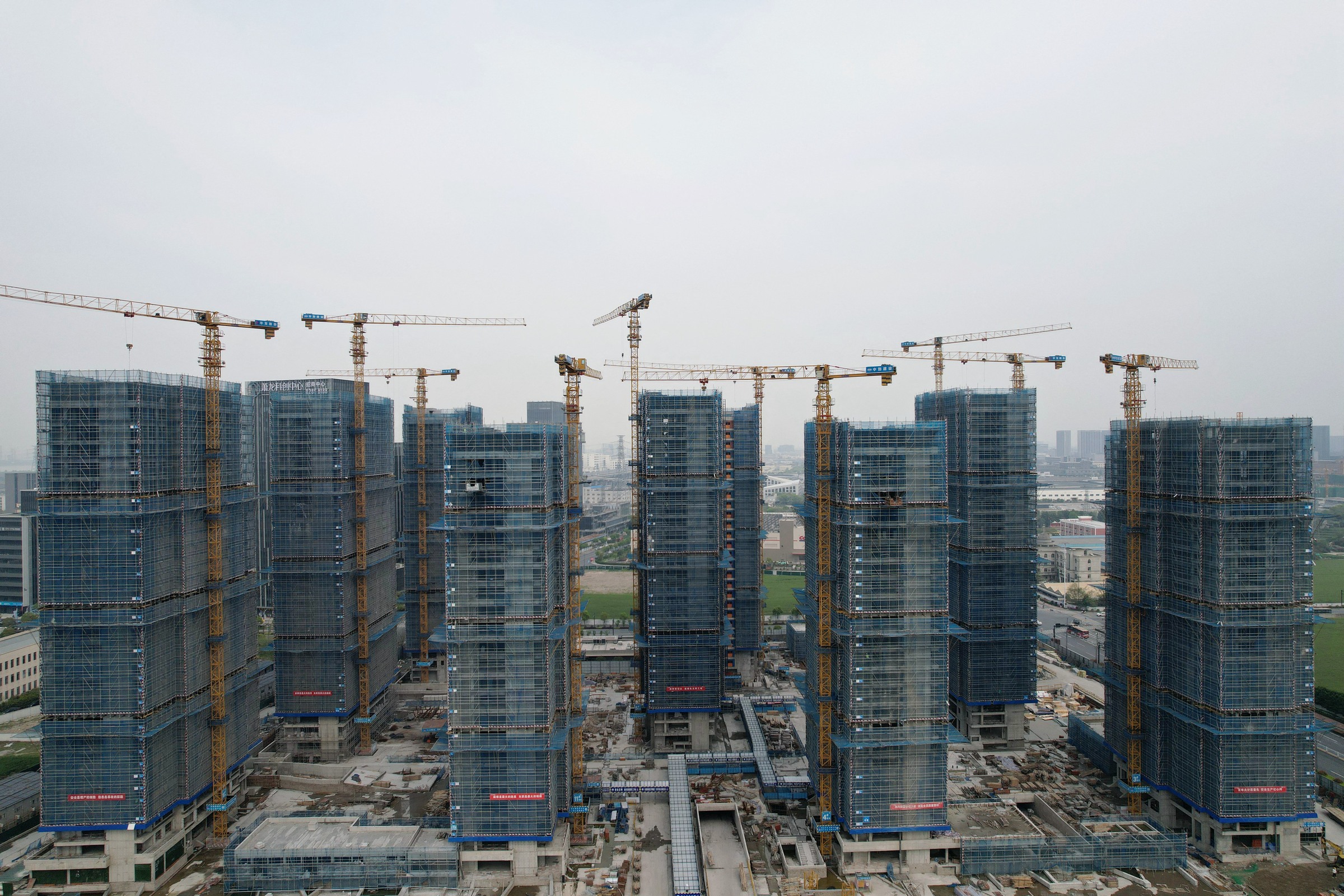 |
Apartment building construction in Hangzhou, Zhejiang province on 16/4/2024. Photo: AFP
Another weakness of China's economy is the housing market. Much of the country's consumer and investor confidence relies on real estate, where most household wealth is stored. Home prices have fallen by approximately 20% from their 2021 peak. According to China's National Bureau of Statistics, in the first 11 months, new home sales decreased by 11.2% in value year-on-year. Real estate investment also declined by nearly 16%.
The apartment Xiao bought in Tongzhou district, Beijing, in 2019 for over 3 million yuan (428,000 USD) has now "evaporated" nearly 20% of its value. "If my home had not lost so much value, I probably would have bought a new one," he shared.
International experts suggest that China may face further challenges in consumption and investment. The oversupply in many industries such as oto, steel, and consumer goods remains a difficult problem, eroding profit margins. These factors could slow growth momentum in 2026.
According to HSBC, the export prices of the world's second largest economy have dropped by over 20% since early 2022. Government efforts to curb price wars have had "minimal impact" to date. Additionally, a trade surplus exceeding 1 trillion USD this year risks triggering protectionist measures from international partners, putting reverse pressure on future exports.
Phi An (according to AP, Xinhua)