On 8/6, the United Nations released its third World Ocean Assessment report, warning that oceans are facing a severe crisis due to human activity. This comprehensive study, conducted by 600 scientists from 86 countries, assessed ocean health from 2021-2025.
Statistics from the report reveal that over 52 million tons of plastic are discharged into oceans annually. This marks a significant increase from the 4,8-12,7 million tons reported in the second assessment in 2021. Of this amount, single-use plastic accounts for 40% and fishing gear for 15% of total ocean waste. Plastic permeates all ocean layers, including deep-sea trenches, with the surface layer alone estimated to contain about 24,400 billion microplastic particles.
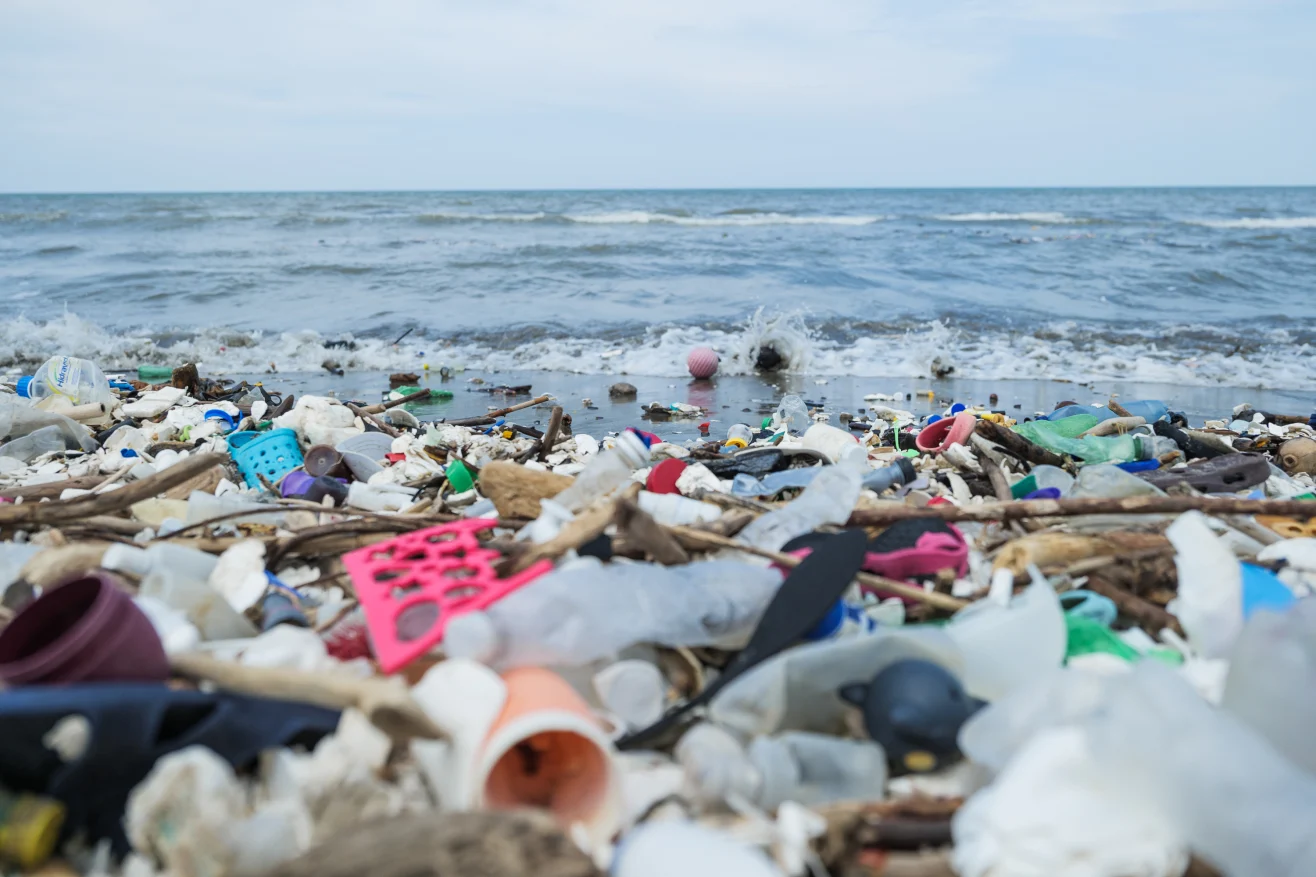 |
Plastic waste on a beach in Honduras. Photo: *The Ocean Clean Up* |
Microplastics, tiny plastic fragments less than 5 mm in size, leak from various products such as tires, clothing, cosmetics, paints, and other plastic items. This pollution impacts over 4,000 marine species. Blue whales, the world's largest mammals, can ingest up to 10 million microplastic particles daily, equivalent to about 43 kg.
To address plastic pollution, countries have sought a global plastic treaty for the past 6 years, aiming to curb production in the 1.1 trillion USD plastic industry. The next round of negotiations is scheduled for 3/2027. While awaiting a production-reducing treaty, experts state that material innovation and increasing alternatives to single-use plastics are urgent. However, these alternatives face obstacles related to price and sustainability.
According to the United Nations report, climate change and industrial fishing cause widespread biodiversity loss, placing ocean ecosystems in severe crisis. Rising sea temperatures have become more frequent since 2018. Scientists observe the highest temperature increases in the Atlantic, southern Indian, and Pacific Oceans. The report also warns that the rate of sea-level rise has doubled, from 2 mm to 4,3 mm between 2015 and 2023. Furthermore, the deep-sea world remains largely unexplored, with only 27% of the ocean floor mapped as of 2025.
United Nations Secretary-General Antonio Guterres stated that "the ocean cannot continue to be treated as an infinite resource." He called for urgent global cooperation to protect marine ecosystems. Countries have signed 57 treaties to protect oceans. Among these, the High Seas Treaty, effective since the beginning of this year, is considered a landmark agreement, establishing international rules to protect two-thirds of the global ocean area, outside national jurisdictions.
Oceans cover 70% of the planet's surface, playing a central role in regulating climate, maintaining biodiversity, and providing food, minerals, and energy for humanity. According to the report, oceans have absorbed 90% of excess heat and 30% of CO2 emissions released into the atmosphere from fossil fuel burning. Demographics are a key factor impacting the marine environment, with the global population increasing from 7,7 billion in 2017 to 8,2 billion by the end of 2024. Over one-third of the population lives within 100 km of the coast, with 11% residing on land less than 10 meters above sea level.
Bao Bao (Source: *The Guardian*, UN)