Brent crude oil fell by 3% to 85,6 USD per barrel. US West Texas Intermediate (WTI) crude dropped by 2,6% to 80,4 USD, marking its lowest point since mid-july.
Oil prices declined for the third consecutive session. This drop follows a pause in mutual attacks between the US and Iran over the past few days, fostering hopes for restored oil supply as Middle East tensions ease. Despite Tehran's denial of a 10-day ceasefire agreement with the US, hostilities have currently quieted.
President Donald Trump told Axios on july 24 that he had considered a "large-scale attack" on Iran. However, the New York Times reported that Trump later postponed this plan, citing concerns about weapon stockpiles. Speaking to reporters on Air Force One on july 27, Trump refuted this report, affirming the US military possessed "a lot" of ammunition.
The Commonwealth Bank of Australia (CBA) noted that the recent fall in oil prices indicates diminishing market concern over short-term US-Iran conflict escalation. Nevertheless, the bank cautioned that global energy supply risks remain elevated.
CBA's report detailed that "the temporary cessation of military actions between the US and Iran appears to have weakened expectations that the conflict will escalate, including large-scale attacks on civilian and energy infrastructure". Yet, the bank warned that disputes concerning the Hormuz Strait, a crucial global maritime route, "could cause fighting to reignite".
Meanwhile, Goldman Sachs analysts projected Brent oil prices could fall to approximately 80 USD per barrel by the end of this year, "if the Hormuz Strait is fully opened" in Q4. However, they also emphasized that Red Sea shipping disruptions and attacks on Saudi Arabia's oil infrastructure could emerge as new factors driving up crude oil and fuel product prices.
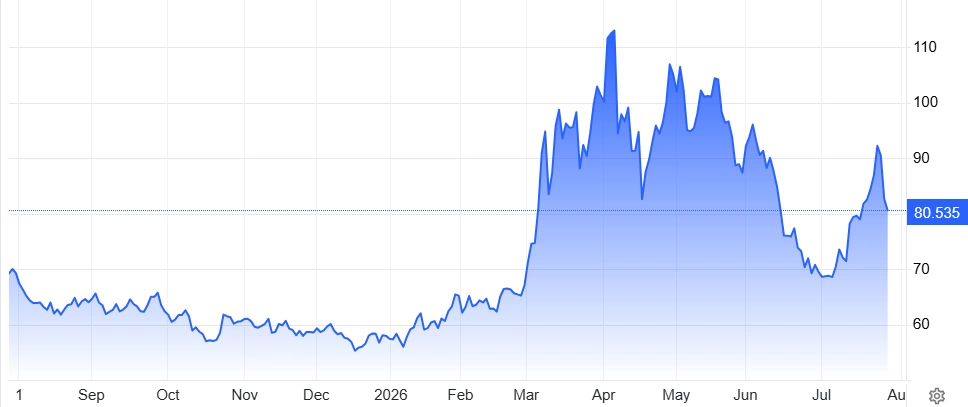 |
WTI oil price movements over the past one year. Chart: Trading Economics. |
By Ha Thu (according to CNBC, Reuters)