For many years, electricity costs for Belden Brick Company in Sugarcreek, Ohio, were relatively stable. However, last year, the 141-year-old manufacturer, which supplied bricks for the restoration project of the Alamo fortress—a UNESCO heritage site—saw its electricity bill increase by 90%. This surge was primarily due to capacity charges rising nearly eightfold.
Capacity charge is a component of the multi-part electricity pricing structure in the US, alongside the actual electricity consumed and transmission fees. This charge is designed to compensate power companies for ensuring grid stability during peak hours and to encourage the development of new supply sources. When electricity supply is scarce, these fees increase significantly.
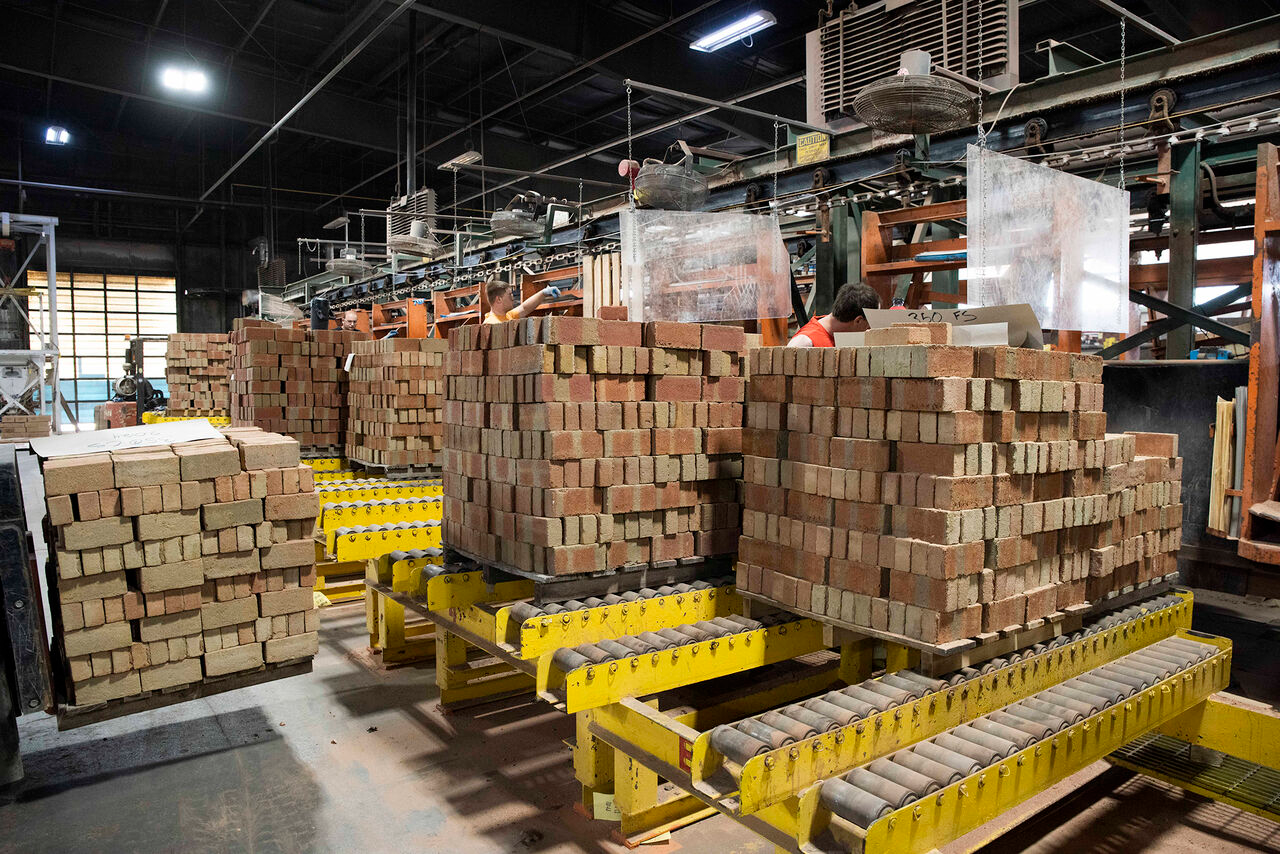 |
A Belden Brick manufacturing facility in Ohio, US. Photo: *Belden*.
The recent boom in data centers and artificial intelligence has pushed electricity demand far beyond existing supply capabilities. According to Reuters, each cluster of servers consumes an amount of electricity comparable to a small town.
This situation has led PJM, the largest grid operator in the US, to repeatedly announce record capacity charges in recent auctions to attract new power generation projects. These fees increased from $28.9 per megawatt (MW) per day in 2024 to nearly $330 this year, marking an increase of more than tenfold.
Despite these record charges, PJM had to implement emergency measures last week, urging residents and businesses to conserve electricity to prevent the risk of rolling blackouts as demand reached new records.
For manufacturing businesses, high capacity charges contribute to a sharp increase in their operating costs. At Plaskolite's plastic manufacturing plants in Pennsylvania and Ohio, total capacity charges rose from $200,000 the previous year to $1.2 million.
Experts and businesses note that even a 1-2% increase in electricity costs can exert pressure on the manufacturing sector, which is characterized by high energy consumption and low profit margins. Paul Cicio, representing the Industrial Energy Consumers of America, warned that this situation could force many businesses to close.
In response to these conditions, many businesses are adapting by adjusting selling prices or accepting slower growth. Plaskolite, for instance, plans to switch to using direct gas-fired electricity instead of relying on PJM's grid.
Tosoh SMD, an Ohio-based manufacturer of materials for the electronics industry, is also considering increasing night shift production to take advantage of lower off-peak electricity prices. "We try to be as creative as possible to stay competitive," said John Holeman, Director of Facilities and Maintenance at Tosoh.
For Belden Brick Company, Brad Belden, a fifth-generation successor, stated that they have increased brick prices by 4%, but profits still decreased. He warned that if electricity bills continue to rise, manufacturers will soon have no room left to cut costs or adjust prices. "There will be some companies on the brink of bankruptcy," he predicted.
The White House announced that President Donald Trump is working to mitigate the impact on manufacturers. Earlier this year, President Trump met with several tech giants, asking them to commit to consumer protection and directing them to fund the construction of additional power plants and self-power their artificial intelligence data centers.
While awaiting policy changes, capacity charges continue to reach new peaks. In PJM's latest auction, these fees rose to $333 per MW per day, which will be reflected in electricity bills starting June next year.
By Bao Bao (via Reuters)