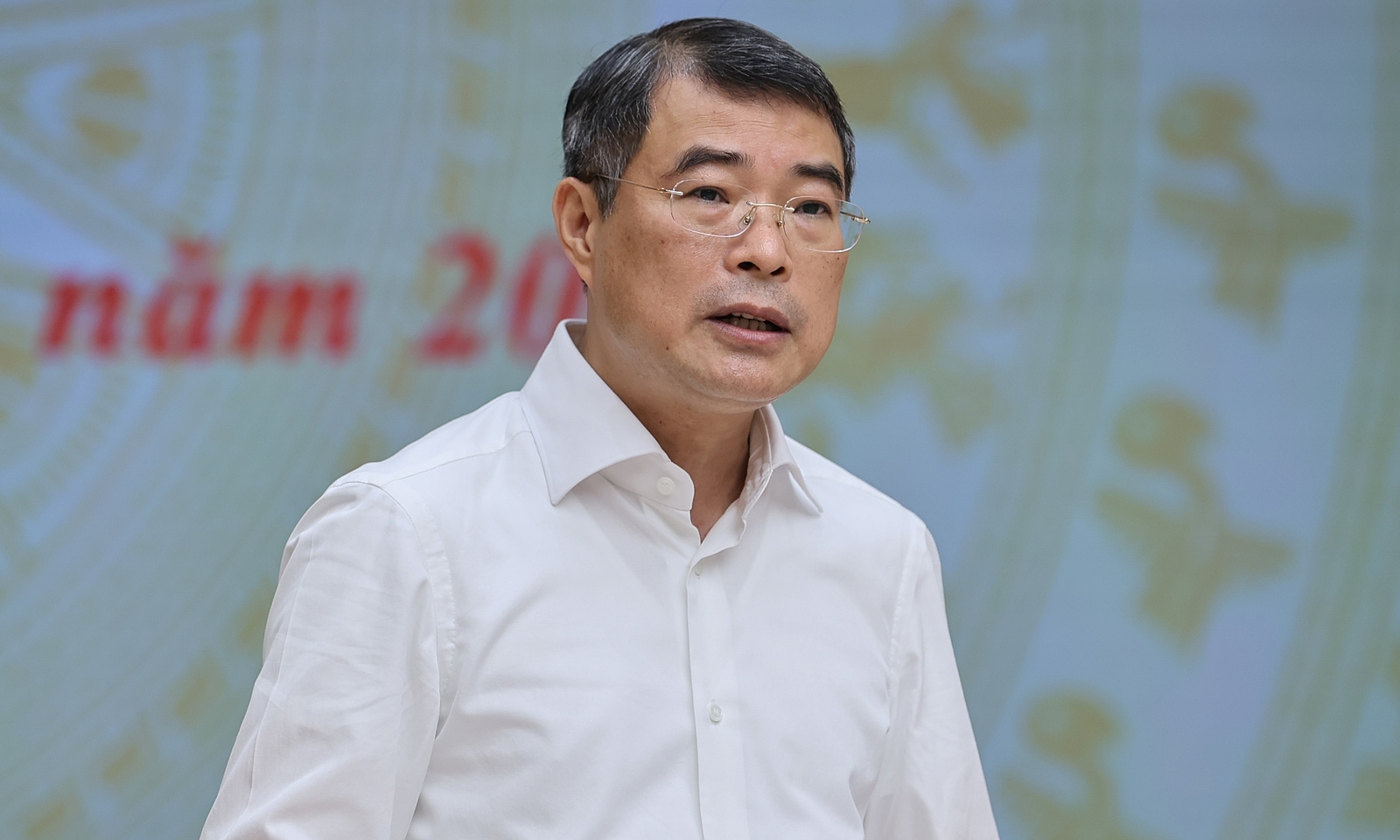
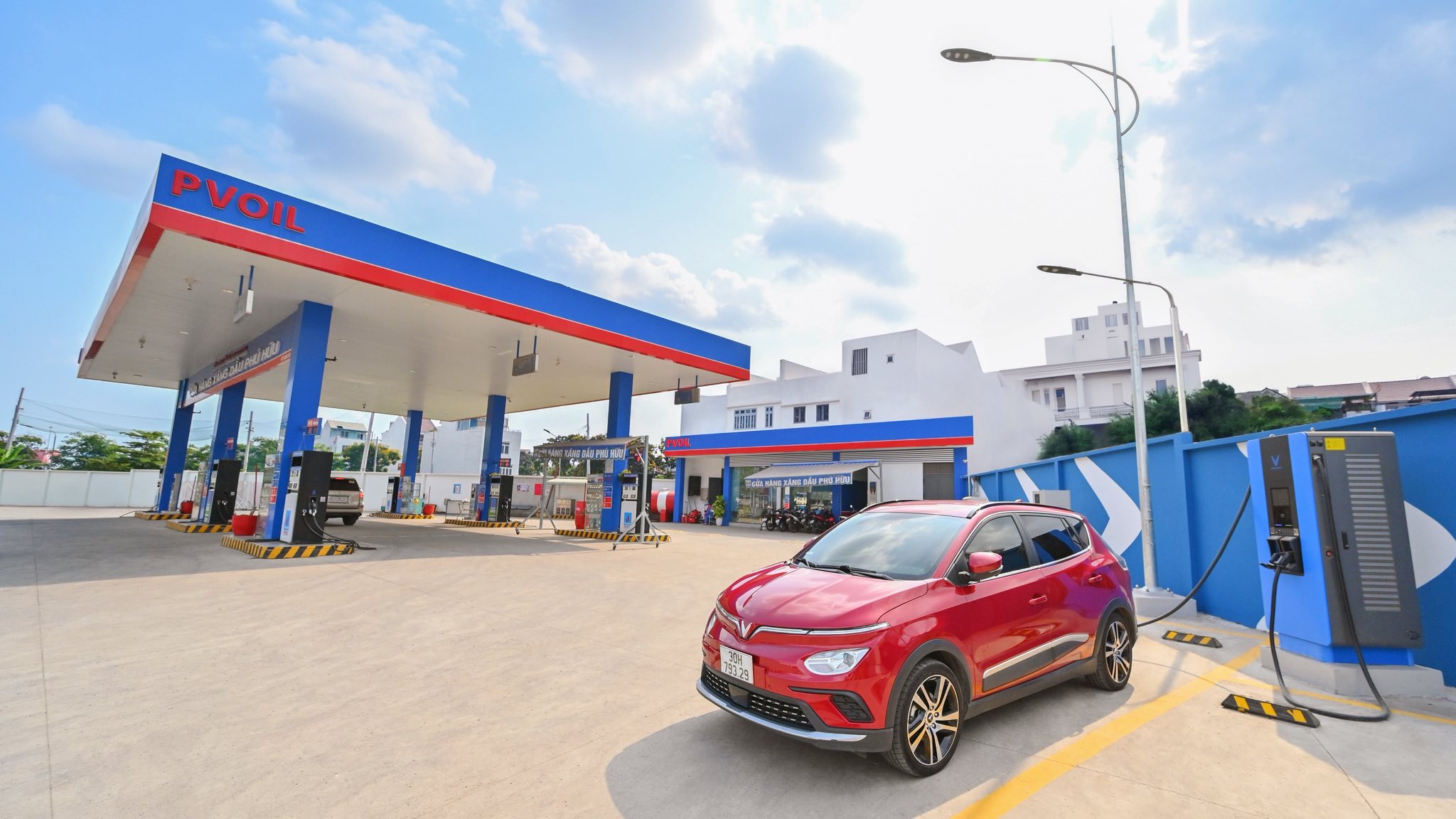
During a meeting of the Propaganda Department on 10/3, Deputy Minister of Industry and Trade Nguyen Sinh Nhat Tan stated that mandatory reserves at key enterprises ensure 20 days of supply as regulated.
He added that Vietnam has not had to use its national reserves, which are only utilized in cases of import shortages or severe declines in domestic production.
The Deputy Minister of Industry and Trade affirmed that the government has prepared response scenarios, and domestic fuel sources are sufficient to meet consumption demand until the end of March.
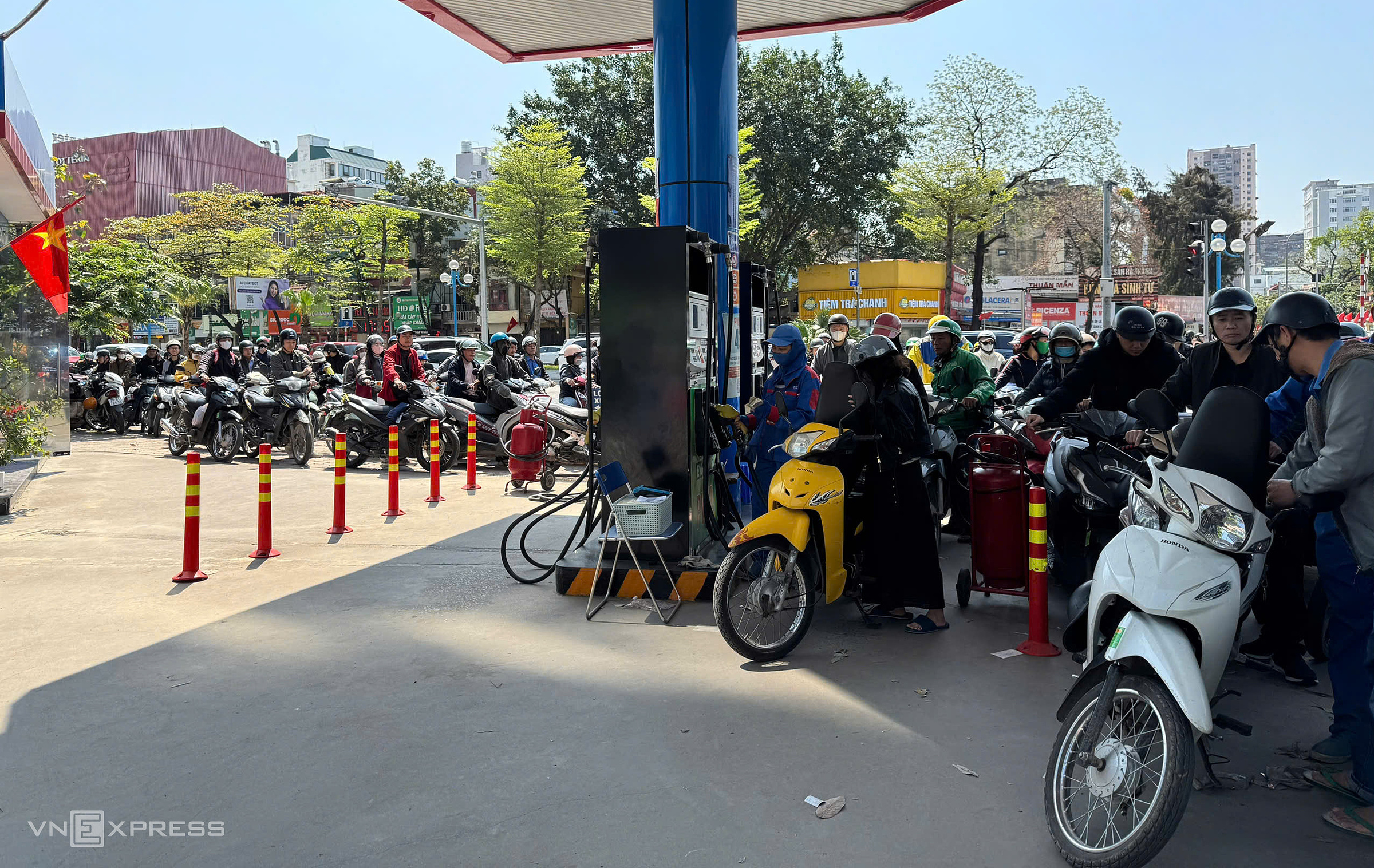 |
People queue for fuel at a petrol station on Hoang Quoc Viet street, Hanoi, on the morning of 10/3. Photo: Giang Huy |
According to regulations, Vietnam's fuel reserve structure comprises three sources: commercial reserves at key fuel trading enterprises (20 days) and distribution traders (5 days); production reserves at two oil refineries; and national reserves. The national reserve specifically accounts for about 7 days of use.
Under Decision 861/2023 on the planning of fuel and gas storage and supply infrastructure, Vietnam will build dedicated fuel storage facilities to increase reserve capacity, aiming to meet about 15-20 days of net imports by 2030. In the period after 2030, the reserve level for refined fuel products and crude oil will increase to about 25-30 days of net imports.
Combined with commercial and production reserves, Vietnam aims to achieve total national crude oil and fuel product reserves equivalent to 75-80 days of net imports, striving to reach 90 days of net imports.
Regarding crude oil imports for domestic fuel production, Nguyen Sinh Nhat Tan stated that Vietnam sources from Southeast Asia, the US, and the Middle East. Some shipments from the Middle East are delayed due to regional circumstances, but global market supply is not short; the main issue is price.
Beyond traditional sources, the Ministry of Industry and Trade is also considering importing crude oil from Venezuela. According to Nguyen Sinh Nhat Tan, Venezuelan crude oil is heavy oil, which can be blended for use at the Dung Quat oil refinery. However, this oil source would be difficult to use at the Nghi Son oil refinery, as its technology prioritizes light oil production.
On 9/3, Prime Minister Pham Minh Chinh announced that the Government had mobilized about 4 million barrels of oil from partners to ensure immediate supply. With this crude oil volume and future additions, Deputy Minister Nguyen Sinh Nhat Tan estimated that fuel supply would be equivalent to 30-45 days of consumption, depending on the production plans of domestic oil refineries and market demand.
In addition to supply, the Government is using tax tools to support the market. Preferential import tax (MFN) on gasoline and some blending components has been reduced to 0%. This solution aims to stabilize supply and incentivize key enterprises to seek and import fuel from markets without free trade agreements (FTAs) with Vietnam.
Deputy Minister Nguyen Sinh Nhat Tan stated that the Ministry is researching adjustments to the pricing mechanism and the use of the Fuel Price Stabilization Fund to support the market during volatile periods. The fund had a surplus of nearly 5.620 billion VND as of the end of QIII/2025.
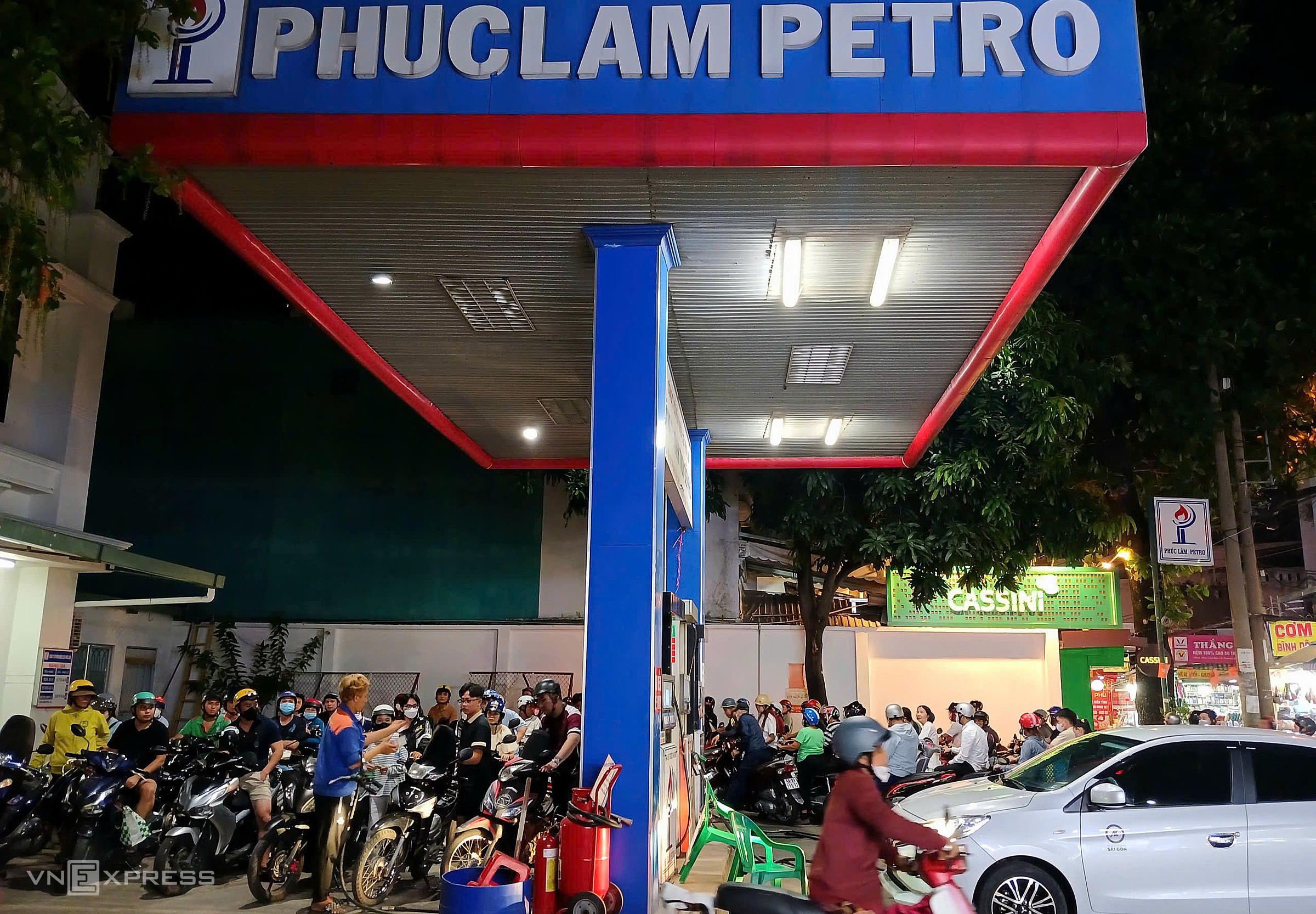 |
People queue in multiple long lines at a petrol station on Pham Van Chieu street, An Hoi Tay ward, TP HCM at 8 p.m. on 9/3. Photo: Thi Ha |
The domestic fuel market has recently experienced strong fluctuations as the conflict in the Middle East escalated from late February, leading to concerns about supply shortages. In many localities, people rushed to hoard, causing consumption demand to increase by 50-100% in a short period.
Observations on the evening of 9/3 and the morning of 10/3 showed long queues of vehicles at many petrol stations in TP HCM and Hanoi, with some customers waiting 30-45 minutes to refuel.
At 8 p.m. on 9/3, at a petrol station on Pham Van Chieu street, An Hoi Tay ward, TP HCM, six lines of motorbikes stretched almost across the entire road. Inside, only one employee stood at the pump, continuously serving customers. This person had almost no time to rest, their shirt drenched in sweat after more than one hour of continuous work.
Each refueling only took a few minutes, but due to the long queues, many people waited 30-45 minutes. An employee stated that the store did not limit sales, but the number of customers increased 2-4 times compared to normal days, keeping the station constantly overloaded.
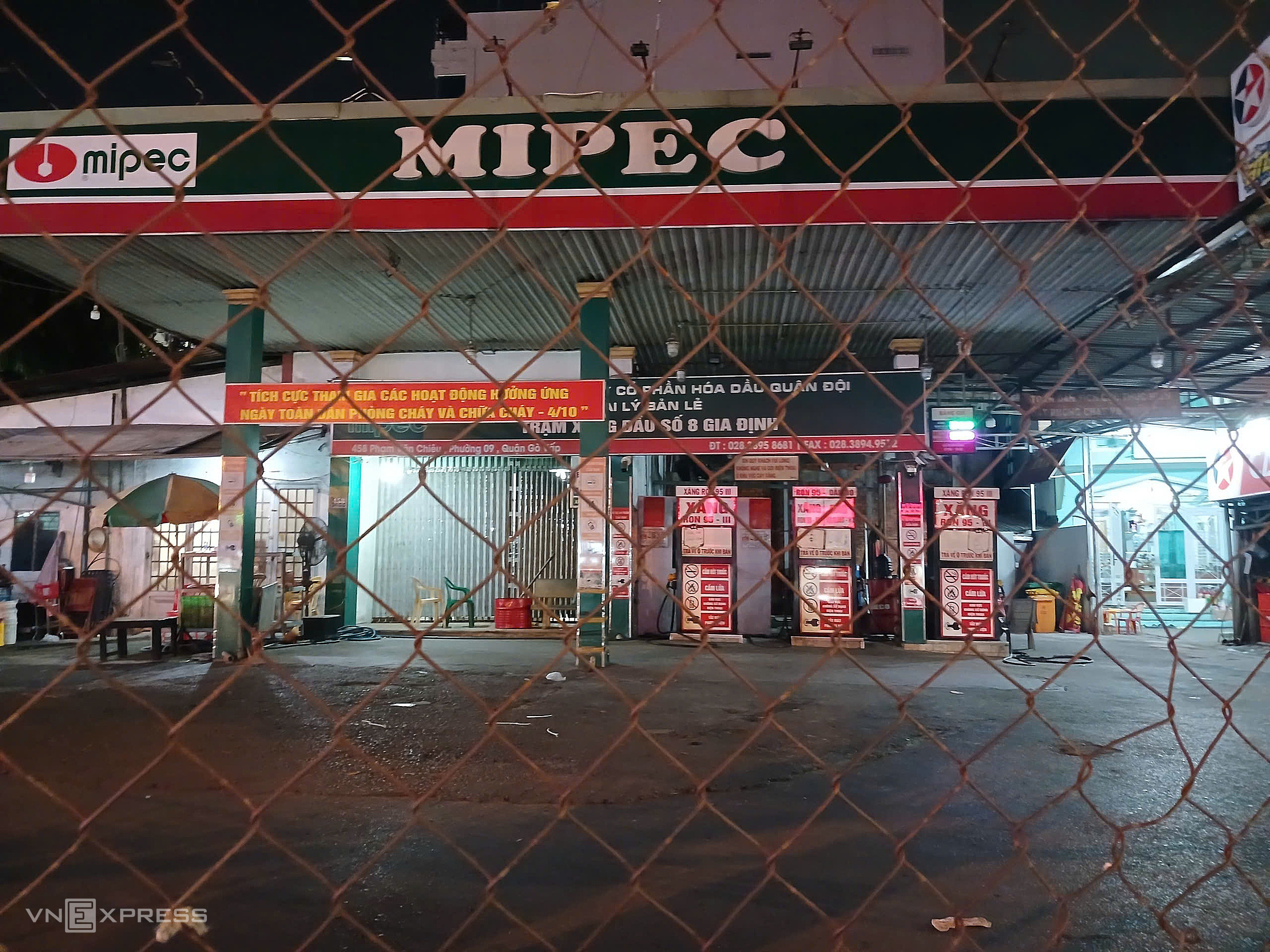 |
A petrol station on Pham Van Chieu street closed earlier than usual, posting a "no fuel" notice, on the evening of 9/3. Photo: Thi Ha |
One kilometer from the aforementioned store, Mipec No. 8 Gia Dinh petrol station (Pham Van Chieu street, Thong Tay Hoi ward) closed earlier than usual and was barricaded, with a sign inside announcing "no fuel". Previously, the store manager said that in recent times, goods had arrived slower than the previous month, leading to limited sales.
The Department of Industry and Trade of TP HCM stated that fuel supply in the city remains secure in the short term, at least for March. However, due to a sudden surge in demand, localized shortages at some petrol stations might occur. The Department is directing market management forces to closely monitor fuel business activities in the area. If stores are found to temporarily suspend sales or show signs of supply disruption, authorities will investigate and take action.
In Hanoi, customer numbers at petrol stations also increased significantly from the evening of 9/3. On the morning of 10/3, many petrol stations in Cau Giay, Ha Dong, and other areas were still crowded with customers.
The Hanoi Department of Industry and Trade reported that fuel consumption in the area increased by 30-50% compared to the previous day, causing many stores to become overloaded. As of 8/3, market management forces recorded about 20 stores that had temporarily suspended sales or ran out of stock due to delayed replenishment.
In Lam Dong, Nguyen Xuan Thang, Director of Hai Au Phat Company, which owns 4 retail petrol stations, said that the enterprise continues to tighten sales limits because supplies from distribution traders are trickling in. Specifically, the amount of fuel sold for each oto was reduced from 500,000 VND to 300,000 VND per fill, while motorbikes were limited to 30,000 VND, lower than the 50,000 VND limit applied two days prior.
According to Nguyen Xuan Thang, the enterprise previously imported about 5 tanker trucks of fuel per week, each carrying 19,000 liters. However, last week, the volume of goods decreased to about 3,5 trucks, and on 9/3, they only received one truck. He stated that if sales were not restricted, the fuel at the store could run out within a few hours. Limiting sales helps maintain stock for about 4-5 additional days.
Amidst supply pressures due to Middle East instability, the Ministry of Industry and Trade requires key enterprises, distribution traders, and retail systems to maintain continuous supply and proactively seek additional import sources. Departments of Industry and Trade and market management forces are directed to increase inspections and address acts of hoarding, selling at incorrect prices, or unjustified suspensions of sales.
The Ministry also advised citizens not to hoard fuel to avoid local supply-demand imbalances and pressure on the distribution system. They also encouraged businesses to work remotely and conserve energy.
Phuong Dung - Thi Ha