INSEAD Business School and the Portulans Institute, a consulting institute in Washington DC, America, recently released the Global Talent Competitiveness Index 2025 (GTCI). Vietnam ranks 76th globally, dropping one spot compared to the 2023 report. This marks the 11th edition of the list, which assesses 77 component indicators across 135 countries, accounting for over 97% of global GDP. The European Commission's Joint Research Centre audits the GTCI.
The overall ranking for each country is derived from six key pillars: Enable, Attract, Grow, Retain, Vocational and Technical Skills (VT Skills), and Global Academic and Professional Skills (GA Skills). Vietnam achieved its best ranking, 67th, in the "Grow" pillar. This pillar measures a nation's capacity to nurture, develop, and upgrade human skills through education, training, and practical career opportunities.
Conversely, Vietnam's two weakest pillars, both ranking 79th, are "Retain" and "GA Skills". The Retain pillar assesses fundamental factors that help an economy retain talent, such as social security, macroeconomic resilience, and personal security levels. The GA Skills pillar evaluates advanced qualifications, specialized knowledge, and innovation capacity. This pillar reflects a country's ability to create, attract, and maintain a high-skilled workforce in high value-added sectors like technology, research, finance, or professional services.
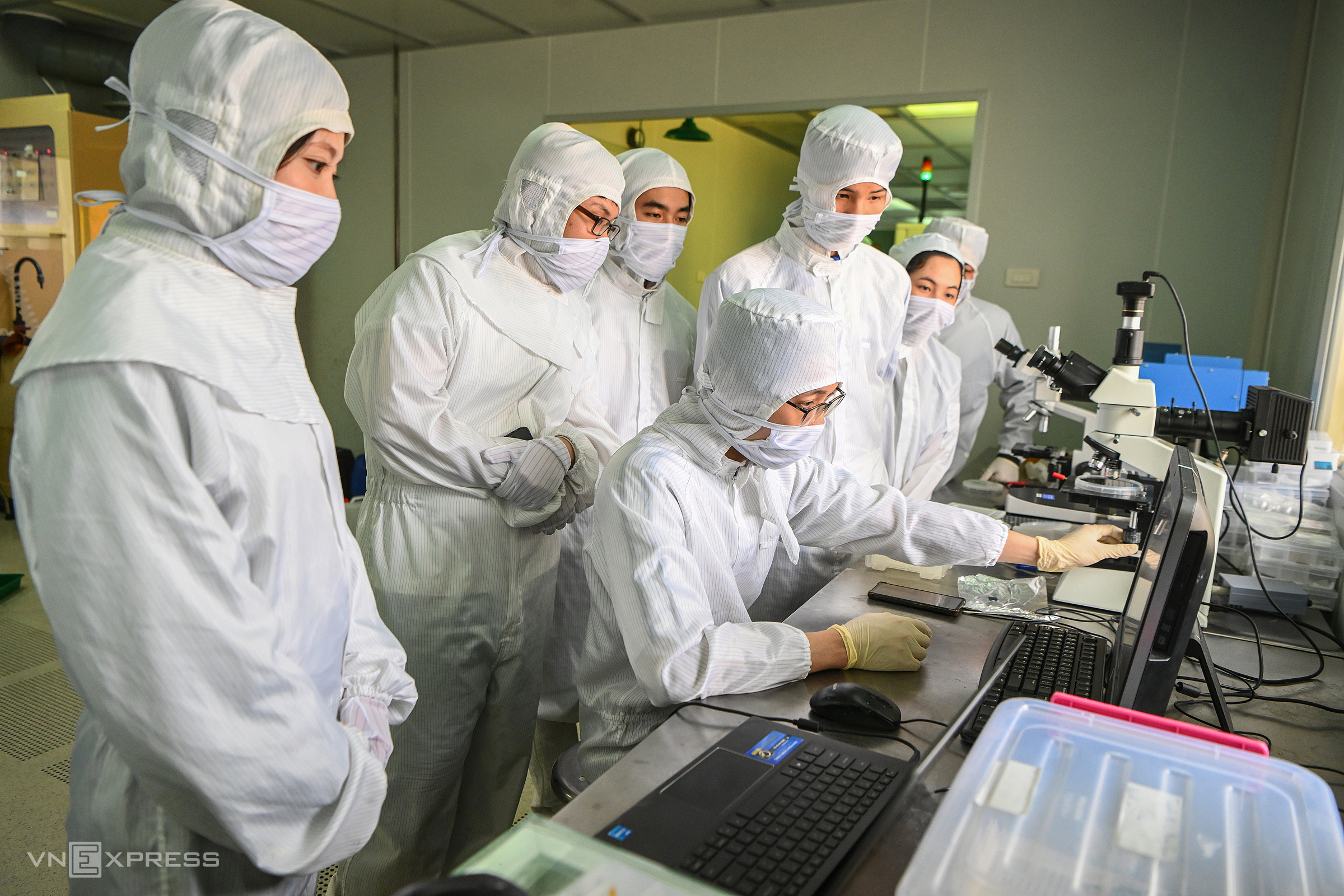 |
A cleanroom at the Nano and Energy Center, University of Science, Vietnam National University, Hanoi, a hub for semiconductor training and research. Photo: Giang Huy |
Singapore leads Southeast Asia and has, for the first time, risen to first place globally, unseating Switzerland, which held the top spot for ten consecutive years. The island nation's ascent is attributed to its robust education system, effective governance, and proactive approach to maintaining an adaptable workforce in the era of artificial intelligence.
The second and third regional ranks belong to Malaysia (46th) and the Philippines (75th), respectively. Other economies trailing Vietnam include Thailand (77th), Indonesia (80th), Laos (106th), and Cambodia (115th).
Here is the ranking of Southeast Asian countries in the Global Talent Competitiveness Index:
| Country | GTCI 2023 | GTCI 2025 |
| Singapore | 2 | 1 |
| Malaysia | 42 | 46 |
| Philippines | 84 | 75 |
| Vietnam | 75 | 76 |
| Thailand | 79 | 77 |
| Indonesia | 80 | 80 |
| Laos | 101 | 106 |
| Cambodia | 106 | 115 |
Globally, following Singapore and Switzerland are: Denmark, Finland, Sweden, the Netherlands, Norway, Luxembourg, America, and Australia.
Rafael Escalona Reynoso, Executive Director of the Portulans Institute, noted that the GTCI 2025 is released amidst "rapid technological change, geopolitical instability, and profound societal shifts." He added that these factors make the ability to develop, attract, and retain talent increasingly crucial.
Lily Fang, Head of Research and Innovation at INSEAD, stated that the world "is living through a period of extreme disruption and anxiety." She assessed, "Geopolitical instability creates significant challenges for the resilience of global markets and trade. Meanwhile, artificial intelligence offers immense opportunities to enhance human potential but also brings unforeseen risks."
Vien Thong