Vietnam's agricultural sector faces significant financial setbacks from the ongoing Middle East conflict, with potential export losses ranging from 1 billion USD to 8 billion USD. This assessment, presented by Tran Gia Long, Deputy Director of the Planning and Finance Department at the Ministry of Agriculture and Rural Development, highlights the increased risk of supply chain disruptions and rising international energy and transportation costs impacting the country's agricultural export activities.
The Ministry of Agriculture and Rural Development is developing scenarios to understand the full scope of the conflict's impact. In a short-term scenario where the conflict lasts approximately one month, the total export turnover for agriculture, forestry, and fisheries products is projected to decrease by over 1 billion USD. This includes an estimated 182 million USD reduction in exports to the Middle East, a 770 million USD loss in European markets, and a 91 million USD decline in African markets.
Should the conflict extend for three months, the damage to Vietnam's agricultural exports is estimated at 3-3,5 billion USD. Under this scenario, exports to the Middle East would fall by 500-600 million USD, North Africa by 200-250 million USD, and the European Union (EU) by 1,5-1,6 billion USD.
In a prolonged scenario where the Middle East conflict continues for one year, Long stated that exports to the region would be completely disrupted. Concurrently, exports to Europe and North Africa could decrease by at least 50-60%. This could lead to a total reduction in Vietnam's agricultural export turnover of 7-8 billion USD, equivalent to a 0,1-0,2 percentage point decrease in the sector's growth rate.
 |
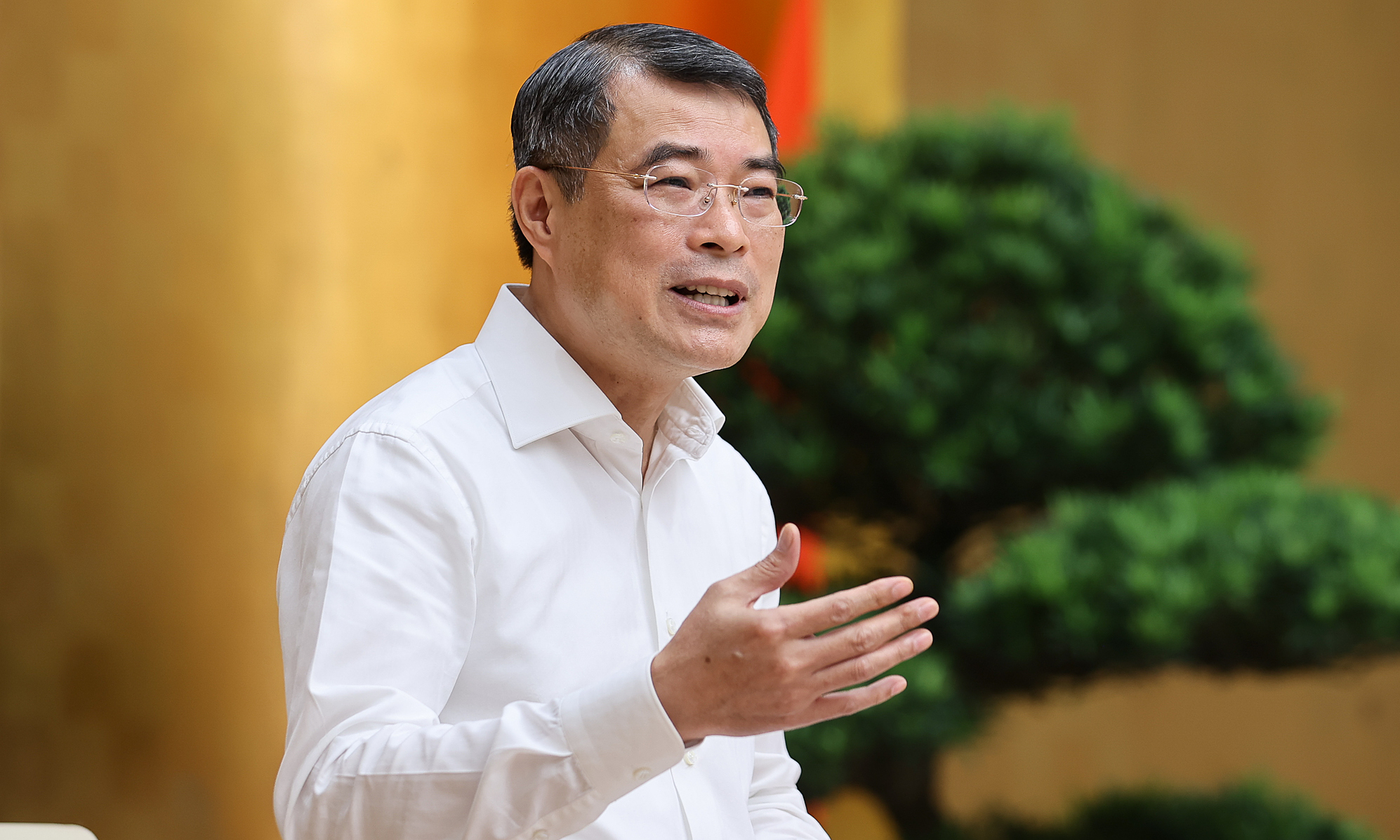
Tran Gia Long, Deputy Director of the Planning and Finance Department (Ministry of Agriculture and Rural Development), speaks about the war's impact on the agricultural sector. Photo: Gia Chinh |
Last year, agricultural exports to the Middle East region reached 1,74 billion USD. Key products contributing to this figure included: cashew nuts at nearly 600 million USD, seafood at 325 million USD, and coffee at 300 million USD.
Le Ba Anh, Deputy Director of the Department of Quality, Processing, and Market Development, highlighted the direct impacts on the agricultural sector, such as transportation disruptions and extended shipping times. Several shipping lines have announced a halt to shipments to the Middle East, and insurance costs have increased. These challenges severely impact businesses exporting products requiring refrigerated containers, such as seafood and fruits and vegetables. Additionally, indirect costs like rising oil prices will affect overall production expenses.
In response to the conflict and disruptions in the Strait of Hormuz, several shipping lines have imposed emergency surcharges for cargo in transit, not yet unloaded at Middle Eastern ports, effective from 2/3, to offset operating costs. For instance, the world's largest shipping line, Maersk, applied surcharges ranging from 1.800-3.800 USD per container, depending on the type, for shipments to countries such as UAE, Saudi Arabia (Dammam and Jubail), Kuwait, Iraq, Oman, and vice versa. Hapag-Lloyd added a "war risk surcharge" (WRS) of 1.500-3.500 USD per container. CMA CGM also announced an "emergency conflict surcharge" of 2.000-4.000 USD for 20-40 foot containers and special cargo.
Agricultural exporters, particularly those dealing with fresh fruits, are in a difficult position as sea freight rates to the Gulf region and Europe have tripled. Nguyen Dinh Tung, Chairman and General Director of Vina T&T, a company specializing in exporting fresh fruits and agricultural products, noted that the value of these goods per container is not high, and profit margins are quite thin compared to electronics and high-tech goods. Therefore, surcharges up to 4.000 USD almost "devour" all profits, even eating into the company's capital.
To respond to the conflict's developments and offset the loss in turnover, the Ministry of Agriculture and Rural Development announced it would boost exports to traditional markets such as China, Japan, ASEAN, South Korea, the EU, and the US. The ministry will also coordinate with other ministries and Vietnamese trade representatives abroad to monitor market developments and provide recommendations for businesses and associations to respond, helping maintain momentum to achieve this year's export growth targets.
In 2026, the agricultural sector aims for agriculture, forestry, and fisheries exports of approximately 73–74 billion USD, with the agricultural products group alone striving to reach around 40 billion USD.
Gia Chinh