According to the Vietnam Association of Seafood Exporters and Producers (VASEP), Vietnam's crab exports to various markets reached nearly 23 million USD in the first four months of the year, a 33% increase compared to the same period in 2025.
Specifically for the US market, Vietnamese crab exports achieved 19 million USD during the four-month period, marking a 45% rise over the same period. This currently positions the US as the dominant market for this product, accounting for 82% of the total export value.
The United States is the world's largest crab importer, particularly for frozen crab products, with an import value of approximately 1.1 billion USD annually. This figure significantly surpasses subsequent markets such as Japan, China, and South Korea.
For blue crab, the US significantly influences global demand and primarily imports from Asia. Regarding Vietnam, American consumers favor crab meat and processed crab, especially products serving the retail channel, restaurants, and convenience foods.
 |
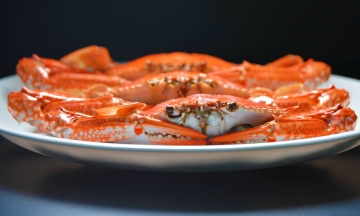
Blue crab harvested from Vietnamese waters. Photo: VASEP
VASEP stated that Vietnam's crab fishery has received equivalency recognition from the US National Oceanic and Atmospheric Administration (NOAA) under the Marine Mammal Protection Act (MMPA), creating further room for stable consumption.
VASEP noted that the reliance of crab products on the US market is not new. However, future growth will depend more on the ability to control raw material sources, ensure traceability, and maintain sustainable harvesting standards.
Consistent monthly growth is a positive sign, particularly as global seafood trade continues to face pressure from rising costs, cautious purchasing power, and increasingly stringent technical requirements.
Crab exports stand out as a bright spot amid pressures on overall seafood shipments to the US. According to the General Department of Vietnam Customs, the value of all seafood products to this market reached 702 million USD in the first five months of the year, an over 8% decrease compared to the same period in 2025.
By Dy Tung