The Ho Chi Minh City Stock Exchange recently announced the delisting of over 800 million shares of Bamboo Capital Group (stock code: BCG) from 15/7. This decision stems from the company's failure to submit audited financial reports for three consecutive years and follows nearly a year of trading suspension for the shares.
The last matched trading price for these shares was 2,500 dong, a significant drop from their record high of over 22,000 dong four years ago. The company's market capitalization is now approximately 2,200 ty dong.
In a letter to shareholders on the evening of 10/7, Ng Wee Siong Leonard, the General Director of Bamboo Capital, stated that the company's leadership acknowledged the seriousness of the share delisting and extended apologies to shareholders.
"We understand that what concerns shareholders most right now is not only the cause of this situation but also the status of their shares following this decision", Leonard wrote.
The head of Bamboo Capital's executive board clarified that the delisting does not mean the cessation of operations. He affirmed that the company continues to operate in accordance with legal regulations. Member units, investments, projects, and ongoing contracts will proceed as planned. Shareholders' legal ownership rights in the company are also protected by law.
 |
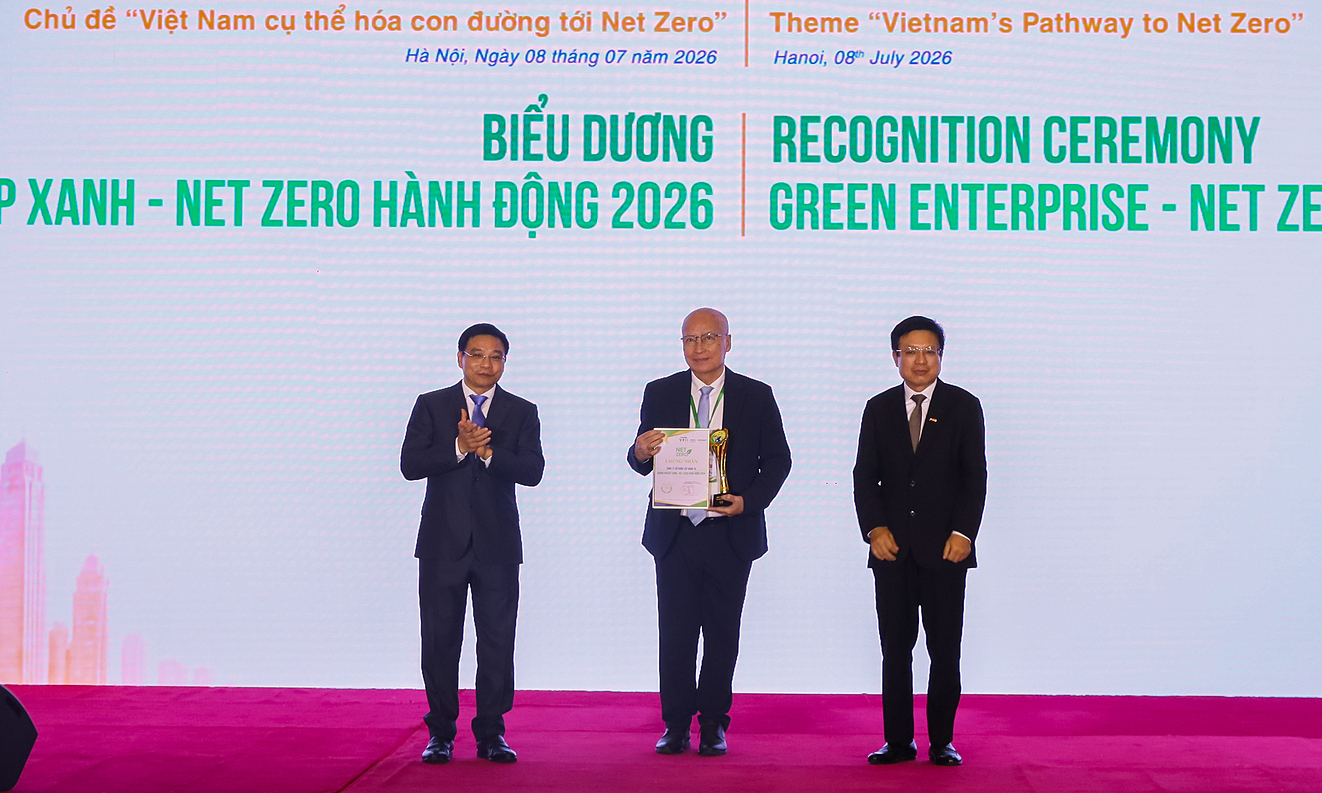
Ng Wee Siong Leonard was appointed CEO of Bamboo Capital in 8/2025. *Photo: BCG Energy Website* |
Explaining the reasons for the delisting, Leonard stated that the company faced multiple challenges simultaneously. Fluctuations in senior personnel and the finance-accounting department resulted in a large volume of handover documents requiring meticulous reconciliation, taking longer than anticipated. Additionally, many documents were required for investigations into a case involving the company, thus restricting full access for both the leadership and the auditing firm for a period.
Furthermore, the company is undergoing a significant restructuring phase, particularly concerning bond obligations and debt reorganization. This process necessitates a more in-depth and rigorous review by independent auditors to ensure the accuracy and reasonableness of financial data.
By 12/2025, Bamboo Capital only secured an auditing firm for its 2024 financial reports. However, the audit remains incomplete to date.
According to Leonard, the company's highest priority during this period is to resolve outstanding information disclosure issues, stabilize business operations, strengthen financial capacity, and protect shareholder interests. "We hope shareholders will see our efforts not just through promises, but through concrete results that will be delivered in the near future", he wrote.
Bamboo Capital was established in 2011, operating in various sectors including: renewable energy, real estate, construction - infrastructure investment, manufacturing - trading, and financial services. In early 3/2025, competent authorities informed the company of a decision to prosecute a case and indict Nguyen Ho Nam, a founding shareholder and long-time Chairman of the Board of Directors. Following this, Bamboo Capital's shares plummeted and were subsequently suspended from trading.
Bamboo Capital lacks audited financial data for the two most recent years. In documents for an extraordinary shareholder meeting late last year, the leadership estimated a consolidated loss for 2024 equivalent to 20% of total assets, or 8,400 ty dong. The company projects a post-tax loss of 1,843 ty dong in 2025, followed by losses of 300 ty dong and 76 ty dong in subsequent years. Profitability is anticipated to return by 2028.
The leadership outlined a restructuring plan extending to 2030, divided into two phases. Phase one (2025-2027) primarily focuses on maintaining stable business operations and financial restructuring to alleviate debt pressure and reduce costs. The company also plans to streamline its organizational structure, address bond-related issues, complete outstanding financial reports, and hold annual general meetings.
In the subsequent phase, the company plans to concentrate on high-potential sectors such as: renewable energy, financial insurance, and manufacturing. According to the leadership, rebuilding trust among shareholders, bondholders, partners, and customers is a prerequisite for the effectiveness of all other recovery plans. The company anticipates that changing market perception could take many quarters, or even several years. During this period, capital raising costs will increase, partners will be more cautious, and many collaboration opportunities may be missed.
Phuong Dong