Leveraging the temporary lifting of US sanctions following last month's ceasefire agreement, Iran loaded approximately 30 million barrels of oil onto ships, equivalent to 1,35 million barrels per day between 15/6 and 6/7, according to data firm Vortexa Analytics. Kpler, meanwhile, estimates that 34,5 million barrels of Iranian oil passed through Hormuz on 21 vessels between 14/6 and 10/7.
However, Iran's oil sales are slowing as China, the primary buyer of this product, shifts to purchasing cheaper crude oil from Iraq, the UAE, and Qatar. According to Kpler data, China's imports of Iranian oil since the beginning of the month have only reached 556.000 barrels per day, the lowest since 1/2023.
This situation is leading to an increasing volume of Iranian oil adrift at sea. The US's re-imposition of sanctions this week could further compel Iran to urgently seek buyers as vessels prepare to dock in Asian ports.
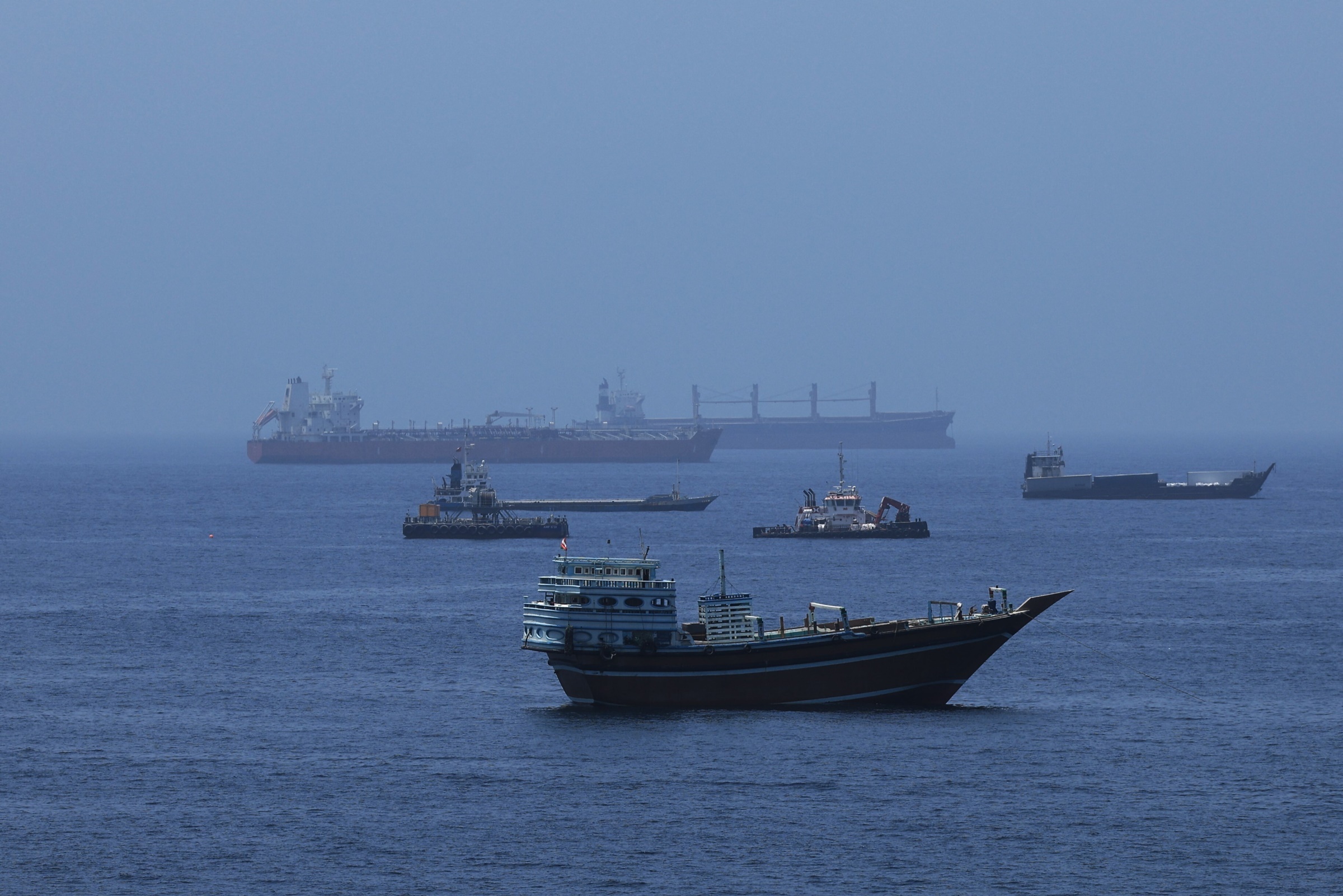 |
Cargo and oil tankers in the Gulf of Oman, preparing to transit the Strait of Hormuz on 21/6. *Photo: AFP* |
Oil traders report that in recent weeks, private refineries in Shandong, China, have purchased 16-20,5 million barrels of crude oil from Qatar, Iraq, and the UAE. This marks the country's largest purchase of unsanctioned Middle Eastern oil since the conflict erupted.
These refineries typically consume the majority of Iranian crude oil imported by China. The reason is that China's state-owned refineries have avoided directly importing Iranian oil since the US reinstated sanctions in 2018.
Oil from other Middle Eastern countries is currently overshadowing demand for Iranian oil. Producers in the region quickly resumed exports after the Strait of Hormuz reopened late last month.
These oil shipments are currently offered at a discount of 5-8 USD per barrel compared to Brent crude prices, with delivery expected in August-September. In contrast, the discount for Iranian light crude is only 2-3 USD compared to Brent, unchanged from before.
According to Reuters, two oil traders described Iranian sellers as acting "slowly" and "inflexibly." "It's ironic that Iranian oil is now the most expensive," one stated.
Traders also noted that the week of national mourning slowed oil sales, as offices were closed during the mourning period. Vessel traffic through Hormuz this week also decreased following retaliatory attacks between the US and Iran.
Nevertheless, traders anticipate that Iranian oil sales will improve starting next week. China's private refineries project discounts of 4-5 USD per barrel for shipments delivered in August-September.
Ha Thu (according to Reuters)