VinCSS representatives note that the demand for secure remote connections to internal systems drove the emergence of virtual private network (VPN) technology many years ago. Initially, VPN was designed to replace costly leased lines, allowing a limited number of users to remotely access systems via the internet while ensuring necessary security.
Over time, with the rise of flexible, multi-office, and multi-cloud work models, VPN became one of the core connectivity infrastructures for many businesses. However, the "open gate" approach, granting access to the entire internal network after initial authentication, revealed limitations. Once a user or device gained access via VPN, they could often reach a broader range of resources than necessary, increasing the attack surface and the risk of deep system penetration.
Simultaneously, the VPN-based security model also showed several limitations in terms of scalability, high investment and operational costs, and complex configuration and access control.
In light of these challenges, zero trust network access (ZTNA) is considered a new approach to network access management. ZTNA operates on the "never trust, always verify" principle, requiring every connection to be continuously authenticated and verified, regardless of whether the user or device is inside or outside the internal network. Access privileges are granted only at the minimum level necessary for each role and task. This approach enables more granular access control, reduces intrusion risks, and limits damage if an incident occurs.
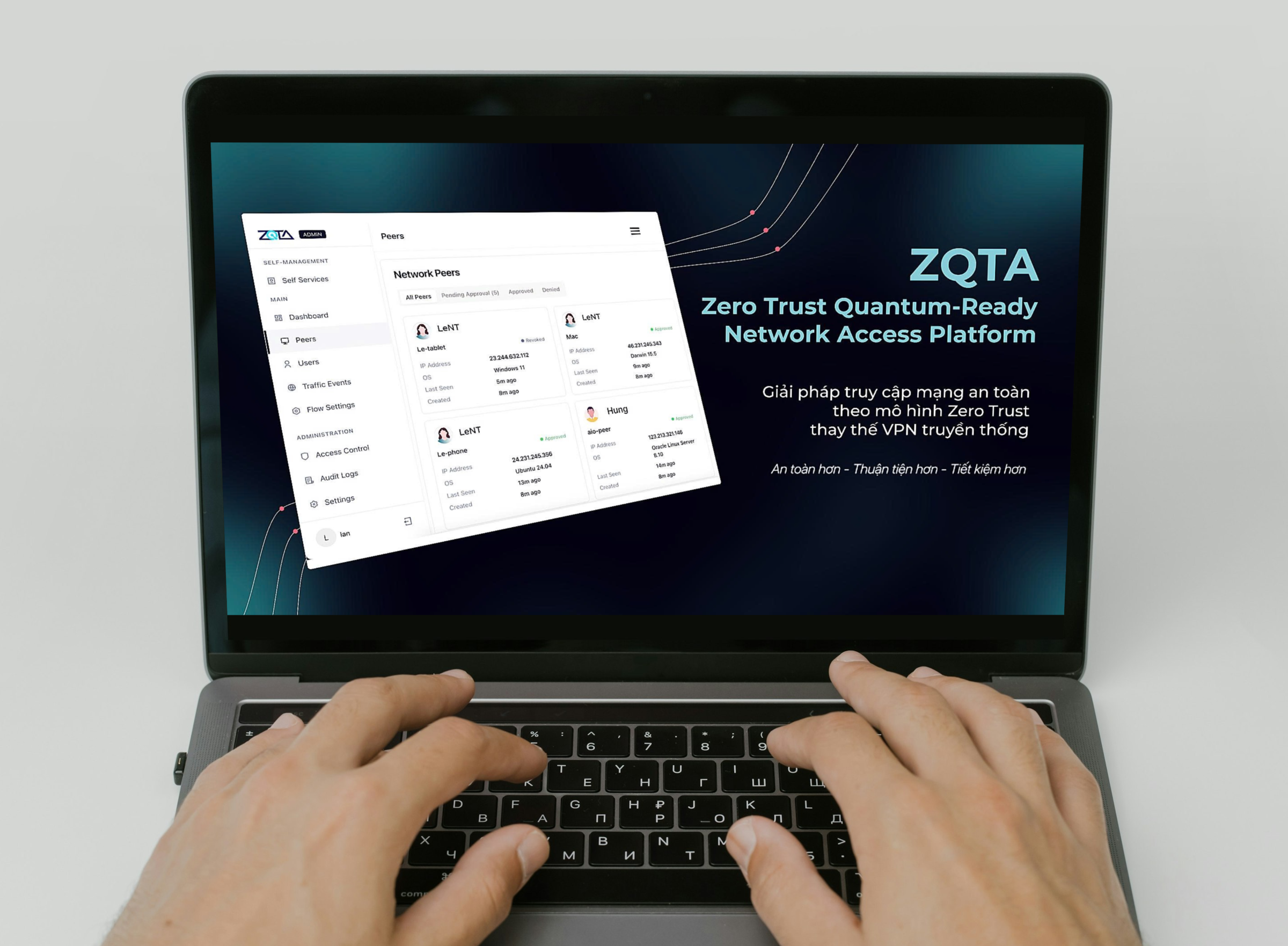 |
Users learning about the ZQTA enterprise access security platform. *Photo: VinCSS*
In many countries, ZTNA is seen as the initial step in implementing a zero trust architecture. In Vietnam, VinCSS Cybersecurity Services Joint Stock Company (VinCSS) is one of the entities researching solutions in this direction. Late last year, VinCSS launched ZQTA (Zero Trust Quantum-Ready Network Access Platform), a new-generation zero trust network access management platform.
A key feature of ZQTA is the integration of FIDO2 passwordless authentication technology, allowing users to verify their identity with just one touch. Even though authentication is frequent under zero trust principles, the user experience is streamlined, reducing reliance on passwords and mitigating risks from credential theft.
Additionally, VinCSS applies quantum-resistant cryptographic algorithms to the platform for long-term data protection. With threats like "harvest now, decrypt later" – stealing current data for future decryption by quantum computers – becoming more prevalent, implementing post-quantum security mechanisms is a crucial step in preparing for long-term risks.
To help businesses implement zero trust without replacing their entire existing infrastructure, ZQTA is designed as an integrated software and hardware solution. This approach extends security to older internet of things (IoT) devices, bringing them into a unified ZTNA ecosystem. Consequently, the transition to a zero trust model can be both flexible and cost-optimized.
The shift from VPN to solutions like ZQTA reflects a change in security thinking, moving from default trust to identity and context-based control. As cybersecurity threats increase, selecting an appropriate access model is crucial for protecting digital assets and maintaining business operations.
(Source: VinCSS)
Learn more about VinCSS's ZQTA here.