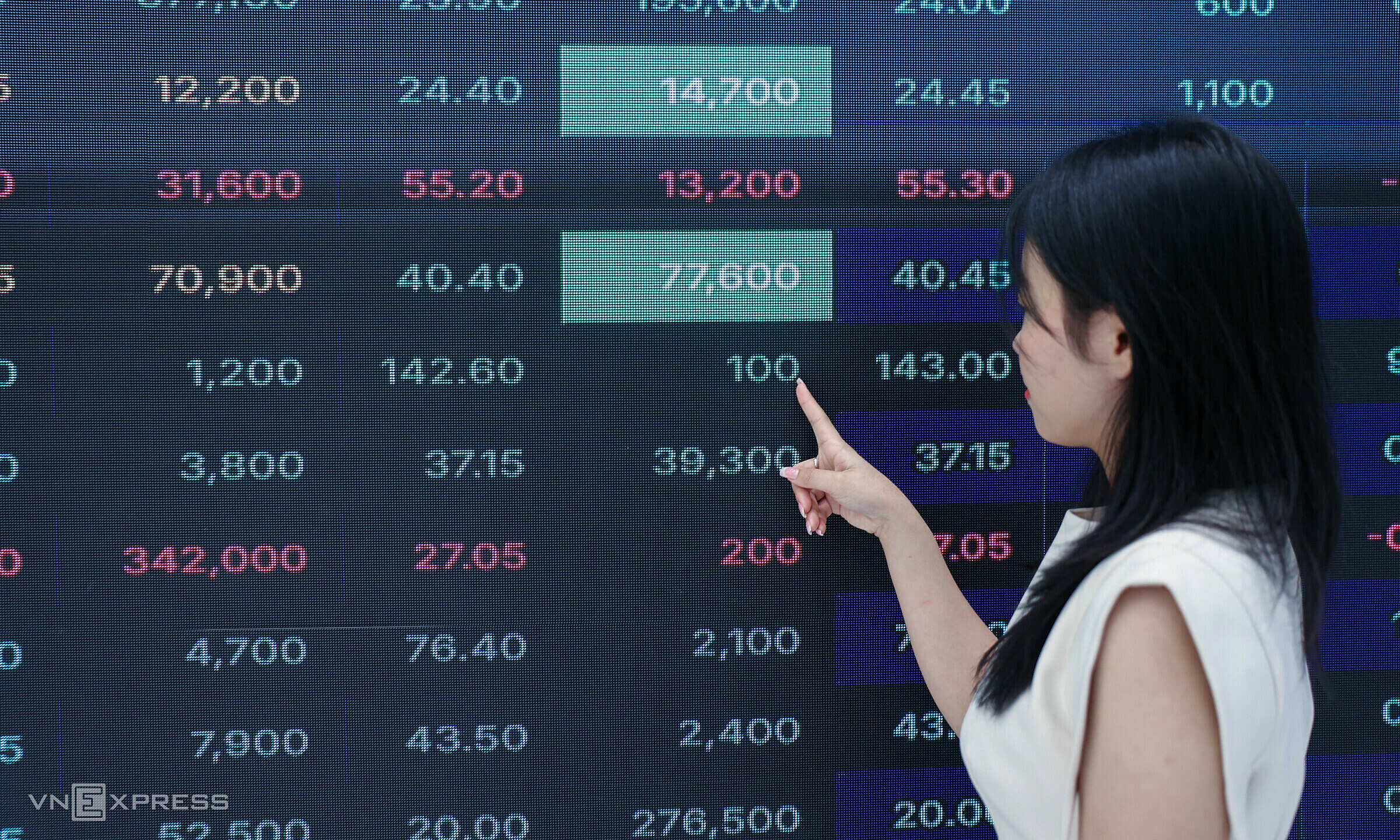
After setting a new record of 1,927 points in the early week trading session, many securities companies anticipated the VN-Index would extend its positive momentum to conquer the psychological threshold of 1,950 points. Some organizations even optimistically suggested the index could soon reach 2,000 points if the Middle East conflict cooled down, coupled with capital rotating among various sectors rather than concentrating on a few individual stocks.
Indeed, the VN-Index today briefly climbed to 1,933 points, its highest level ever recorded within a single trading session. However, this rally was short-lived as selling pressure intensified on state-controlled stocks such as Petrolimex, PV Gas, BSR, Vietcombank, and BIDV.
The index traded below its reference level from mid-morning until closing. The VN-Index fell 15 points from its reference, ending the session at 1,913 points.
In a strategy report published this afternoon, analysts at ACB Securities noted that several technical indicators for the VN-Index have weakened, suggesting an increased risk of a short-term correction. The 1,940-1,950 point range is considered a significant resistance zone, where profit-taking and selling pressure could rise considerably.
Despite this, the analytical group remains hopeful that investor sentiment will improve as the Middle East conflict de-escalates. This improvement could offset the risks of rising inflation and weakening profits of listed companies, potentially pushing the VN-Index towards the 2,000 point record.
Red dominated the TP HCM exchange, with 223 stocks closing below their reference price, double the number of gainers. The large-cap basket also saw strong divergence, with 21 stocks declining and only 8 gaining.
Investors sold off oil and gas stocks, making this group the worst performer of the session. Leading industry stocks like PLX, GAS, BSR, PVD, and PVT all hit their floor prices. This development contrasted with yesterday, when most of them rose on investor expectations that information regarding the draft criteria for classifying state-owned enterprises could positively impact stock prices.
The banking sector was also broadly negative. HDB, VPB, BID, and TCB lost over 2%, while other key stocks like MBB, CTG, and LPB dropped 1-2% from their reference prices. According to statistics from VNDirect Securities Company, this group contributed half of the 10 stocks with the most negative impact on the index.
Selling pressure from these two major sectors spilled over into smaller industries, including seaport, securities, and industrial real estate.
Conversely, investors poured capital into Vingroup-related stocks, helping four constituent codes—VIC, VHM, VRE, and VPL—reverse from losses to gains. These stocks acted as a crucial support, contributing over 3 points to the VN-Index and helping the index avoid a deeper correction.
Liquidity on the TP HCM exchange today reached over 32,300 billion VND, the highest in one and a half months. The market saw 5 stocks with liquidity exceeding one trillion VND: VCB, GEX, VIX, SSI, and BSR. Foreign investors engaged in their third consecutive selling session, but the selling pressure surged dramatically. This group sold 3,800 billion VND worth of stocks, approximately 1,000 billion VND higher than the early week session.
Phuong Dong