The World Gold Council (WGC) reported a record surge in jewelry gold demand in Vietnam during the first quarter. This demand, valued at 472 million USD, marks a 28% increase from previous quarters, making it the highest ever. "The value of jewelry consumption in Vietnam hit a new peak, while this activity remained subdued in many Southeast Asian countries," the WGC report noted.
This trend, according to the WGC, stems from two main factors: rising prices and a scarcity of gold bar supply. Higher prices prompted consumers to favor jewelry with lower gold content and investment appeal. The limited supply of gold bars also significantly impacted Vietnam, leading to the largest regional reduction in gold bar consumption, which fell by 24% to 9 tons.
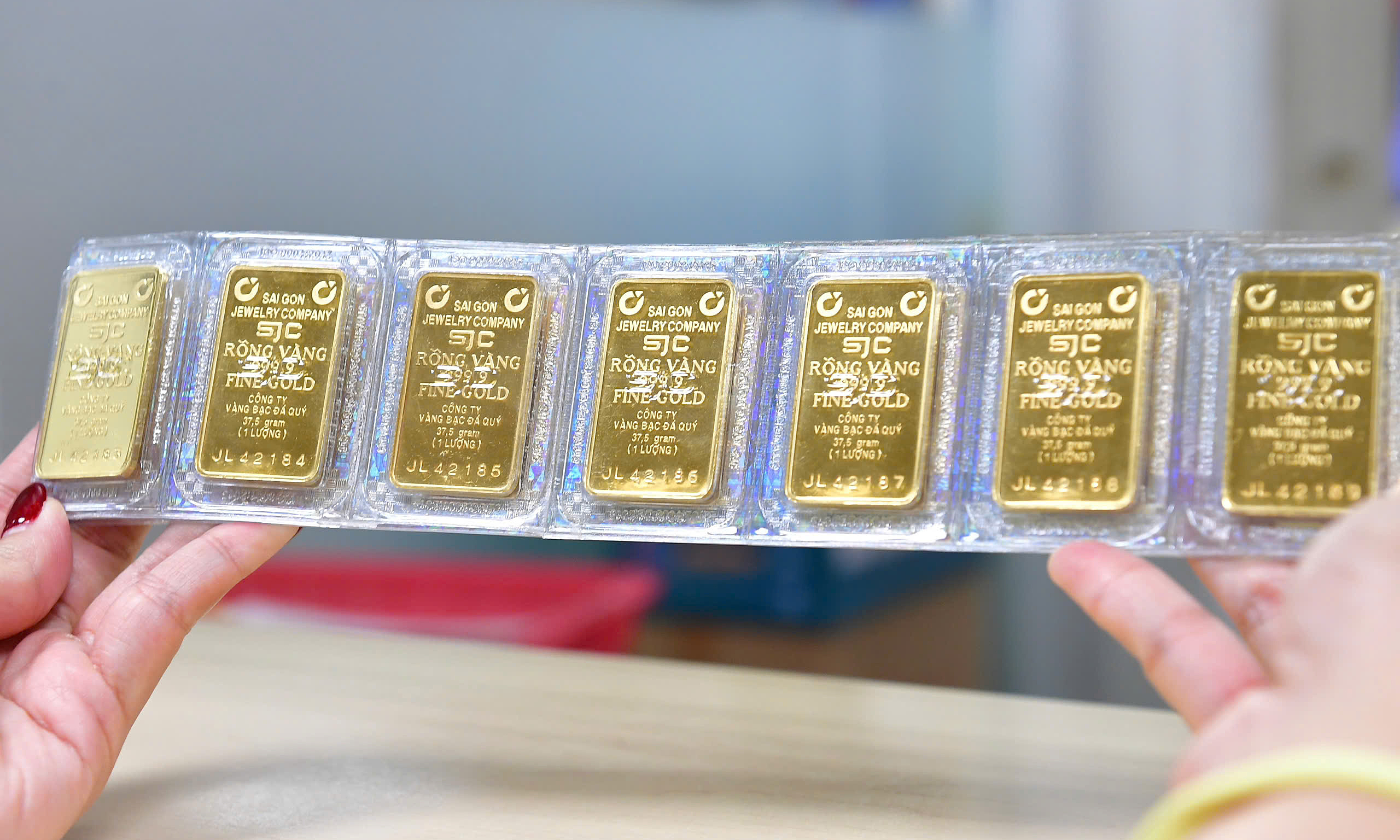
On 31/3, Saigon Jewelry Company (SJC) sold plain gold rings at 172 million dong per tael, a more than 12% increase since the year's start. On 2/3, this product reached a record high, trading above 189 million dong per tael.
Globally, first-quarter jewelry gold demand decreased by 23% year-on-year, reaching 300 tons. This decline affected most major markets, including: China (down 32%), India (down 19%), and the Middle East (down 23%). Despite the volume drop, the transaction value for jewelry gold increased, showing consumers' readiness to pay higher prices.
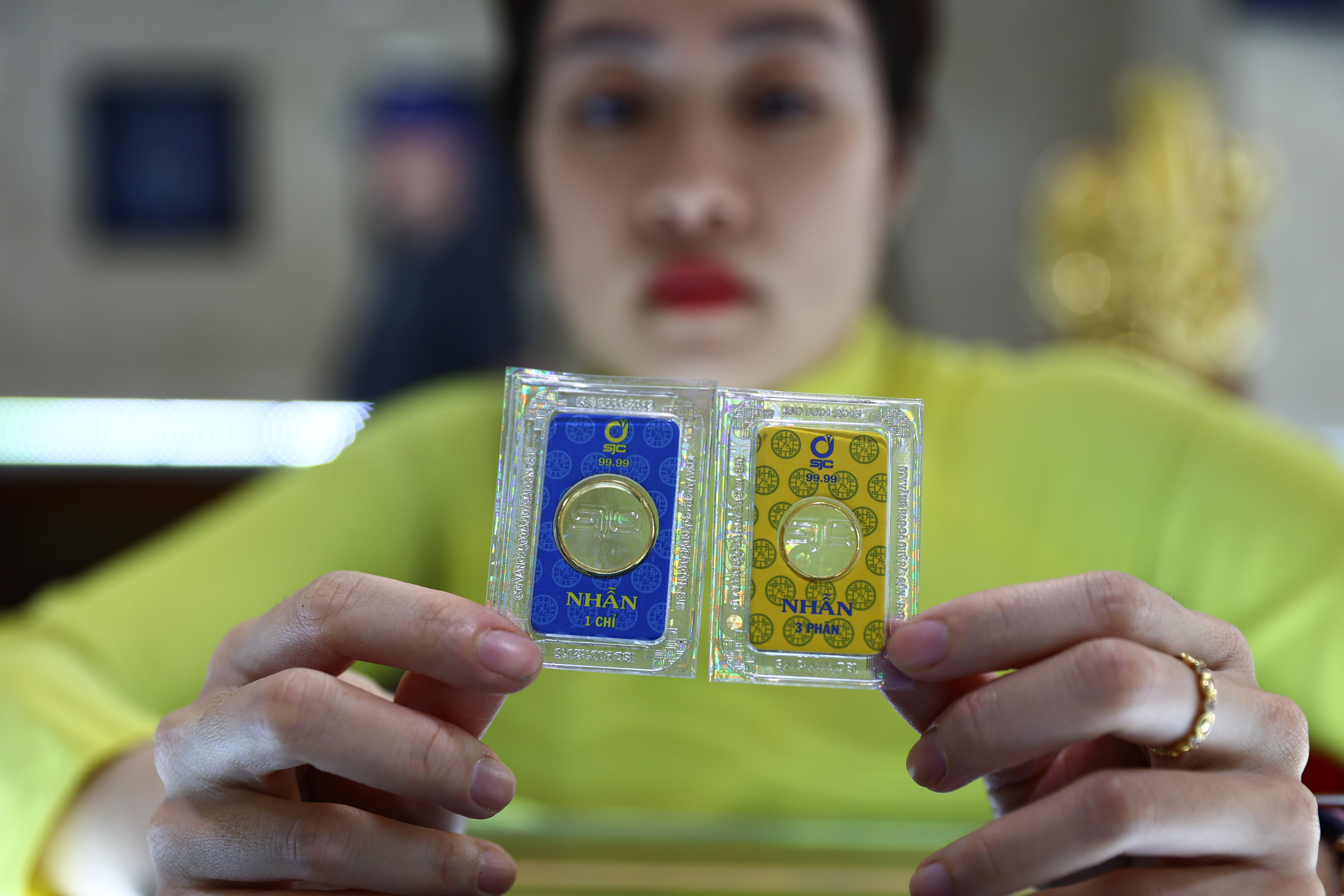 |
Plain gold rings sold at SJC headquarters in Ho Chi Minh City, 3/2025. Photo: *Quynh Tran*.
Overall global gold demand in Q1 reached 1,231 tons, a 2% increase year-on-year. While transaction volume saw a modest improvement, the total value of demand soared to a record 193 billion USD, a 74% increase from the previous year.
Individual investors, drawn by the price rally and gold's safe-haven appeal, accumulated 474 tons, marking a 42% increase in volume year-on-year.
In China, individual investors bought a record 207 tons of gold bars. India, South Korea, Japan, the United States, and European markets also saw increased demand for the precious metal.
Central banks also bolstered overall demand, with net purchases totaling 244 tons. This surpassed the five-year average, despite some institutions, including Turkey, Russia, and the State Oil Fund of Azerbaijan, increasing their sales.
Shaokai Fan, the WGC's Global Central Bank Director, anticipates that geopolitical tensions will continue to fuel gold demand in 2026 and beyond. This will bolster net purchases by central banks, inflows into gold ETFs, and hoarding. "High prices may continue to affect jewelry gold demand, though purchasing power in this segment is expected to remain stable," Fan noted.
Echoing this sentiment, Louise Street, a senior market analyst at the WGC, believes geopolitical risks will drive investment gold demand. However, a sustained high-interest rate environment could pose challenges, especially in Western markets. On the supply side, mining output is projected to see a slight increase, but potential energy shortages could constrain this growth.
Trong Hieu