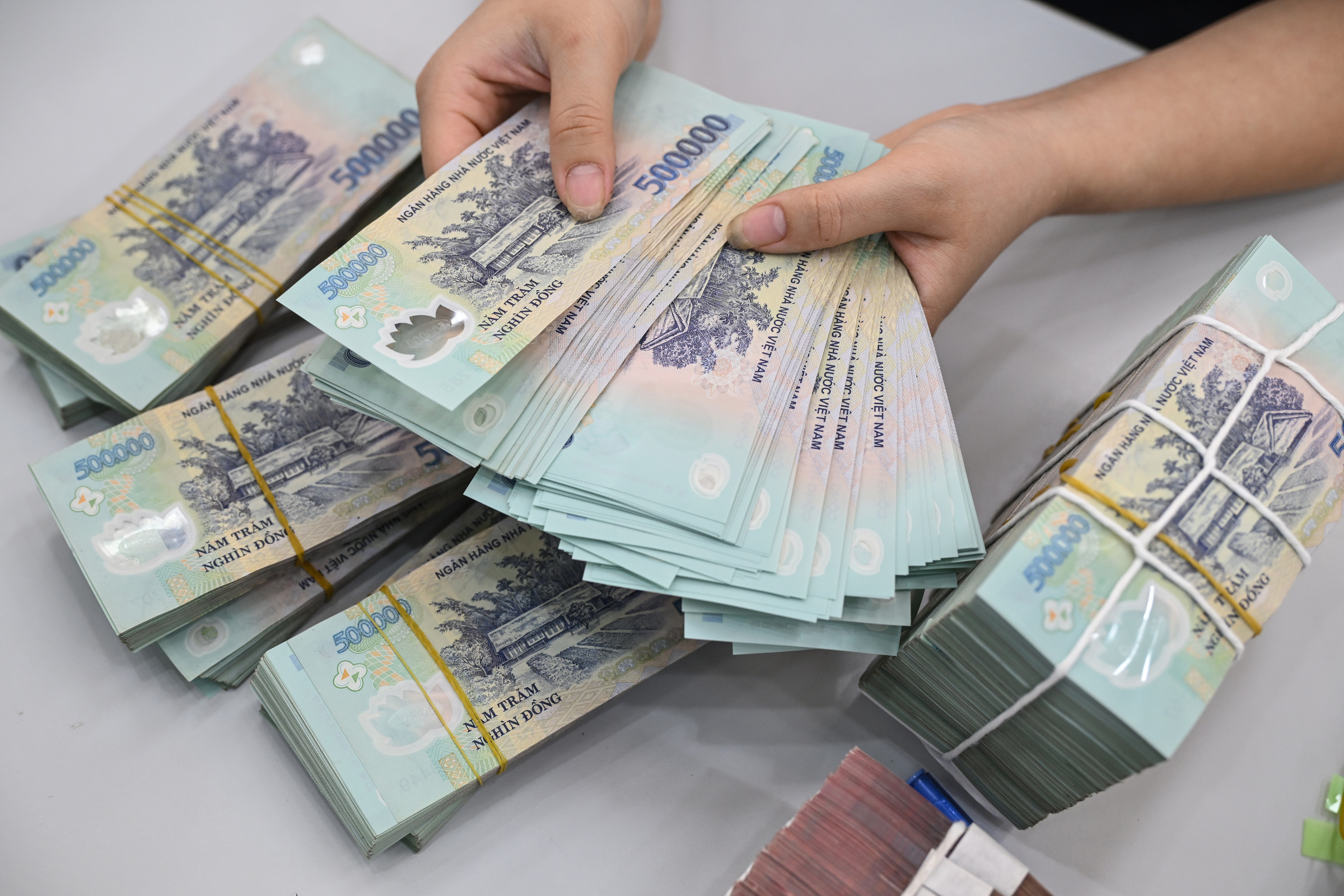
The Ministry of Finance and the State Securities Commission (SSC) are soliciting feedback from entities, organizations, and individuals on a draft circular that provides guidance on reporting and information disclosure in the digital asset trading market. The draft specifies these obligations for various activities, ranging from customer asset transactions and custody to the monitoring of transactions with signs of violations.
Under the draft, organizations providing digital asset services must submit daily transaction reports to the SSC. These reports include statistics on investor structure, categorizing data into domestic and foreign investors. This is further divided into individual and institutional investors, detailing the volume and value of buys and sells for each type of digital asset.
A notable aspect is the classification of transactions by value, which is divided into four groups: under 1,000 USD, 1,000-5,000 USD, 5,000-10,000 USD, and over 10,000 USD. Crypto exchanges must report the number of transactions, total value, and proportion of each group.
This classification provides more detailed transaction information than what is publicly disclosed daily in the stock market. Current regulations primarily focus on the number of orders, volume, and transaction value for each security, along with some indicators related to foreign investor transactions.
The draft also sets reporting deadlines close to transaction times. Exchanges must submit reports on the previous day's trading activities to the SSC by 3 PM on the trading day. Additionally, by the 10th of each month, exchanges must send market situation reports to the SSC, the Ministry of Public Security, and the State Bank of Vietnam.
Beyond trading activities, the draft requires exchanges to report on the amount of customers' digital assets currently under custody. Weekly reports must detail wallet management, including the crypto code, blockchain network, wallet address, and whether it is a hot or cold wallet.
The report template also includes a section on "proof of reserves," which records the actual reserve ratio, the amount of customer assets, and the service provider's balance. This level of detail is significantly higher compared to asset management practices in the stock market.
Furthermore, exchanges must submit audited six-month reports on customer assets to the SSC annually, on 31/1 and 31/7.
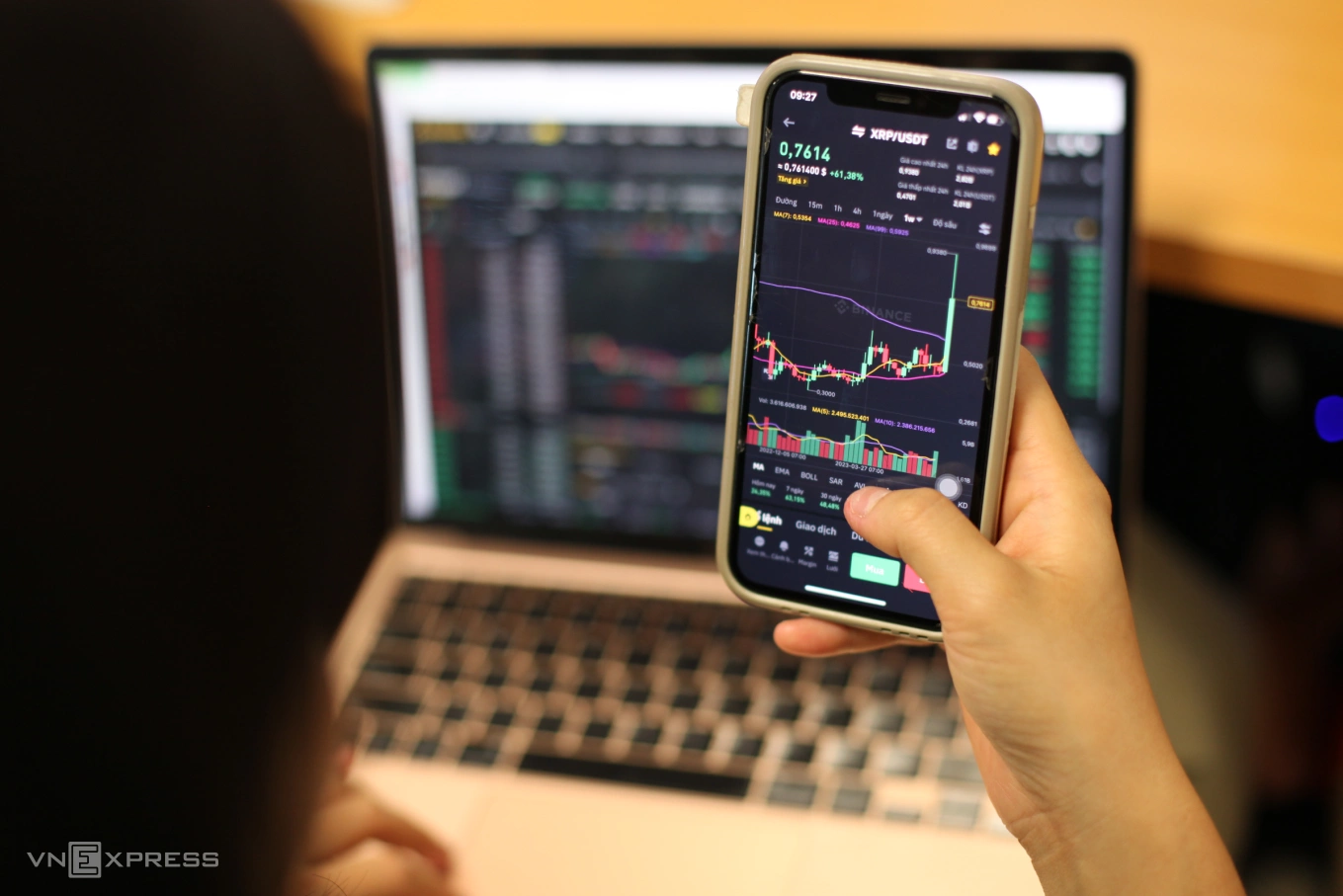 |
A Vietnamese investor monitors cryptocurrency price fluctuations on a phone. Photo: Khuong Nha |
Another layer of data requiring reporting involves transactions showing signs of violations. According to the draft, by the 10th of each month, digital asset service providers must submit reports to the SSC on transactions identified as potentially violating rules based on their monitoring procedures.
The report template requires specifying the violation code, describing the suspicious signs, the number of related organizations or individuals, the digital assets involved, the transaction period, the total volume and value of related transactions, the processing start date, and the processing status. For completed cases, exchanges must state the number of organizations and individuals processed and the form of processing.
Compared to the securities market, this is a significant point regarding the responsibility of market operators. Stock exchanges and market members already have mechanisms for monitoring and reporting unusual transactions under securities law. However, the digital asset draft specifically includes "transactions with signs of violations" as a separate monthly report with specific data fields.
Thus, if enacted as currently proposed, investor data in the digital asset market will extend beyond just trading value and volume. Regulatory agencies could receive information on the structure of traders, the size of each trading group, customer assets under custody, wallet positions on the blockchain, and transactions identified by exchanges as having signs of violations.
However, most of this data is for regulatory bodies and does not mean that information about individual investors will be publicly disclosed to the entire market. The draft only requires exchanges to disclose information such as trading volume, value, price fluctuations, best bid-ask prices, and foreign investor transactions, along with periodic financial reports.
Detailed data concerning investor structure, transactions by value thresholds, customer assets custodied in hot or cold wallets, wallet addresses, or transactions showing signs of violations will remain within the report templates submitted to the SSC and other relevant regulatory agencies.
Tat Dat