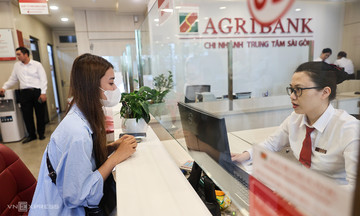
By the end of QIII, green credit outstanding across the system reached approximately 742,800 billion dong, an increase of 9,3% compared to the end of 2024, according to data from the State Bank of Vietnam. However, this category still accounts for a modest 4,4% of total outstanding loans, similar to 2024. This highlights the challenges startups and small and medium-sized enterprises (SMEs) face in accessing green capital.
To help businesses navigate these challenges, Associate Professor, Doctor Pham Thi Tuyet, Vice Principal of the Banking Academy Staff Training School, offered guidance at the "Creative Entrepreneurship in the Green and Sustainable Economy" workshop. She emphasized that startups and SMEs need to define their green projects according to national standards.
Specifically, according to the Prime Minister's Decision 21/2025, green activities are categorized into six groups: clean energy, green production, sustainable agriculture, waste management, and more. "If the group is incorrectly identified, the loan application of a startup or SME will be rejected for being 'off-topic'," Ms. Tuyet stated, adding that if businesses do not understand themselves, banks will find it difficult to provide support.
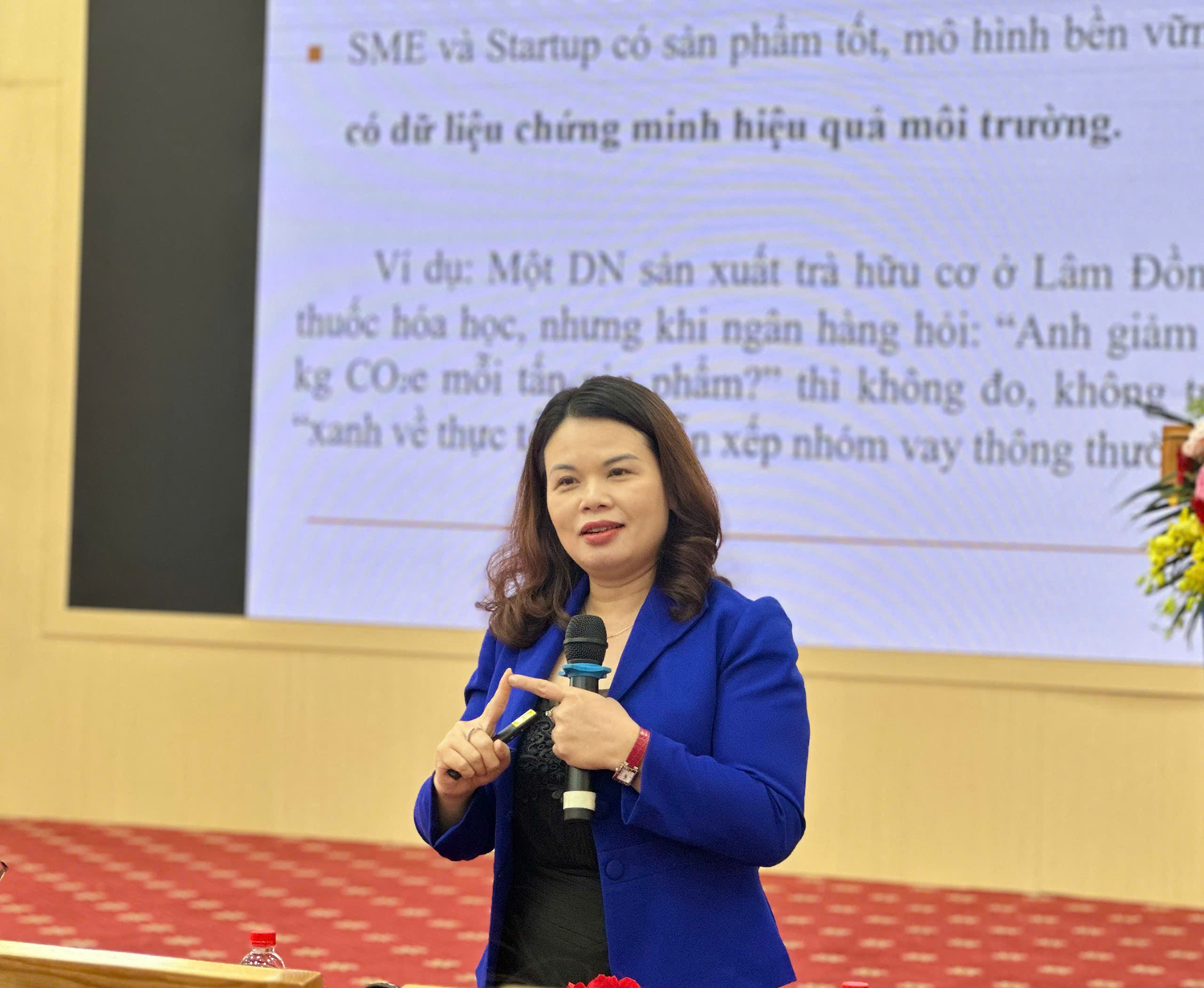 |
Associate Professor, Doctor Pham Thi Tuyet, Vice Principal of the Banking Academy Staff Training School, speaking at the event on 14/12. Photo: Trong Hieu |
Additionally, Associate Professor Pham Thi Tuyet believes startups need to integrate the ESG (environmental, social, and governance) framework into their business models. The expert emphasized that businesses should not integrate ESG merely "for compliance" or as a document, but rather as a long-term strategy. This will provide banks with a basis for granting green loans to businesses.
The Vice Principal of the Banking Academy Staff Training School stated that the next approach for startups to access capital is to standardize measurement metrics and audit reports. She explained that businesses need to produce emissions reduction reports, as this is crucial for loan applications, and should seek independent third-party verification to enhance validity. Parameters can include: electricity consumption per product, water usage per production run, or carbon reduced during operation.
"Businesses must clearly define the targets they can achieve, not just make empty promises," Ms. Tuyet affirmed. For example, a business that secured a sustainability-linked loan committed to reducing consumption by 10% and increasing recycled materials by 15% within 12 months.
Furthermore, choosing the right financial product is equally important, according to Associate Professor Pham Thi Tuyet. Businesses should start with a sustainability-linked loan, as each credit institution has its own criteria for this category.
Currently, major banks such as Agribank, BIDV, Vietcombank, VietinBank, TPBank, Sacombank, Bac A Bank, and HDBank are rolling out green credit packages with preferential interest rates, focusing on areas like: renewable energy, clean/organic agriculture, green buildings, and green products/consumption (such as electric vehicles). For instance, BIDV has launched the "Green SME Credit" program, offering interest rates from just 6-7% per year, which is 1-1,5% lower than the average commercial loan rate.
Finally, Ms. Tuyet advised that businesses need strong data management capabilities. Startups should develop the habit of storing and managing information using tools like blockchain, or simpler ones such as Excel and Google Forms. This will provide SMEs with data to track green improvements and subsequently prepare ESG reports.
In early october, the Ministry of Finance sought feedback on a draft decree to support interest rates for private sector businesses, individuals, and business households undertaking green and circular economy projects, applying the environmental, social, and governance (ESG) standard framework. Under this proposal, these groups would receive a 2% interest rate reduction when borrowing from non-budget state financial funds such as: the Small and Medium Enterprise Development Fund, the Vietnam Environment Protection Fund, the Vietnam Farmers' Support Fund, and other central and local funds.
Trong Hieu