


Quang Ngai's Gross Regional Domestic Product (GRDP), based on 2010 comparative prices, is estimated to reach 92 trillion dong in 2025, marking a 10,02% increase compared to 2024. The economy's scale, measured by current GRDP prices, hit 192 trillion dong, surpassing the growth target set by the Government. This performance positions Quang Ngai as the leader in the central region and 6th out of 34 localities nationwide in GRDP growth rate. Specifically, in the first six months of the year, Quang Ngai's GRDP grew by 11,51%, leading the entire country.
The province is one of six provinces and cities to achieve GRDP growth above 10%, building momentum toward the central government's goal of sustained double-digit growth for several consecutive years. Last year, the province's GRDP grew by only 4,07%, lower than the national average of 8,02%. This year, Quang Ngai has surged to the forefront due to robust growth in industrial production, construction, and services.
Data from the Quang Ngai Provincial Statistics Office indicates that in 2025, industry and construction accounted for 41,3% of the province's GRDP (with industry alone contributing 35%). The service sector followed with over 29%, while agriculture, forestry, and fisheries made up 17,2%.
The office noted that industrial production has flourished, maintaining its pivotal role in the provincial economy. The added value of the industrial sector increased by 17,8%, with processing and manufacturing serving as the core drivers.
Notably, oil refining and steel production, two sectors contributing over 73% of the industrial sector's value, both accelerated production, providing significant impetus for growth. Petrochemical products increased by 20%, and the value of steel production rose by nearly 35%.
The Quang Ngai Provincial Statistics Office explained that after a temporary halt for maintenance in 2024, the Dung Quat oil refinery increased its capacity in 2025, leading to higher oil product output. In steel production, alongside the Dung Quat one project, Hoa Phat commenced operations of the Dung Quat two project in september 2025.
BSR, the operator of the Dung Quat oil refinery, reported that by increasing its capacity to over 120%, the plant's output last year reached over 7.9 million tons, its highest level since commercial operation began. The company effectively leveraged the price difference between crude oil inputs and product outputs, expanding international business activities with products like DO oil, FO oil, and RFCC Naphtha. This strategy resulted in a revenue of 142.298 trillion dong, exceeding its target by 10%.
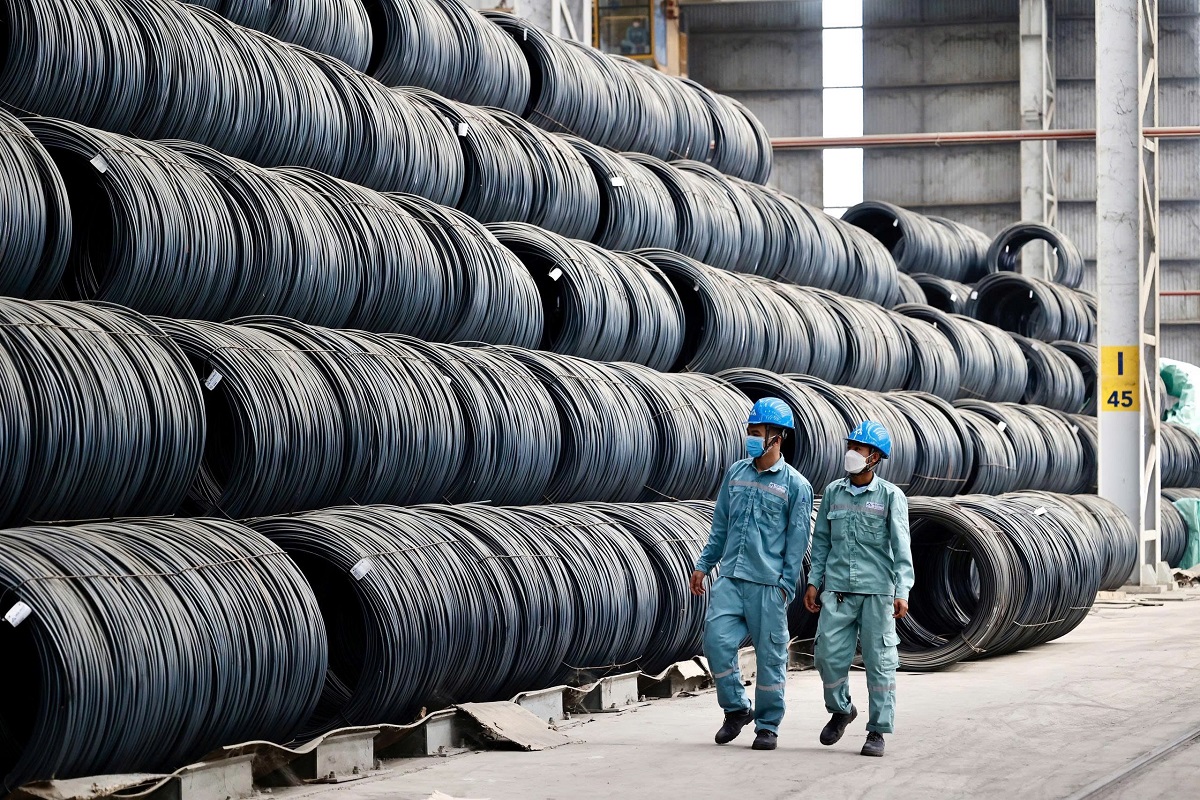 |
Steel products at Hoa Phat Dung Quat, one of the major contributors to Quang Ngai's GRDP growth. Photo: Tran Nghi |
Meanwhile, Hoa Phat Dung Quat stated that its Dung Quat two project has produced high-quality commercial products, including hot-rolled coil (HRC) steel, which has a higher value than conventional steel, significantly boosting steel product output.
Other industrial sectors also demonstrated impressive growth: wood chips for paper increased by 33,5%, electricity production by 25,9%, textiles by over 23%, wood, bamboo, and rattan products by nearly 29%, and prefabricated metal products by nearly 29%.
These strong growth sectors offset declines in some industries affected by new US tariff policies. Additionally, Hyundai's acquisition of Doosan Vina meant the plant only fulfilled existing orders, with machinery and equipment not yet classified, leading to a 21,7% decrease in production.
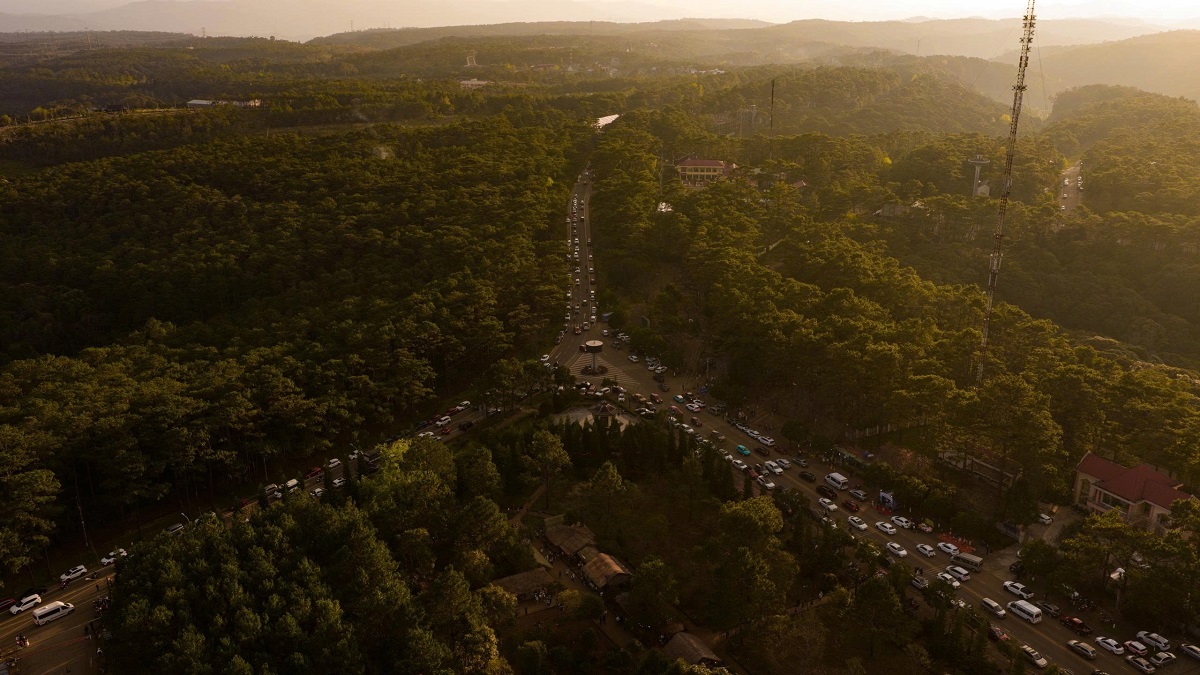 |
Mang Den, with its Da Lat-like climate, has become a new tourism hub for Quang Ngai. Photo: Phuong Vu |
Alongside industry, the value of the service sector also increased by 7,88%, driven by areas such as retail, accommodation, food services, warehousing, and entertainment. Total retail sales and consumer service revenue reached nearly 134 trillion dong, up 14,4%. Transportation activity revenue was an estimated 10.604 trillion dong, an increase of over 21,05% compared to last year, which propelled the service sector's growth.
Vo Thanh Nhan, Head of the Quang Ngai Provincial Statistics Office, explained that after the merger, the province organized numerous cultural, sports, and tourism activities. Increased travel and shopping by residents and civil servants positively impacted overall retail sales, tourism, and transport services.
This shift resulted in the service sector's contribution to the province's GRDP increasing to 29%, up from 26% in 2024.
Many service sectors gained additional growth potential. Tourism, for example, benefited from expanded attractions from Ly Son island to Mang Den. Last year, Quang Ngai welcomed 5.2 million visitors, a 38% increase compared to 2024, with tourism revenue estimated at 3.700 trillion dong, up 74%. Mang Den, formerly a tourism center of Kon Tum province, contributed 1.8 million visitors after the merger, accounting for 36% of Quang Ngai province's total 5 million visitors.
Nguyen Hoang Giang, Chairman of the Quang Ngai People's Committee, attributed these results to the significant efforts of businesses and residents in production and market adaptation, as well as the leadership of central and local authorities in resolving bottlenecks and promoting units. However, the provincial leader emphasized that all levels, sectors, and localities should not be complacent or settle for average performance, but instead strive for breakthroughs.
He highlighted several provincial limitations: the role of science and technology in production has not been fully utilized, and transport infrastructure remains challenging. Particularly, the province faces numerous bottlenecks and backlogs in compensation and site clearance, which have slowed the progress of both public investment projects and local production investments.
To achieve 10% growth in 2026, the provincial Chairman directed efforts toward resolving policy and mechanism bottlenecks, addressing issues in compensation and site clearance, and accelerating public investment projects from the beginning of the year.
Concurrently, the province needs to refine its policies to attract selective investment, prioritizing high-tech foreign direct investment projects, and building a growth model based on productivity and science and technology.
Leveraging its existing strengths, the province will attract investment in auxiliary sectors for steel refining and post-steel product manufacturing. It will also propose policies to develop a national petrochemical and energy center in the Dung Quat Economic Zone, and enhance tourism areas such as Mang Den, Ly Son, and My Khe.
According to Nguyen Hoang Giang, leading localities in growth share common traits: a strong capacity to absorb investment capital, especially foreign direct investment, the creation of large-scale industrial complexes, and a booming service sector. This model fosters widespread growth among residents by generating substantial employment and increasing incomes. "Quang Ngai already has a similar foundation, and the provincial government is actively learning and acting to develop commensurate with its potential," Giang said.
Pham Linh


