On the morning of 14/10, thousands of Ho Chi Minh City residents lined the streets, holding white flowers, to bid farewell to 731 martyrs as their remains were moved from Le Thi Rieng Park for reburial at a cemetery. This solemn moment highlighted the quiet contributions of a "special task force" comprising nearly 20 lecturers and students from the University of Technology and the University of Science, both part of Vietnam National University, Ho Chi Minh City.
"I rearranged my work to stand and pay my respects to the martyrs," said Associate Professor Doctor Le Van Anh Cuong, Head of the Geophysics Department at the University of Science.
Cuong was a member of the team assisting in the survey to locate martyr grave trenches at Le Thi Rieng Park, an effort that began in early June and lasted for one month. He stated that the initial days were challenging due to incomplete information and diagrams of suspected burial areas. The team decided to employ two geophysical methods: ground penetrating radar (GPR) and direct current resistivity tomography (ERT), to survey beneath the surface and identify anomalies.
These "radar eyes" provided scientific data for the search, limiting excavation, according to Cuong.
On the morning of 23/6, a call from the Ho Chi Minh City Command reported the discovery of the first remains within the area the team had delineated, deeply moving Cuong. Visiting the site the following day, team members shed tears upon witnessing the remains being brought to the surface. Throughout the search, the lecturers and students constantly reminded each other to remain diligent and not overlook any suspicious signals or information.
"If a martyr were not found due to our negligence or oversight, we would feel regret and self-reproach," Cuong stated.
 |
Lecturers from the University of Science used ground-penetrating radar equipment in an area suspected of containing mass graves of martyrs at Le Thi Rieng Park, 15/6. *Photo: Thanh Tung*
Concurrently, a team of five lecturers from the University of Technology, led by Associate Professor Doctor Pham Tan Thi, Head of the Science and Technology Department, joined the search to locate the remains of martyrs at Le Thi Rieng Park starting 16/6.
Once authorities had established preliminary search areas and requested depth determination for the burial pits, Thi's team utilized resistivity measurement techniques with the Syscal Pro electrical imaging device from IRIS Instruments (France). This equipment allowed for wide-area surveys at depths of 2-15 m, with less interference from surface obstacles.
Using this method, the team did not need to excavate or drill; instead, they transmitted an electric current into the ground via two electrodes and measured the potential difference generated from two other electrodes. This allowed them to identify resistivity anomaly zones based on the varying electrical conductivity of objects and the underground environment.
Survey results at Le Thi Rieng Park revealed resistivity anomaly locations at depths of 3-8 m, appearing as trenches and unevenly distributed within a 6x8 m2 area. These depths corresponded to the buried remains. The data was then provided to authorities, enabling faster and more precise targeting of search areas.
"There is nothing more meaningful than applying our professional expertise to help find and bring the remains of martyrs to their final resting place," Thi said.
For their contributions, both research teams received gifts and commendations from the Prime Minister and Vietnam National University, Ho Chi Minh City, at an opening ceremony on the afternoon of 13/10.
The lecturers and students are currently involved in surveying and searching for suspected mass graves in the Go Vap area, along Truong Chinh street, in the Dak Cam area (Quang Ngai), and at K76A Hospital (Hoa Hiep commune, Ho Chi Minh City).
 |
Lecturers from the University of Technology, alongside authorities, searched for suspected martyr remains at K76A Hospital, Hoa Hiep commune, in July. *Photo: HCMUT*
 |
Lecturers from the University of Technology, alongside authorities, searched for suspected martyr remains at K76A Hospital, Hoa Hiep commune, in July. *Photo: HCMUT*
 |
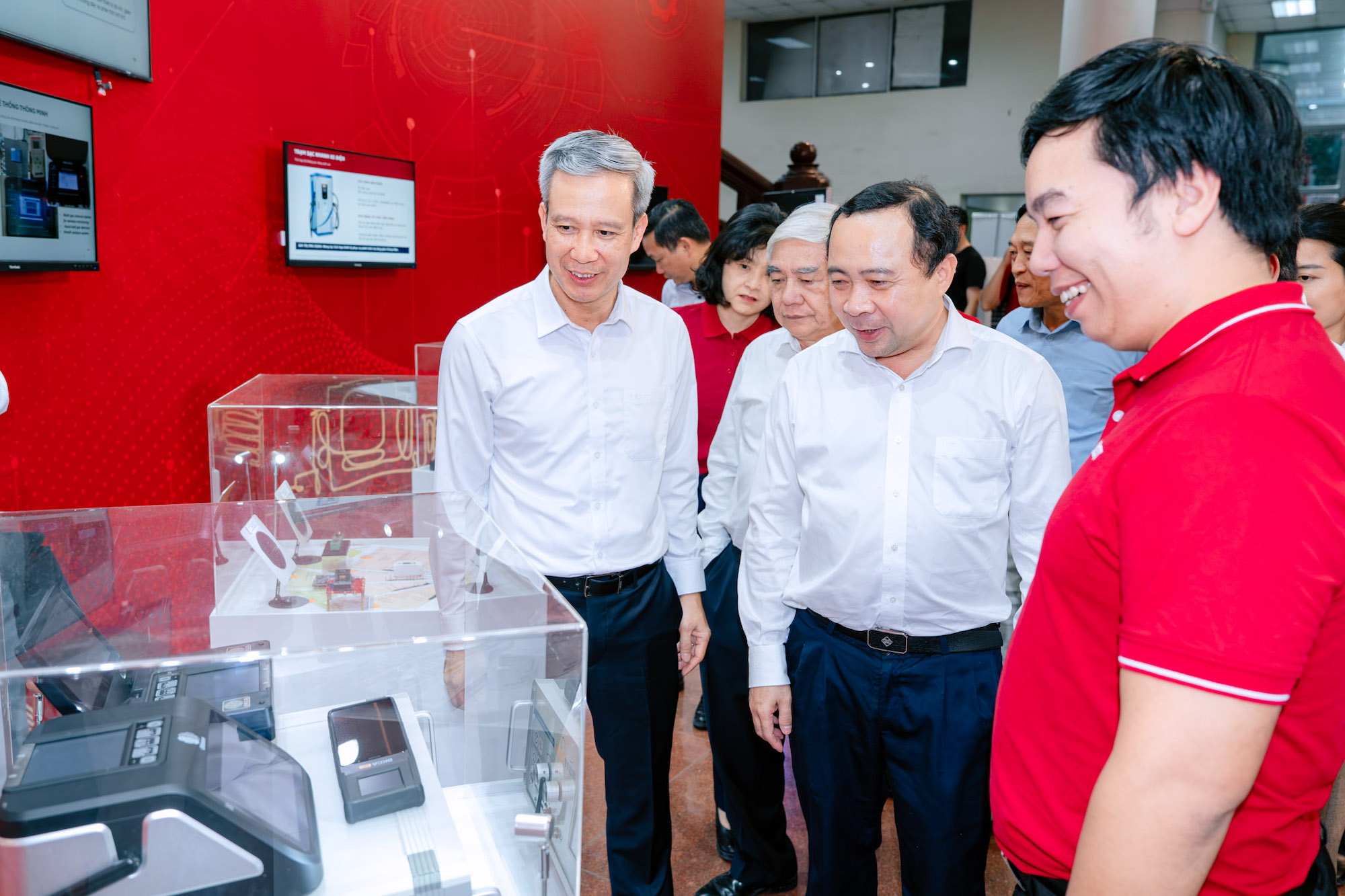
Lecturers from the University of Science and University of Technology received gifts from the Prime Minister on the afternoon of 13/10. *Photo: Quynh Tran*
Le Nguyen