This content was outlined in the conclusion notice by Deputy Prime Minister Le Tien Chau regarding the progress of public preschool and general education school rearrangements, announced on the afternoon of 13/10.
Specifically, following the school rearrangement phase by the end of August, the nation saw a reduction of nearly 19,000 public schools, equivalent to 50.6%, surpassing the initial minimum target of 30%. Over 28,200 principals and vice-principals transitioned to teaching roles. Mr. Chau assessed that school operations after the rearrangements were largely stable, ensuring students' right to education.
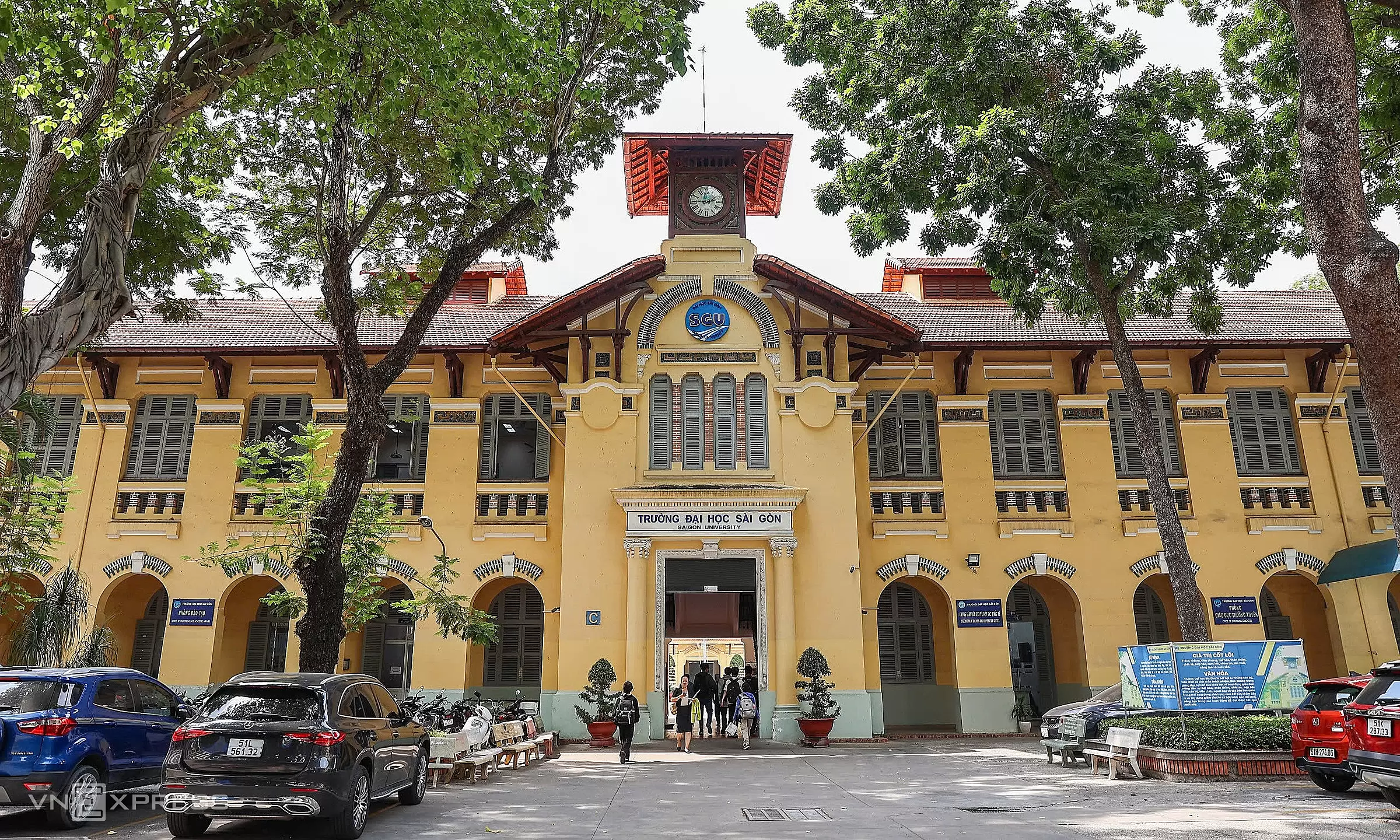
However, the reality reveals numerous large-scale schools, with 114 schools having over 100 classes. For instance, in Nha Trang ward, Khanh Hoa province, Nha Trang Primary School, formed from the merger of 13 older schools, now comprises 287 classes with over 10,500 students – making it the largest nationwide. The preschool and secondary schools in this ward also have 124 and 205 classes, respectively.
According to Mr. Chau, some schools face governance difficulties due to their large scale; many principals, vice-principals, and staff have not yet been assigned roles; and the handover of finances, assets, data, and completion of new legal entity procedures remain slow. He mandated that provincial and city chairpersons bear direct responsibility for the outcomes of school rearrangements and operations within their localities.
Immediately in October, localities must review all large-scale schools, including those with multiple educational levels, campuses, teaching points, and wide geographical areas, especially the 114 schools with over 100 classes. This is to promptly adjust situations where the scale exceeds governance capacity, affecting quality, safety, or student welfare.
Concurrently, ministries, sectors, and localities must finalize regulations on job positions, employment policies, staffing levels, and the number of vice-principals, ensuring effectiveness based on school size, avoiding a one-size-fits-all approach. The Ministry of Home Affairs needs to research and propose appropriate policies for principals and vice-principals of the aforementioned large-scale schools, as well as for managerial staff whose roles no longer fit after the rearrangements.
Under current regulations, the maximum class size for preschools and general education schools ranges from 30 to 50 classes, depending on the educational level. For inter-level schools, there are two tiers: 50 classes for two-level schools and 75 classes for three-level schools.
The emergence of these 'mega-schools' post-merger presents a challenge of shifting from system management to system governance. The Ministry of Education and Training requires that organization and governance adhere to general principles of unity, seamless operation, fostering the proactivity of vice-principals and departments, and avoiding the creation of intermediate management levels. Schools must increase the application of information technology, accelerate digital transformation, and synchronize data across students, staff, expertise, finances, and assets.
 |
Main campus of Nha Trang Primary School, Khanh Hoa. *Photo: Bui Toan*
Thanh Hang