On 13/10, the Secretariat's oversight team announced its decision and plan to monitor the implementation of Politburo's Resolution 71 on breakthrough development in education and training. The purpose is to review and assess strengths, limitations, shortcomings, and any potential violations.
The oversight team is expected to work until 15/12. Trinh Van Quyet, Head of the Central Propaganda Department and leader of the team, outlined four key areas for the oversight period.
First, regarding the education curriculum from primary to high school: The team will assess the scientific rigor, continuity, and interconnectedness of the curriculum across all levels. They will also evaluate its suitability for students' psychology and the practical conditions of different regions.
Authorities will also examine issues related to content load, the organization of integrated teaching, and the selection and alignment of subjects across different curriculum levels.
Quyet emphasized the need for a thorough evaluation of this content. Therefore, the team will collaborate with the Ministry of Education and Training to invite experts and scientists who have conducted long-term, multi-stage research to contribute their opinions.
Second are textbooks, particularly content related to moral education, history, politics, and lifestyle for students in subjects like Literature and History.
Quyet stated that despite its advantages, the textbook reform in recent years still presents many concerns requiring careful study. For example, the policy of one curriculum with multiple sets of textbooks has raised numerous issues concerning quality, selection, and cost, leading to public frustration. Even with a single set of textbooks, issues arose, such as the design requiring students to complete exercises directly in the books, rendering them single-use.
The oversight team will seek expert opinions, examining sections to retain or inherit, and parts to omit or replace. They will identify the causes of these issues and propose solutions.
"We must conduct thorough research to propose specific solutions to the Politburo and the Secretariat," Quyet said.
 |
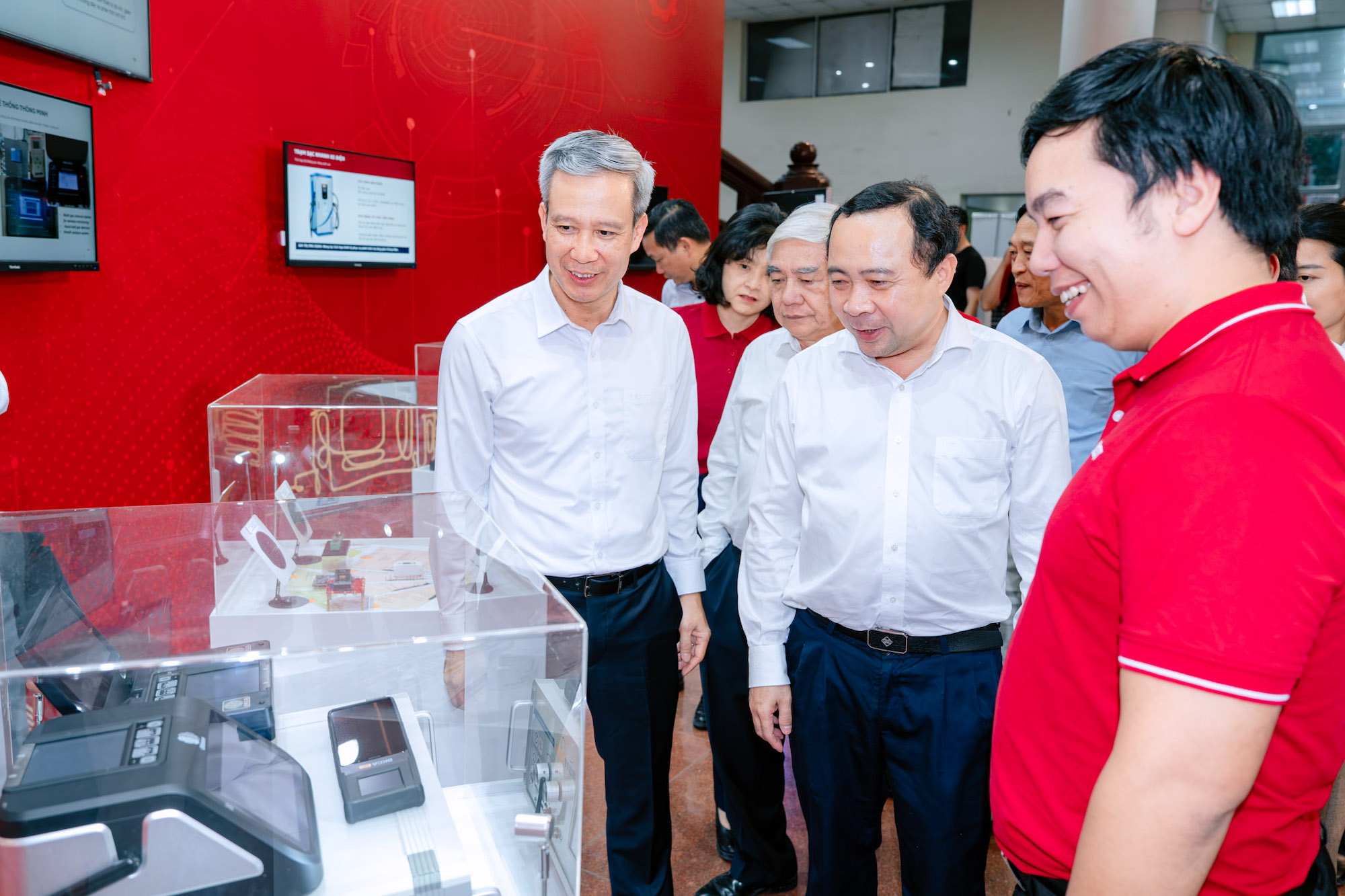
Trinh Van Quyet speaks at the conference on the afternoon of 13/10. Photo: MOET |
The third issue concerns facilities, specifically the shortage of schools, classrooms, and learning equipment. This includes investment in building general schools, and particularly inter-level boarding schools for primary and secondary education in border communes.
Finally, the team will monitor the organizational structure and personnel for state management of general education. This includes school administrators and teachers, addressing localized teacher shortages and surpluses, and evaluating policies and benefits for educators.
Quyet highlighted that the Party and State have made efforts to ensure benefits for educators. The evaluation process must consider teachers' total income, rather than just their salary coefficient, as income includes other allowances. From this, comparisons will be made with other professional groups to assess the level of remuneration for teachers.
"For all four areas, we must answer the questions: What has been achieved and what has not? Why? What should be done next, and how? What should be proposed to the Politburo?" Quyet stated.
The head of the oversight team emphasized that the goal is to accurately assess the strengths and limitations in general education, not to find faults. The oversight results must serve as a basis for the Politburo and the Secretariat to determine policies and decisions for general education in the new phase.
"This is both a requirement and an opportunity for the Ministry to report on its achievements, difficulties, and limitations, while also making proposals to improve the quality of general education," said Hoang Minh Son, Minister of Education and Training.
Duong Tam