The Prime Minister approved a plan on 8/8 to develop Vietnam National University, Hanoi (VNU) into a leading higher education institution in Asia.
The plan aims for VNU to become an elite research and innovation-focused university by 2030. From 2031 to 2035, VNU targets a position among the top 200 universities worldwide, serving as a national innovation hub. This development will directly contribute to Vietnam's goal of becoming a developed, high-income nation.
To achieve these objectives, VNU must rank among the top 100 universities in Asia and the top 500 globally by 2030. Additionally, at least one of its fields needs to be within the world's top 100 in reputable rankings. These target fields include: semiconductor technology, artificial intelligence, biotechnology, new energy, new materials, and interdisciplinary social sciences and humanities.
In terms of staff development, VNU aims for at least 80% of its lecturers to hold doctoral degrees and plans to attract 500 international experts and scholars.
For training, postgraduate enrollment (master's and doctoral programs) must constitute at least 30% of the student body. Furthermore, 60% of programs in science, engineering, technology, and strategic priority fields will be taught in English. The university also targets a 5% international student enrollment rate.
VNU also has science and technology objectives, including a 15% increase in international publications (in Q1 and Q2 journals) and supporting the establishment of 50 new spin-off or start-up businesses annually. Revenue from science and technology transfer is targeted to reach 35%.
Additionally, VNU must complete its technical infrastructure and accommodate 60,000 students at the Hoa Lac urban area by 2030.
On 16/5, during the 120th anniversary celebration of Vietnam National University, Hanoi, General Secretary and President To Lam highlighted the university's mission: to become a modern, elite, and multidisciplinary institution operating under an innovation-driven model with national leadership capabilities.
According to him, "elite" status is measured by academic quality, the capacity to generate new knowledge, nurture talent, develop strategic technologies, and make tangible contributions to the nation, alongside international recognition.
At the "Developing an Elite and Excellent University Model in Vietnam" workshop on 10/8, the Ministry of Education and Training announced that, in line with the Higher Education Development Strategy, Vietnam plans to designate three to five elite universities to implement a national strategy.
Last year, the government tasked the Ministry with developing a plan for three to five such institutions. A Ministry representative clarified that an elite university represents a higher tier, surpassing strong research universities. The specific criteria for elite universities are currently under development by the Ministry.
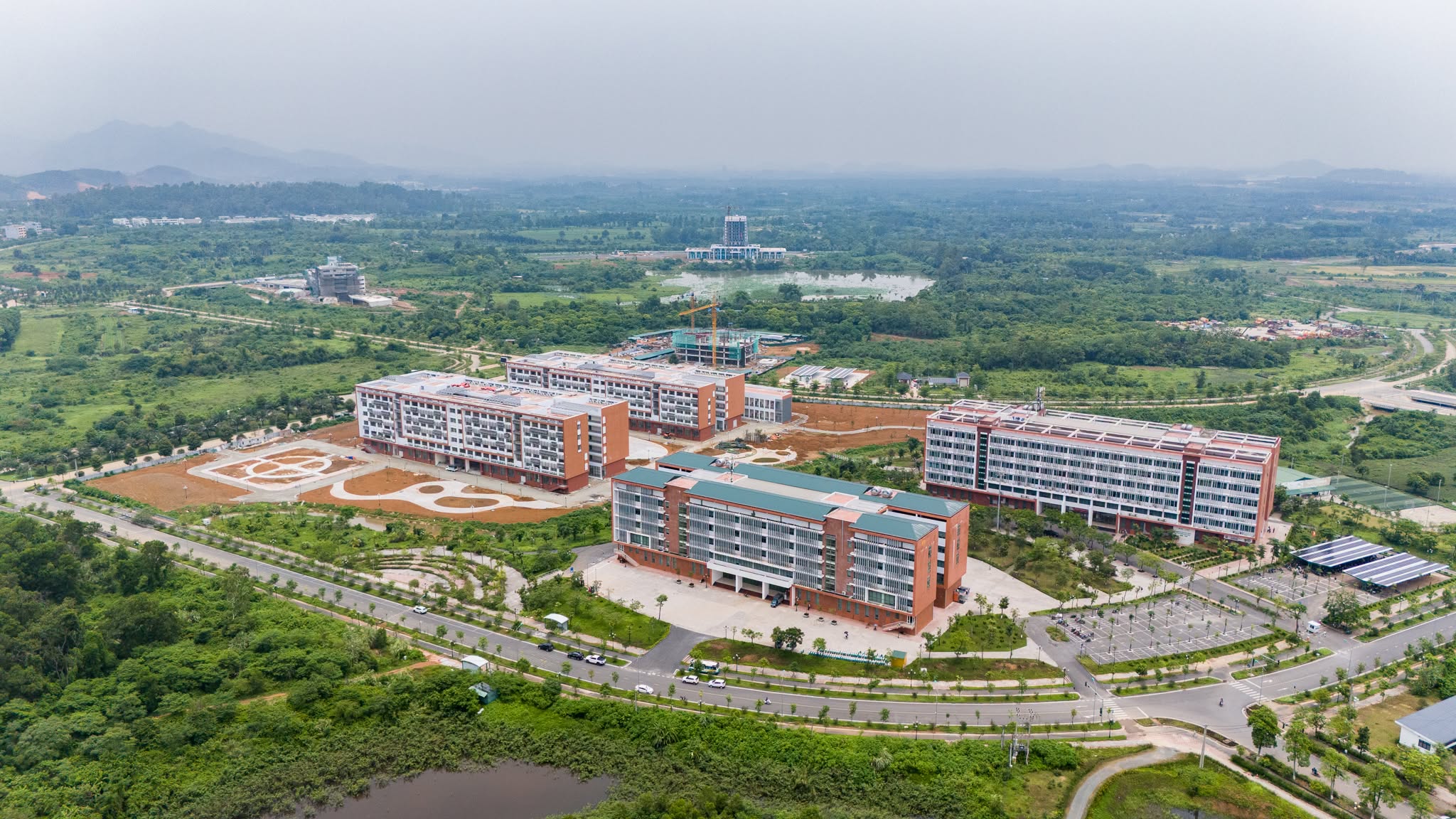 |
A corner of the Vietnam National University, Hanoi campus in the Hoa Lac urban area. Photo: VNU. |
Duong Tam