Vietnam should implement a comprehensive learning system, develop a student-centered curriculum, and strengthen teacher support to successfully transition English from a foreign language to a second language. This recommendation comes from Professor Barry O’Sullivan, Director of English Language Research at the British Council, who shared insights at the VietTESOL (VIC) 2026 International Conference.
Professor O’Sullivan emphasized the need for a system where the educational program, implementation methods, and assessment are interconnected and tailored to Vietnam's unique context. "This is the first consideration when implementing policy; otherwise, synchronized deployment will be very difficult later on," he stated.
He suggested that students require both formal learning opportunities and out-of-school experiences through various media like films, music, games, and other activities to enhance their exposure to English. Classroom effectiveness, he noted, relies on a combination of effective teachers, learning materials, and a supportive environment. For assessment, Professor O’Sullivan proposed integrating non-graded knowledge checks with graded semester exams.
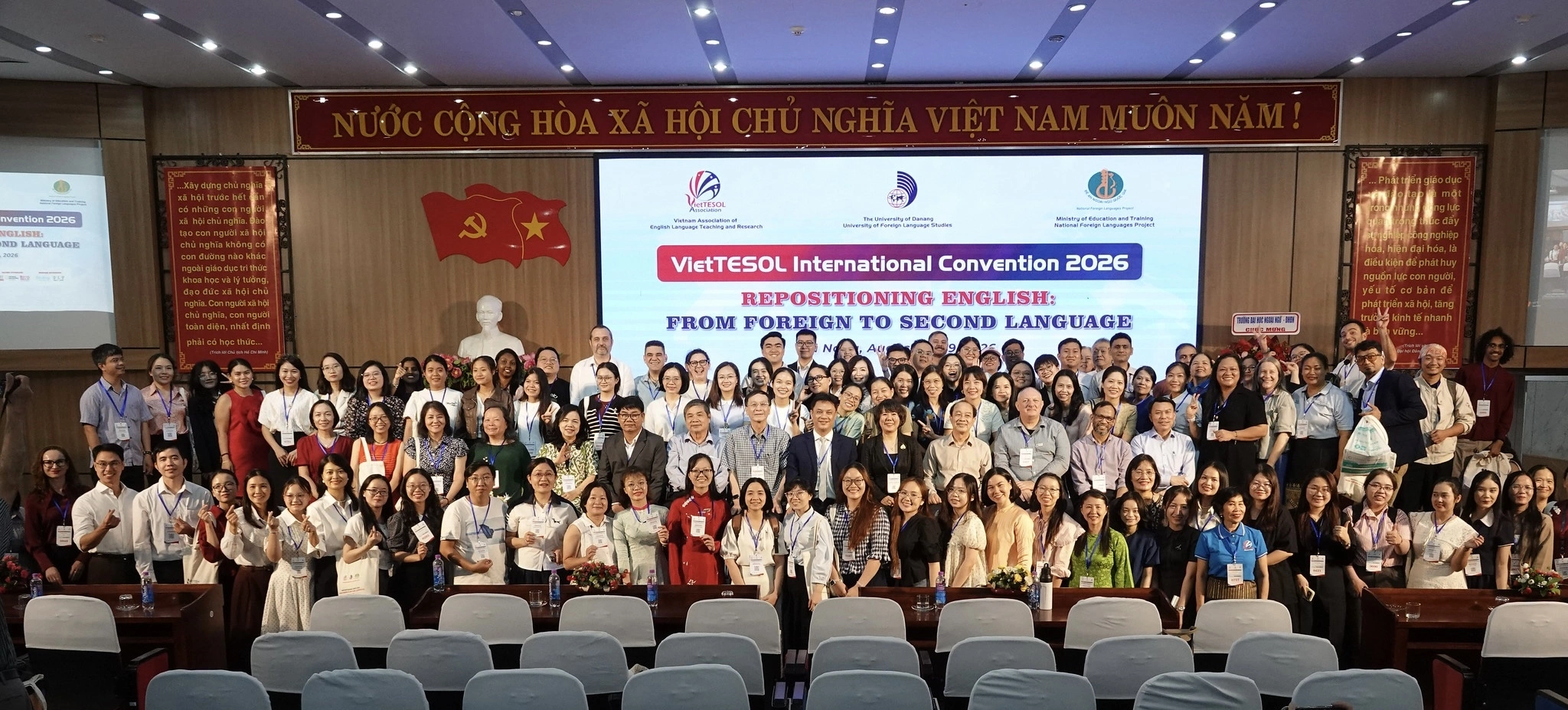 |
Professor Barry O’Sullivan presented his paper, "Lessons from East Asia: English curriculum trends and suggestions for ESL development in Vietnam." Photo: British Council |
Professor Barry O’Sullivan presented his paper, "Lessons from East Asia: English curriculum trends and suggestions for ESL development in Vietnam." Photo: British Council
Teachers play a crucial role in this transition. Professor O’Sullivan warned that the objective would be challenging to achieve without qualified, appropriately trained teachers who are ready to support the policy. From an assessment perspective, he commended Vietnam's long-term vision but highlighted the challenge of innovating exam design, especially as more subjects are taught in English. "These exams must reflect the new education system Vietnam is pursuing," he affirmed, adding that the British Council is ready to assist Vietnam in this process.
The VietTESOL 2026 International Conference, held from 27 to 29/8 in Da Nang, served as the platform for these discussions. Organized by the Vietnam Association for English Language Teaching and Research (VietTESOL), the University of Foreign Language Studies (University of Da Nang), and the Ministry of Education and Training, with the British Council as an academic partner, the conference focused on "Repositioning English: From a foreign language to a second language." It explored approaches to enhance the quality of English language teaching and learning, aligning with Vietnam's strategic educational direction.
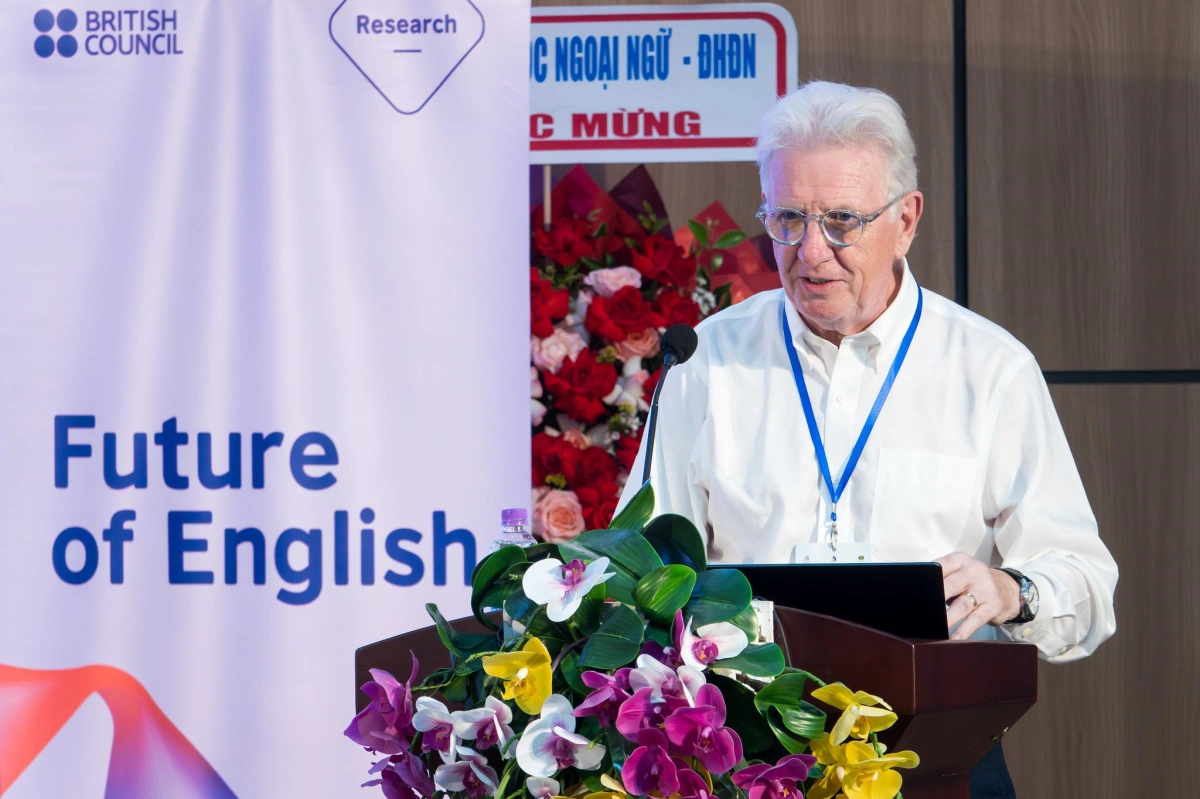 |
Overview of the VietTESOL 2026 International Conference, attended by national and international scholars and experts. Photo: British Council |
Overview of the VietTESOL 2026 International Conference, attended by national and international scholars and experts. Photo: British Council
Within the conference framework, Andrew Milner, Academic Manager for the British Council in East Asia, presented initial findings from an ongoing study on the value of English in Vietnam. This research, which surveyed over 600 respondents, provides important scientific evidence reinforcing the necessity and significance of Vietnam's initiative to establish English as a second language.
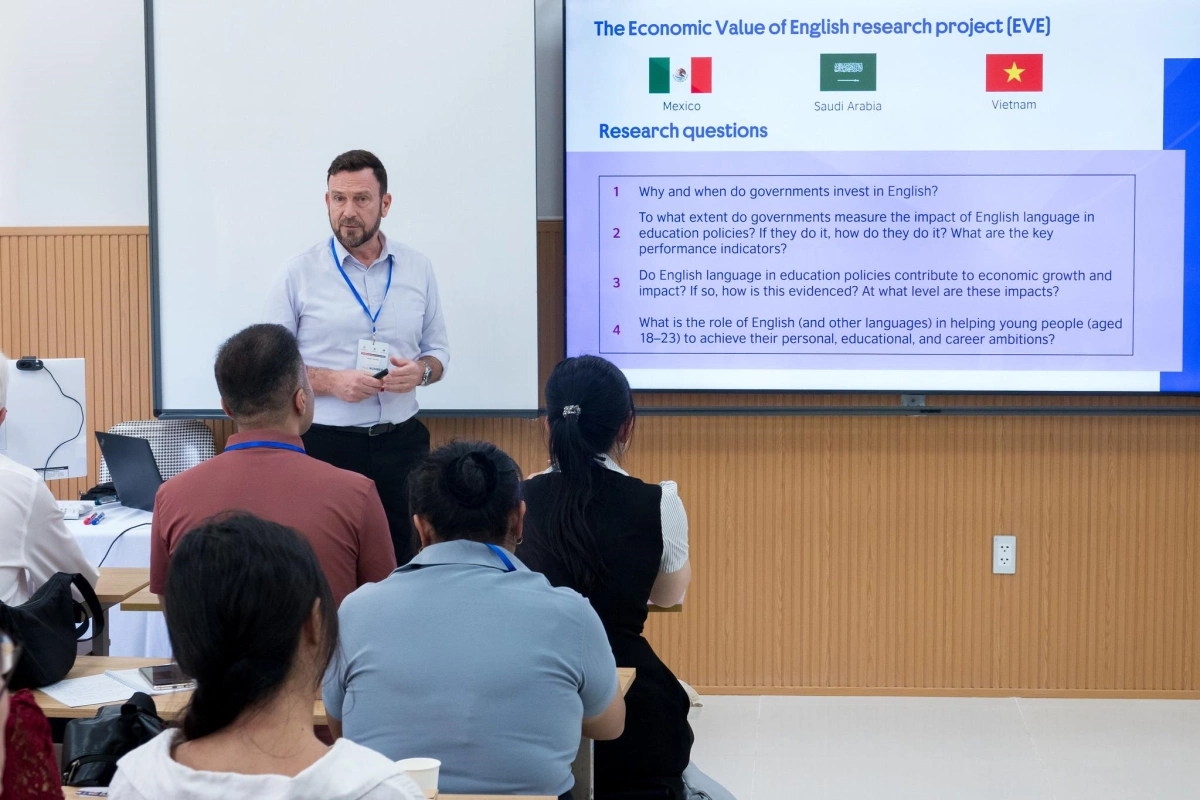 |
Andrew Milner shared findings from the research paper, "The value of English in Vietnam: Perspectives of young people in a multilingual digital economy." Photo: British Council |
Andrew Milner shared findings from the research paper, "The value of English in Vietnam: Perspectives of young people in a multilingual digital economy." Photo: British Council
The preliminary results indicate that a growing number of Vietnamese view English not just as a school subject but as a tool for accessing educational, career, and life opportunities. In an increasingly integrated economy, English is also seen as a foundation that helps learners access other languages, such as Japanese and Korean. For young people, English is increasingly prevalent in both social life and digital environments, spanning education, work, and entertainment.
2026 marks the third consecutive year the British Council has partnered with VietTESOL as an academic partner. This year's British Council Signature Series included 15 presentations on teacher development, pedagogical skills, and related research, featuring experts from Vietnam and abroad.
According to the British Council, these activities align with their commitment to support Vietnam across multiple areas: policy development, teacher training, enhancing teaching quality in digital environments, and developing English teaching and assessment solutions.
Yen Chi