Last week, Cao Liangliang was appointed professor of data and artificial intelligence at Hong Kong Polytechnic University (PolyU). This event marks his return to "where everything began," over 20 years after he was a student at The Chinese University of Hong Kong (CUHK).
Cao previously held leadership positions on AI teams at leading global technology corporations. He served as chief scientist at Apple, where he led machine learning projects for apple intelligence and the Vision Pro. He also co-founded Switi Inc, a startup company acquired by Google in 2018. Before joining PolyU, he was principal engineer and director at Google DeepMind, Google's artificial intelligence research and development division. He dedicated over a decade to intelligent assistant systems and AI agents, contributing directly to the development of Gemini, Google Assistant, apple intelligence, and IBM Watson.
The expert expects to bring practical experience from Silicon Valley to foster the development of PolyU specifically, and Hong Kong's tech ecosystem generally, in the new AI era.
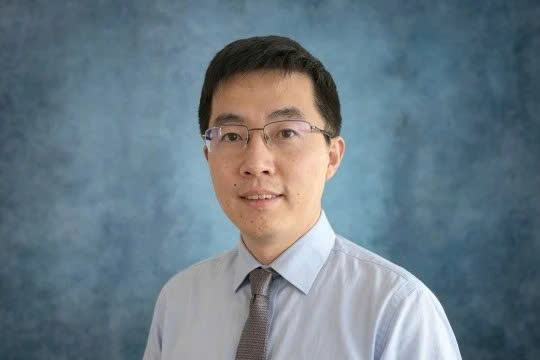 |
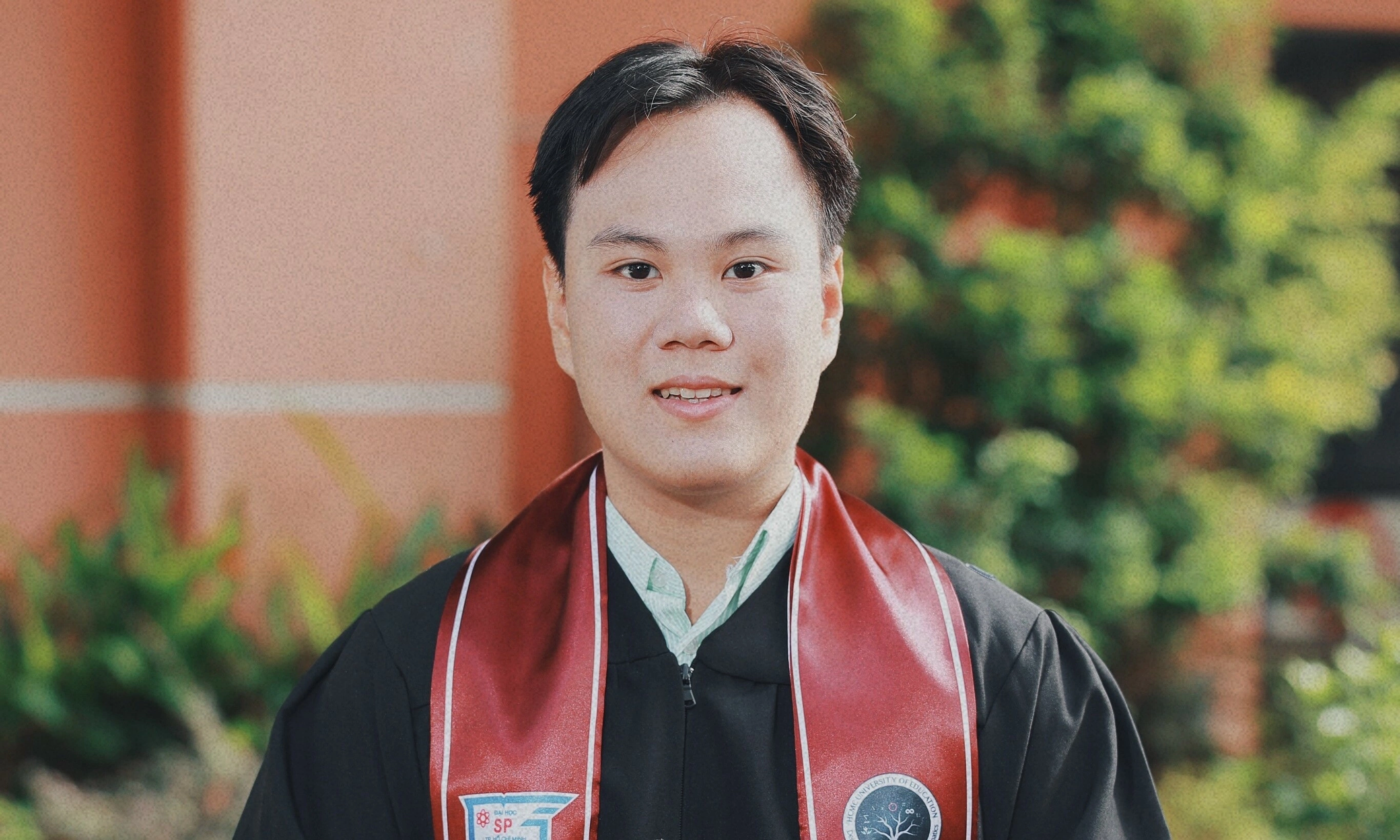
Cao Liangliang. Photo: SCMP |
Born in Liaoning province, Cao was admitted to the University of Science and Technology of China (USTC) in 1998, one of mainland China's leading science education institutions. After graduating in 2003, Professor Tang Xiao'ou recruited Cao for master's studies at CUHK's Multimedia Laboratory (MMLab). Cao moved to the United States in 2006, pursuing a PhD program at the University of Illinois Urbana-Champaign (UIUC). He studied under the guidance of Professor Thomas S. Huang, who is known as the "father of Chinese computer vision." Cao gained exposure to advanced knowledge in AI and computer vision. He won first place in the ImageNet competition, a massive image database considered the foundation for the modern deep learning revolution in computer vision. After leaving UIUC, Cao worked in academia for a short period before transitioning to companies and corporations.
Alongside his commercial achievements, Cao holds many notable awards. In 2017, he received the "Rising Star" award from the Association for Computing Machinery's (ACM) Special Interest Group on Multimedia. In 2025, he was elected an honorary fellow of the Institute of Electrical and Electronics Engineers (IEEE) for his far-reaching contributions to the computer vision and speech recognition industries.
Beyond core AI systems, Cao dedicated himself to humanitarian research. His previous work applied machine learning to early detection of autism spectrum disorder by analyzing children's eye gaze and facial expressions through video. Cao states he is currently focusing on developing AI-powered tools specifically for special education.
Chinese universities have been actively recruiting overseas Chinese talent for about two years now. Before Cao, many notable figures have returned, such as statistical scientist Liu Jun (Tsinghua University), semiconductor expert Jiang Jianfeng (Peking University), and mathematics "prodigy" Wan Daqing (Chongqing University).
Khanh Linh (Source: SCMP, PolyU)