Harvard's faculty council will vote this week on a proposal to limit 'A' grades to no more than 20% per course, aiming to curb grade inflation. The proposal also includes ranking students by percentile with honors such as cum laude, replacing the current grade point average system.
This immediately sparked a fierce debate across campus. A survey of over 800 students by the Harvard student council revealed 94% opposition. Many students fear that Harvard's already demanding environment will become even more toxic, as individuals meticulously strategize for limited 'A' grade slots.
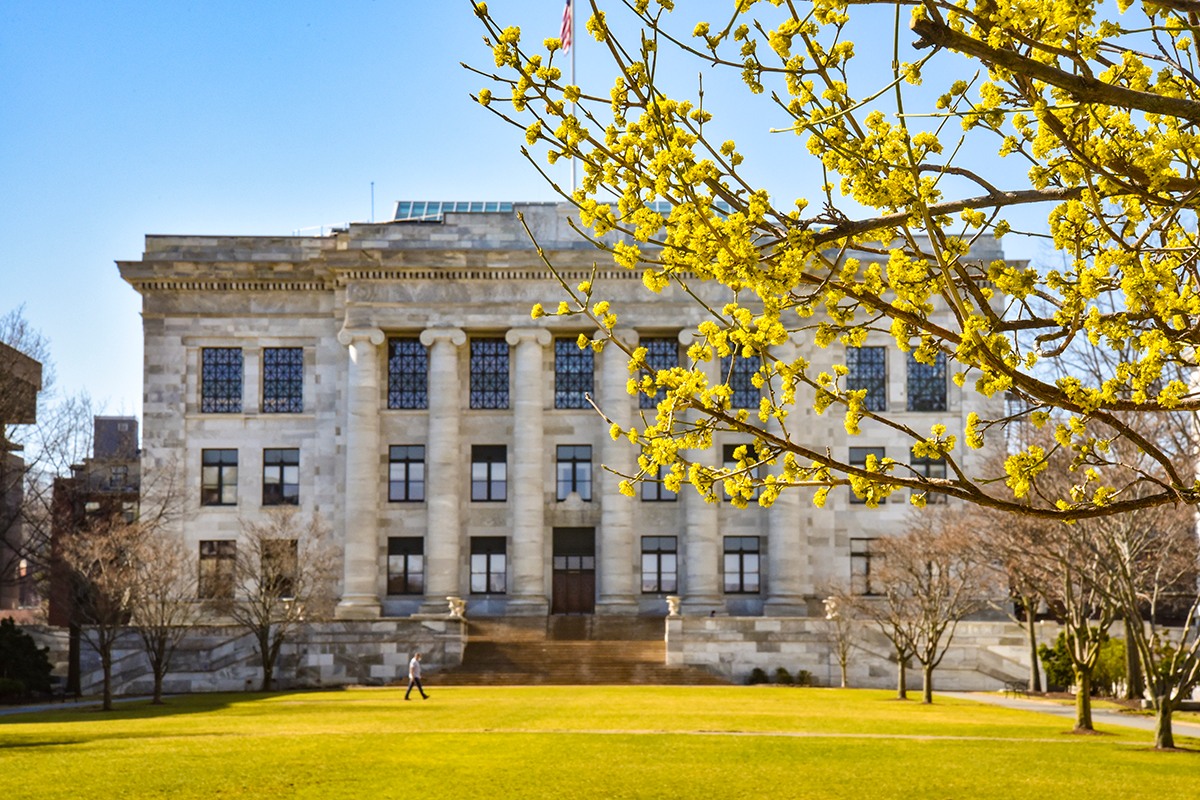 |
A view of Harvard University campus. *Photo: Harvard University*
Professor of English Martin Puchner supports the cap, arguing the current system is unfair to truly outstanding students. Professor of Psychology Joshua Greene compared current academic pursuits to driving a brand-new car for four years without a single scratch. "'You wouldn't dare challenge yourself in difficult terrain or do anything interesting for fear of losing an 'A' grade,' he said."
The proposal only applies to 'A' grades, not 'A-'. The drafting committee hopes 'A-' grades will become more common and less stigmatized. Professor Sean Eddy stated that most students achieving a 'proficient' level would receive an 'A-' rather than an 'A', reserving the top grade for 'exceptional' individuals.
From a student perspective, Anthony Wang, a chemistry major, called the approach "old wine in a new bottle," arguing it fails to address the root problem. Hyunsoo Lee, a student council representative, added that students are not afraid of challenging courses or receiving 'B' grades, but are concerned about fairness and teaching quality.
Given the strong backlash, Harvard University decided to postpone the implementation until autumn 2027 instead of this year, allowing faculty time to adjust curricula. Ms. Claybaugh, head of undergraduate education, also suggested that the 94% opposition figure was an immediate reaction.
Administrators and some faculty members assert their goal is to reform academic culture and encourage students to take their studies more seriously. Harvard has already made initial progress. The percentage of 'A' grades dropped to 53,4% last autumn semester. The university is committed to this plan, following reports from many faculty members of receiving low student evaluations or seeing students avoid their courses due to stricter grading compared to colleagues.
"'It's strange that at Harvard, it's easy to identify the best basketball player or violinist, but impossible to distinguish the best student in a class,' said Ms. Claybaugh. 'We must do what is best to preserve Harvard's reputation. Students themselves are the beneficiaries of it.'"
Last academic year, 'A' grades accounted for 60% of all grades at Harvard, a significant increase from 25% for the 2005-2006 cohort. Despite rising grades, students are actually studying less. Many students skip classes or focus on electronic devices, pretending to have read assignments and not participating. If the 'A' grade cap plan is approved, the overall grade distribution would revert to 2011 levels.
Khanh Linh (According to The Wall Street Journal, Harvard Magazine)