This information is detailed in the Wissenschaft weltoffen 2025 (Science Open to the World) report, published by the German Academic Exchange Service (DAAD) in early December.
About 402,000 foreign students enrolled in Germany for the winter semester 2024/25, a 6% increase from the previous academic year. Among these, over 116,000 were new international students. Approximately 270,000 pursued university-level studies. The majority enrolled in engineering fields (43%), followed by economics, law, and social sciences (25%).
India contributed the largest number of international students, with 59,000, representing a 20% increase compared to the 2023/2024 academic year. This figure significantly surpasses the group from China, which accounted for 38,600 students. The remaining three countries in the top 5 were Turkey, Iran, and Austria, each sending approximately 16,000-20,000 students, all showing an increase from last year. Although the number of Vietnamese international students was not specified in this report, another DAAD report indicates a stable figure of about 5,800.
Overall, students from the Asia-Pacific region comprise the largest proportion of international students in Germany (33%). Africa also contributes significantly, accounting for about one-quarter of the total.
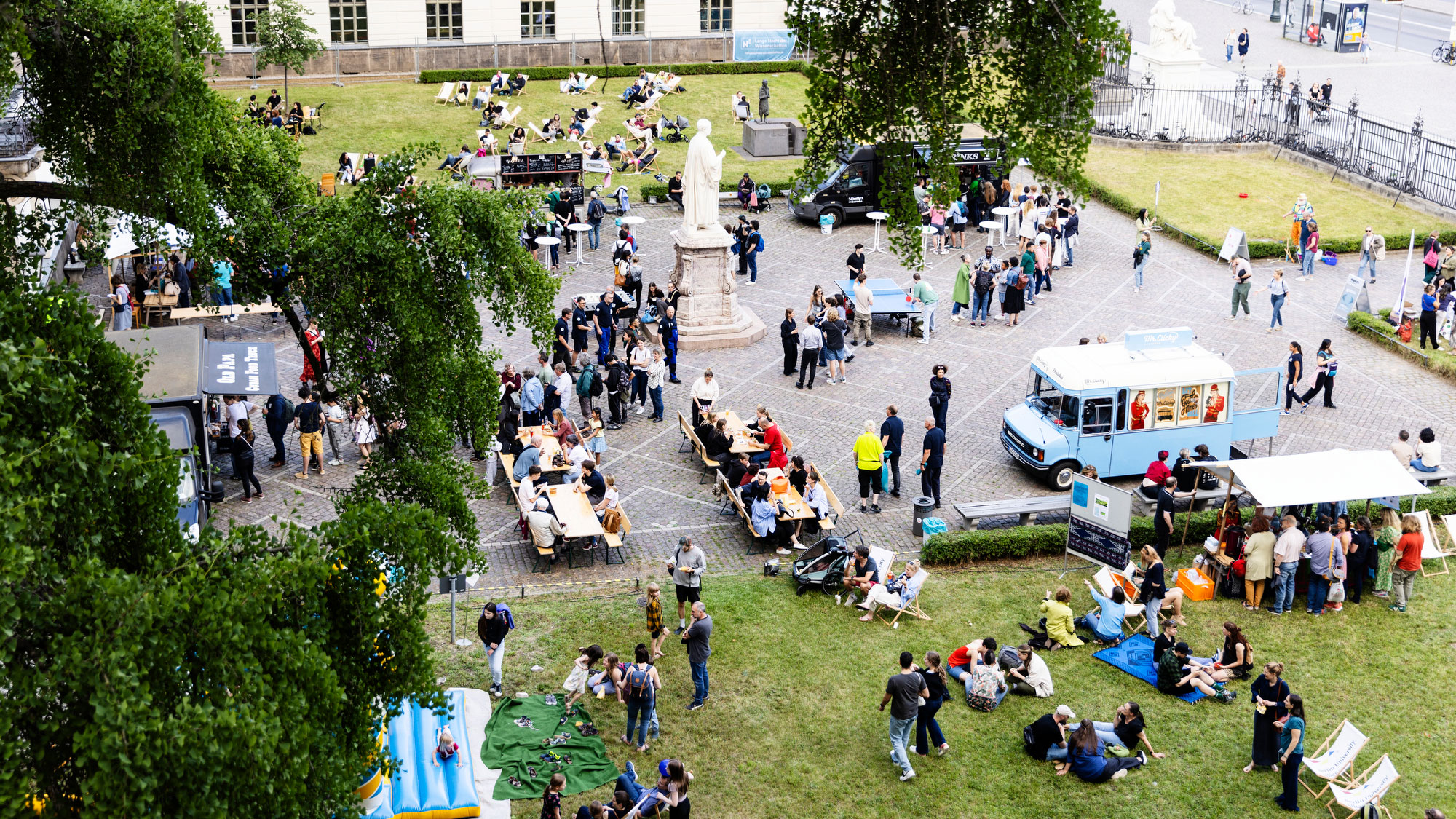 |
Humboldt University of Berlin campus. Photo: Humboldt University of Berlin Fanpage |
The number of international students arriving in Germany has consistently grown over the past decade. While Australia, the United States, the United Kingdom, and particularly Canada have implemented more restrictive policies for international students, Germany has taken the opposite approach. Beyond bachelor's degrees, the country has also succeeded in attracting master's and Doctor of Philosophy (PhD) candidates, who constitute 26-28% of all students at these levels.
Doctor Marcus Beiner from the German Centre for Higher Education Research and Science Studies (DZHW) told ICEF Monitor that this trend highlights Germany's continuing development as a central hub for science.
This growth has led to an expansion in staff and training programs within international education offices at universities. According to DAAD, universities currently offer nearly 2,400 accredited English-taught programs, including about 420 bachelor's programs (4% of the total) and 1,930 master's programs (18%).
Germany, Europe's largest economy, faces a severe shortage of skilled labor, projected to reach 7 million by 2035 due to an aging population.
The DAAD has urged the government, universities, and businesses to develop a strategy to attract and double the proportion of international students who remain after graduation, aiming for about 50,000 people per year by 2030.
According to Study in Germany, the information portal for studying in Germany, there are three primary reasons why the country appeals to foreign students:
First, public universities offer tuition-free education; students only incur an administrative fee of 150-250 euro (4-6,6 million VND) annually. Additionally, the quality of German higher education is highly regarded, with over 500 bachelor's and master's programs taught in English. A total of 49 German universities are included in the Times Higher Education world university rankings.
Second, the average monthly living cost for international students in Germany is only about 930 euro (1,000 USD), which is significantly lower compared to international students in the United Kingdom (1,500 USD) or the United States (1,250 USD).
Finally, after graduation, students have the opportunity to stay and work for up to 18 months with an extended residence permit. Survey results also indicate that nearly 70% of international students wish to remain in Germany to seek employment after completing their studies.
Khanh Linh