The China National Science and Technology Awards for 2025 were announced on 8/7. According to Peking University's website, where Wei Dongyi is an associate professor, he and his colleague Zhang Zhifei received the second prize in the Natural Science category.
The research that earned them the award is a mathematical study on flow transition mechanisms. It provides new theoretical tools to understand the transition process from laminar to turbulent flow.
Previously, they co-authored numerous papers in leading global mathematics journals on navier-stokes equations, euler equations, and the theory of nonlinear differential equations.
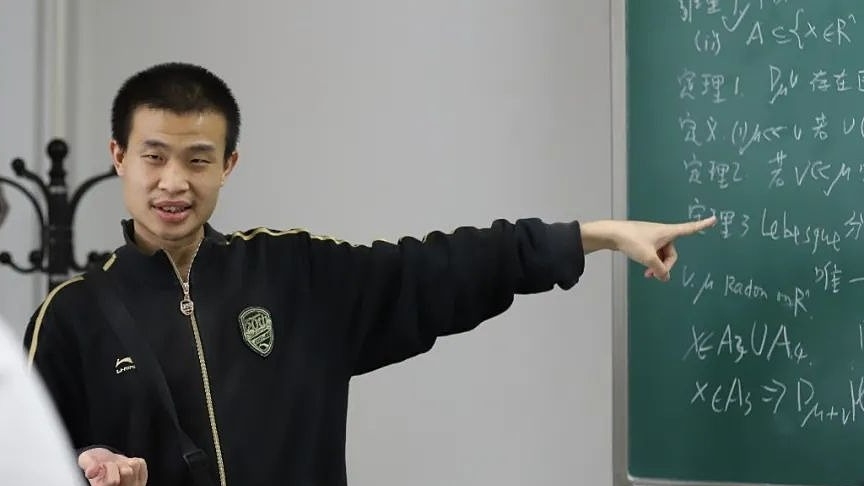 |
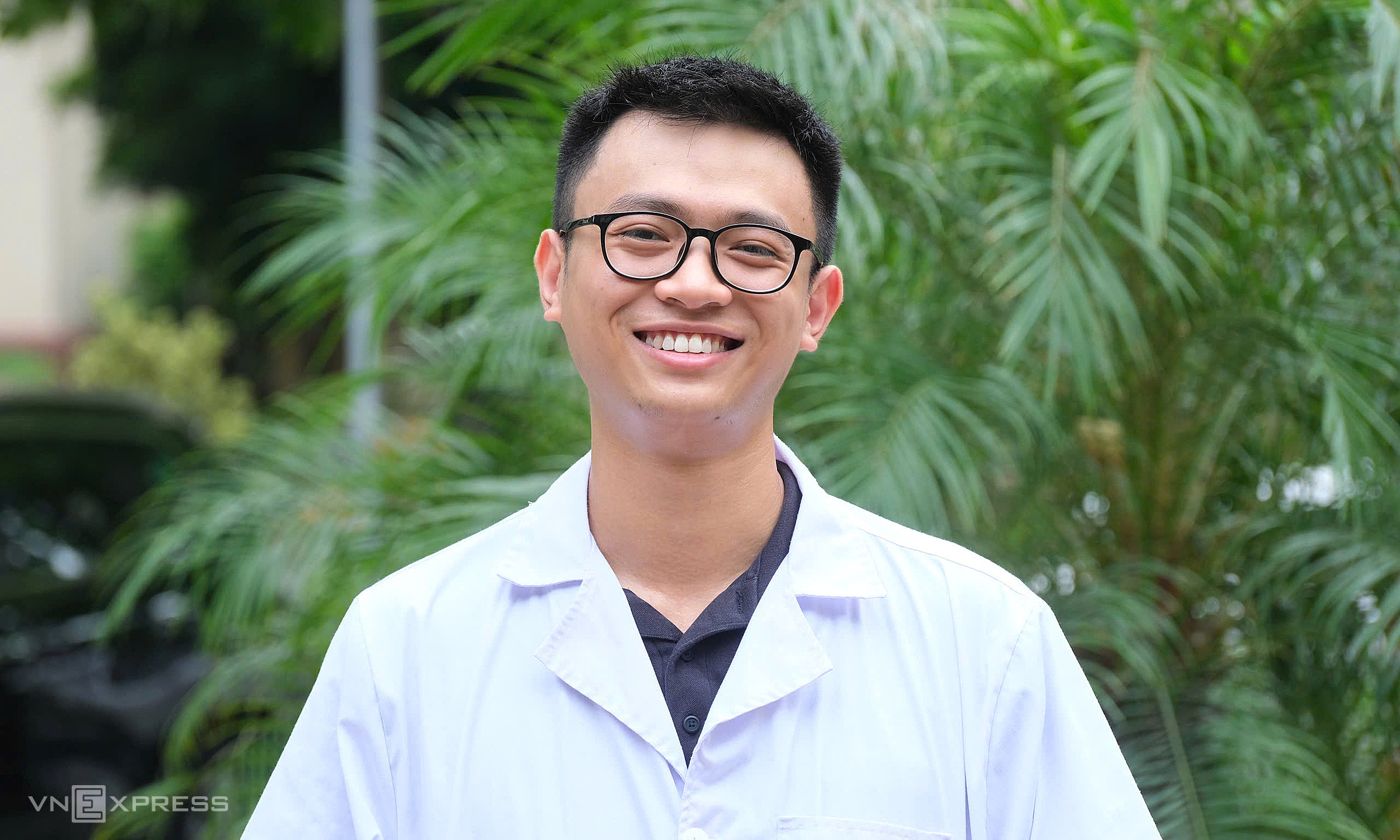
Mathematician Wei Dongyi. *Photo: Peking University* |
Wei Dongyi, born in 1991, became an "internet sensation" in China after a spontaneous street interview in 2021. At the time, he appeared remarkably unassuming, holding a large bottle of mineral water and a bag of steamed buns, and spoke with some shyness.
His personal profile, however, astonished the public. Wei achieved two perfect scores at the International Mathematical Olympiad (IMO) in 2008 and 2009. In high school, he once "shocked" his teachers by solving 23.5 out of 24 problems in eight gifted student selection competitions. Notably, Wei used his own methods rather than conventional approaches.
After his IMO triumph, Wei declined a full scholarship offer from Harvard University to attend Peking University and complete his doctoral program there. He is affectionately known as "God Wei" by both academics and the public for his exceptional talent.
Established in 1999, the China National Science and Technology Awards are among China's most important state-level awards, recognizing groundbreaking discoveries in basic research across fields such as mathematics, physics, chemistry, biology, and engineering.
The award features two levels, first and second prizes, across three categories: Natural Science, Technological Invention, and Science and Technology Progress. A total of over 250 projects were honored this year.
By Khanh Linh (According to Peking University, SCMP, Science Net)