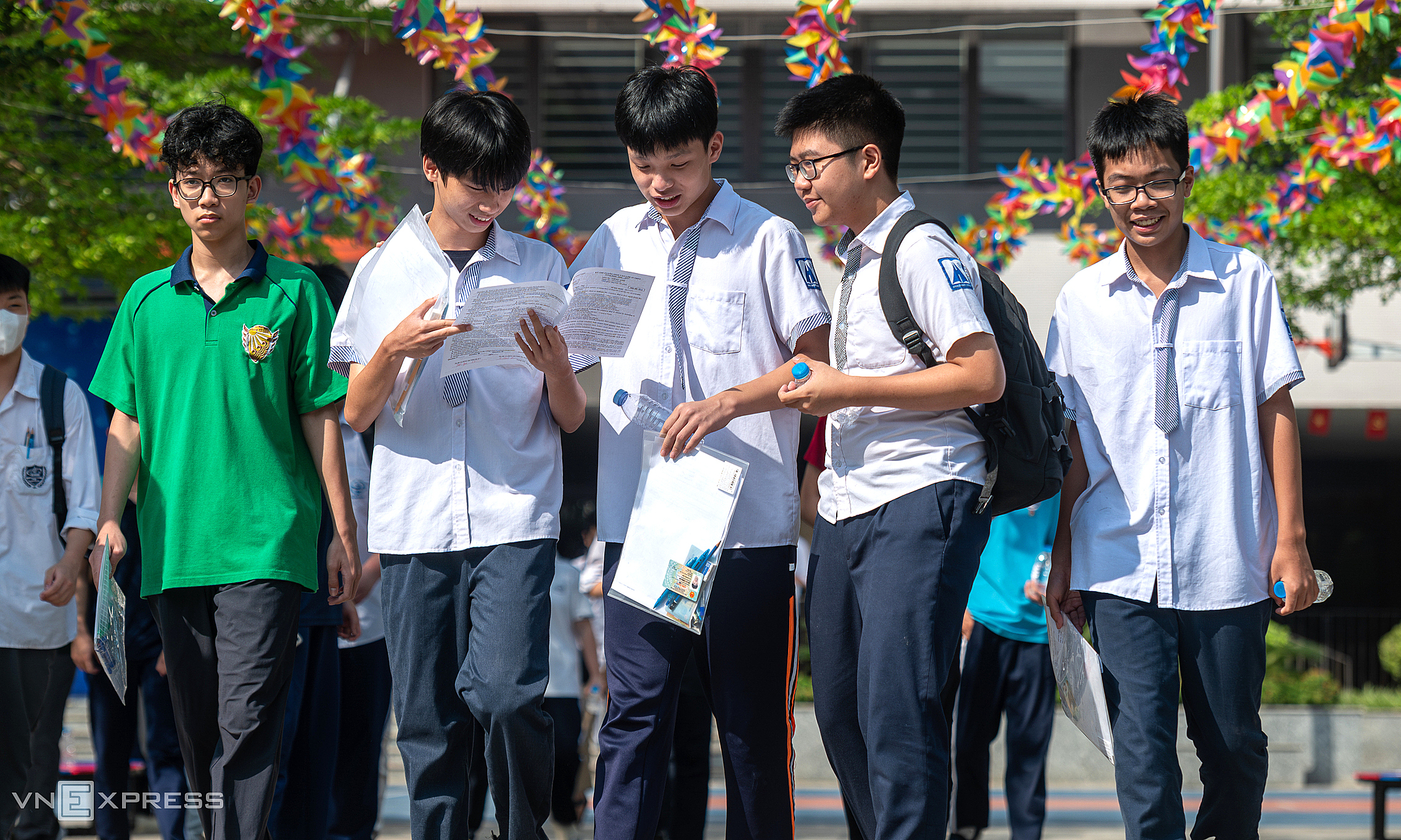
The Organisation for Economic Co-operation and Development (OECD) released the results of its Programme for International Student Assessment (PISA) 2025 on 8/9. This assessment cycle saw over 7,350 Vietnamese students from 194 junior high schools participate.
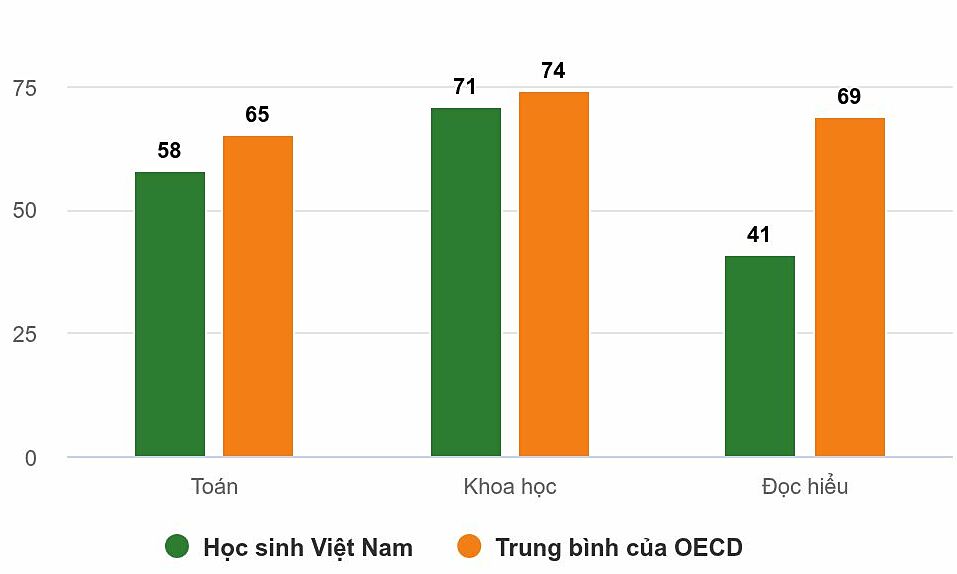
A significant finding reveals that only 41% of students achieved level 2 or higher in reading comprehension, nearly 30% below the OECD average. Level 2 is considered the basic threshold, enabling students to apply knowledge and information to familiar real-world scenarios. "In other words, approximately 59% of Vietnamese students have not reached the basic reading comprehension level according to PISA's assessment," the Ministry of Education and Training (MOET) stated.
On average, Vietnamese students scored 457 in science, 443 in mathematics, 392 in reading comprehension, and 461 in computer-based problem solving. These scores represent a decrease of approximately 15 to 70 points compared to the 2022 assessment. PISA does not establish minimum or maximum scores but calculates them to align with a standard distribution.
MOET noted that this assessment marked the first time Vietnamese students transitioned from paper-based to computer-based testing. Given the differences between these two methods, the score variation is not sufficient to determine if education quality has improved or declined.
The proportion of students achieving level 2 or higher in science and mathematics was more positive, at 71% and 58% respectively, compared to OECD averages of 74% and 65%.
 |
In light of these findings, MOET emphasizes the need to improve students' reading comprehension across all subjects. This extends beyond literature classes, as strong reading skills are essential for solving word problems in mathematics, grasping scientific concepts, interpreting maps, charts, or online instructions, and for effectively selecting, comparing, and analyzing information.
To foster improvement, teachers can expose students to diverse information formats, including articles, tables, images, and data. Regular assessments can also provide timely support. Educators can adopt PISA's approach by encouraging students to explain, reason, process information, solve problems, and engage in critical thinking. However, it is important to avoid transforming PISA into a mere examination or organizing specific test preparation courses.
Conversely, MOET noted that the PISA 2025 results highlight positive aspects of Vietnam's educational resources: students value learning, demonstrate persistence, proactively seek support, and are diligent. Teachers are attentive, and students quickly adapt to new technologies.
The Programme for International Student Assessment (PISA) is a global assessment program conducted every three years. Vietnam has participated since 2012. The recent assessment involved approximately 765,000 students across 91 countries and economies.
By Thanh Hang