Hanoi Medical University (HMU) issued a statement on the evening of 7/9 regarding the organization of its resident doctor specialty registration day, "Match Day 2026". This event, for 780 candidates who passed the august examination, has sparked considerable debate on social media.
HMU has consistently implemented "Match Day" since 2016. Candidates are called to choose their specialty based on a publicly displayed ranking of exam scores, from highest to lowest. Those with higher scores select first. The selection process and remaining slots for each specialty are updated in real-time on a large screen. Once the final slot for a specialty is filled, the system automatically locks it, meaning subsequent candidates no longer have that option.
Faculty and students at Hanoi Medical University consider this a unique method for the institution, as 12 other medical schools offering resident doctor training allow candidates to register their preferences before taking the exam. Videos from "Match Day" events over the past few years have gone viral on social media, largely celebrating the talent of young doctors.
This year, as the selection day approached, a lively discussion about this method emerged on social media. The debate originated from a post by a former resident doctor, who suggested the event served more as a public relations tool than an effective admissions process. He expressed concern that "Match Day" could trigger a "fear of missing out" (FOMO) among candidates, leading them to hastily choose popular specialties instead of carefully considering their strengths.
Another doctor also observed that selecting specialties based on score rankings might compel many lower-ranked candidates to make an arbitrary choice, picking a specialty they do not prefer simply to secure a place in this elite training system.
In response to these concerns, Hanoi Medical University maintains that "Match Day" remains the optimal and most progressive approach for the institution.
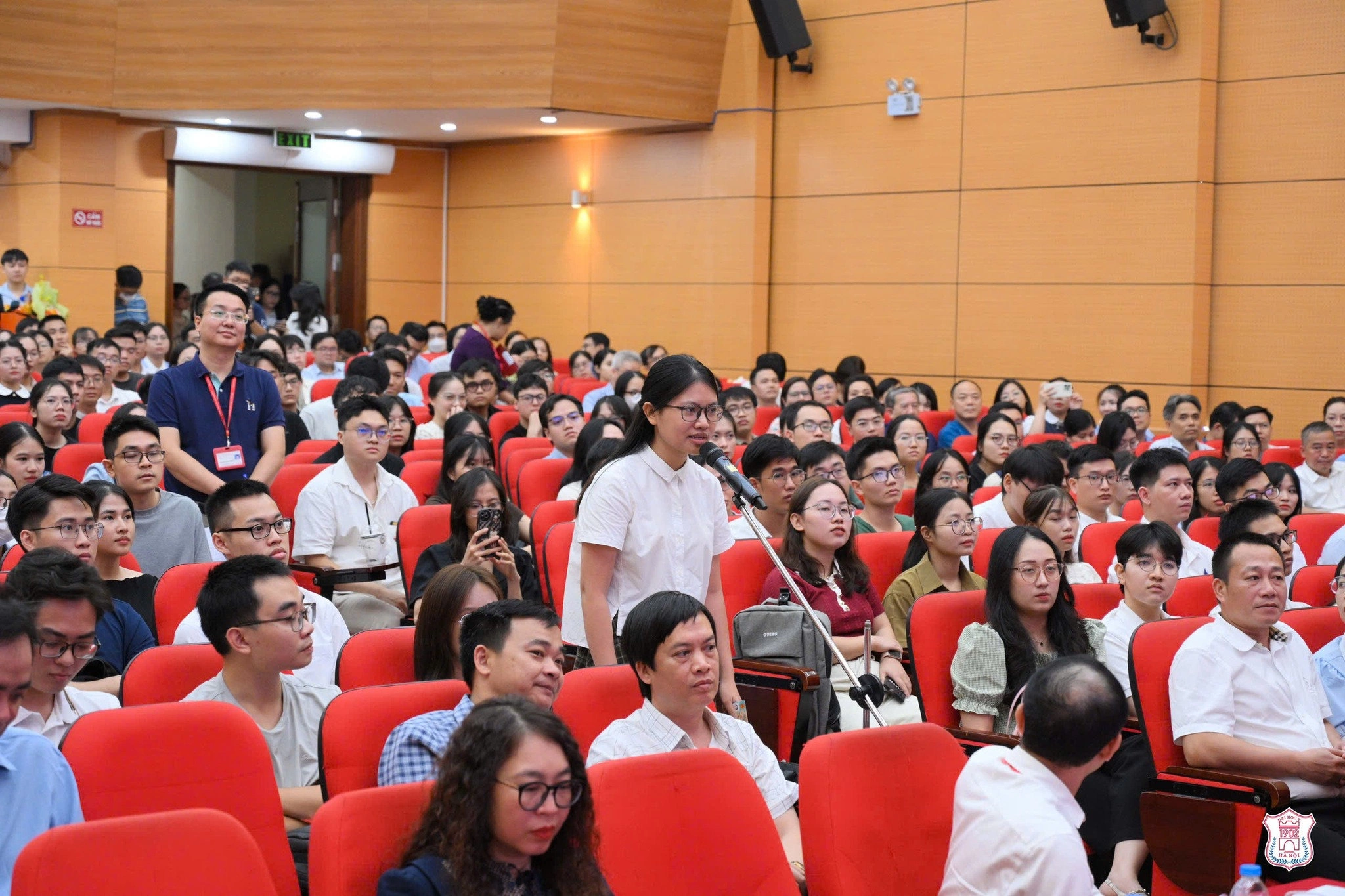 |
New resident doctors select their specialty during Match Day 2025. *Photo: HMU* |
The primary reason for this commitment is ensuring transparency. All information concerning rankings, quotas, and selection progress is displayed in real-time, eliminating any possibility of external interference with applications or quota adjustments outside the established procedure.
Secondly, this model eliminates false enrollment rates because candidates make their decisions and sign specialty confirmations on the spot, allowing the university to finalize the admission list efficiently.
Furthermore, the university leadership believes this method honors the true capabilities and studious spirit of new doctors after a rigorous three-session examination. This comprehensive exam covers clinical subjects such as internal medicine, surgery, obstetrics, pediatrics, and emergency medicine, alongside basic medical sciences including anatomy, physiology, biochemistry, genetics, pharmacology, microbiology, and histology-embryology. This format also provides candidates with the best opportunity to determine their future based on their exam scores, rather than requiring them to register preferences beforehand.
Professor Doctor Nguyen Huu Tu, the Rector, emphasized that each specialty holds unique value and offers opportunities for success if pursued with effort, passion, and persistence.
"New resident doctors, prepare your resilience and courage for three years of rigorous but invaluable study to mature and assert yourselves," Mr. Tu stated.
The resident specialty selection event at Hanoi Medical University went viral.
Hanoi Medical University has trained resident doctors since 1974, with over 6,000 graduates to date. These graduates represent a core medical workforce, holding key leadership positions and serving as leading experts within the Ministry of Health, various hospitals, health sector training institutions, and research institutes.
Duong Tam