According to data released by the Ministry of Education on 28/12, a total of 4,008 schools across the nation have ceased operations. Primary schools account for the majority, with nearly 3,700 closures, followed by 264 middle schools and 70 high schools.
The primary reason for these closures is the country's birth rate, which is the world's lowest at below 0,8. In the past five years alone, 160 schools have disappeared from the education system. This trend is expected to continue, with at least 100 more projected to close in the next five years.
Among the provinces, North Jeolla recorded the highest number of closures with 16 schools, followed by South Jeolla (15), Gyeonggi (12), and South Chungcheong (11).
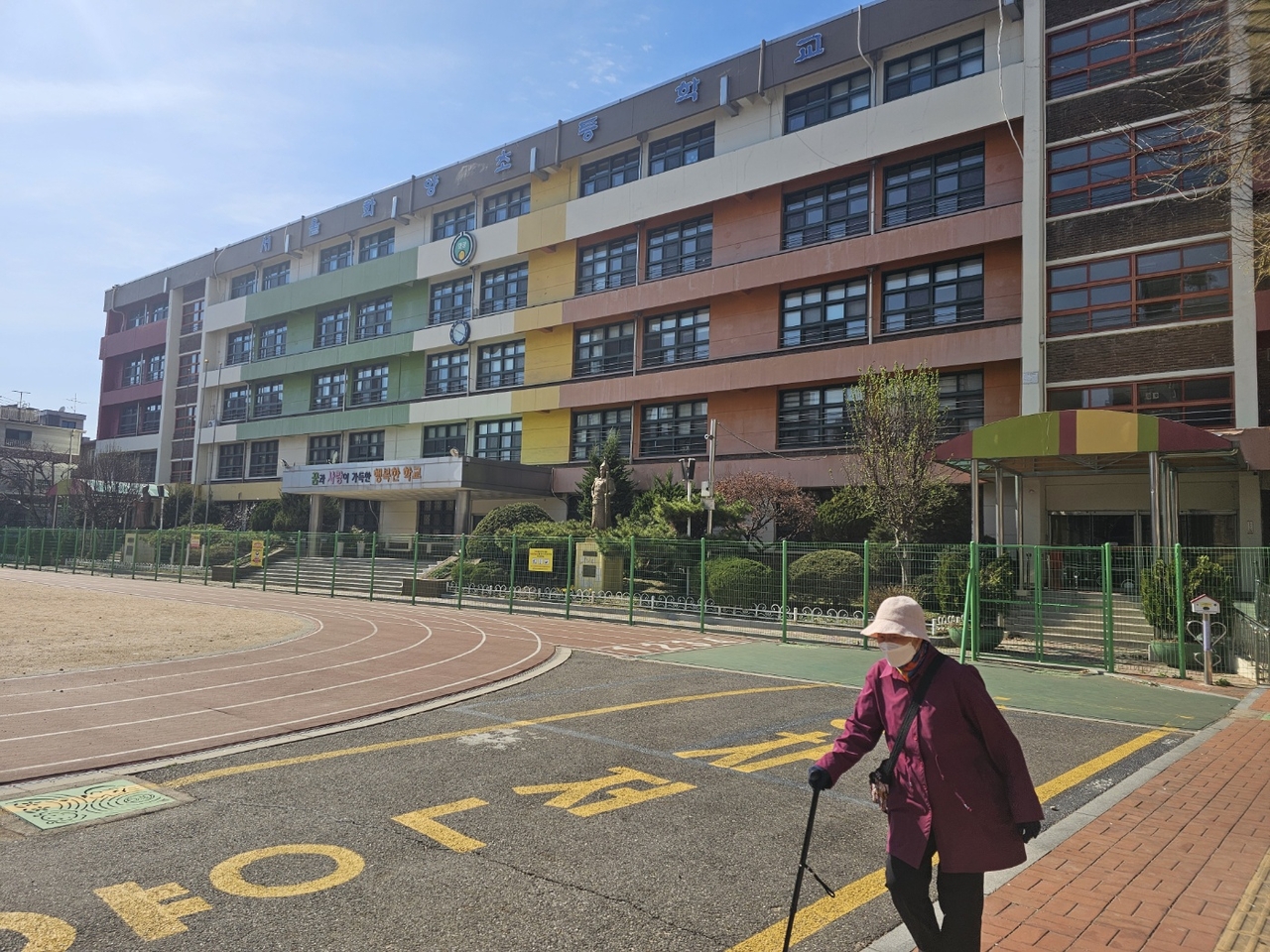 |
An elderly woman exercises on the grounds of Hwayang Primary School in Seoul, which closed last year due to a lack of students. *Photo: The Korea Herald*. |
The Korea Educational Development Institute (KEDI) estimates that student enrollment across all levels will decrease from the current 5 million to 4,25 million by 2029, less than half the number recorded in 1980.
Beyond the silence where student chatter once filled the halls, South Korea also faces the challenge of wasted public assets. Data reveals that nearly one-tenth of the more than 4,000 closed schools remain vacant. Approximately 270 facilities have been abandoned for over 10 years, with more than 80 schools deserted for over 30 years.
Parliament member Jin Sun-mee suggested that the government needs a long-term plan to repurpose these school properties into assets that serve local communities, rather than allowing them to go to waste.
The student shortage crisis also directly threatens the teaching profession. In February, the Ministry of Education announced a reduction of over 2,200 teaching positions. To sustain remaining facilities, many local authorities have implemented temporary solutions, such as reducing class sizes to just 10-15 students and increasing the number of lessons.
Khanh Linh (According to The Korea Times, The Korea Herald)