This is one of many perks the South Korean associate professor has enjoyed for the past five years, since joining the Department of Biology and Chemistry at Southern University of Science and Technology (SUSTech) in Shenzhen, Guangdong province, as reported by Korea Times.
In 2022, upon his arrival, Shin was classified as "Class C talent" under the city's Peacock Plan. Despite being the lowest tier, he immediately received a 35,000 USD cash bonus and an annual after-tax salary of 170,000 USD. At SUSTech, he gained unrestricted access to a 4,5 million USD cryo-electron microscope and priority for research funding applications. The city also provided assistance with home purchases, job placement for his wife, and an income tax rate that was only one-third of what typical high-income residents pay.
The Global Times estimates that 13,000 scientists have joined Chinese institutions over the past five years. Many of these individuals have received prestigious accolades, including Nobel Prizes, or held senior professorships at top Western universities.
The primary appeal lies in China's extensive network of talent recruitment and funding policies. The nation currently manages around 200 provincial and national programs, establishing a multi-tiered incentive structure that academics refer to as the "hat ladder".
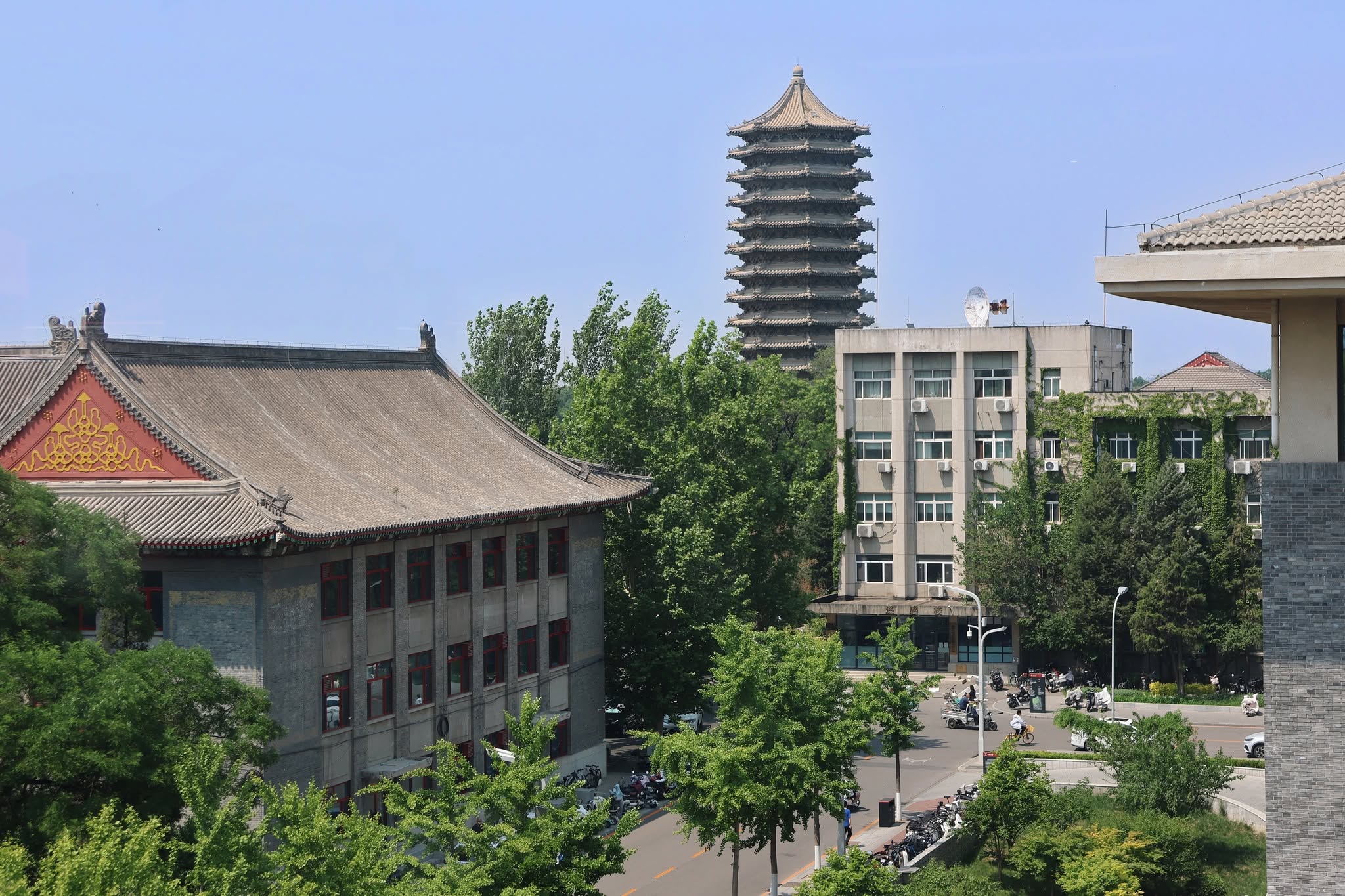 |
A corner of Peking University campus, China. Photo: Peking University Fanpage
Prominent among these are national initiatives like the Natural Science Fund for Outstanding Young Scientists Abroad, the Changjiang Scholars Program, Thousand Talents, and Young Thousand Talents. These are complemented by local policies such as Shenzhen's Peacock Plan, Zhejiang's Kunpeng Initiative, and Shanghai's Oriental Scholars program.
Talent is categorized into A, B, and C levels, which determine their respective benefits. All recipients receive a signing bonus and research grants in exchange for a commitment of three to five years of service.
For example, a scientist joining the Chinese University of Hong Kong's Shenzhen campus under the "Young Thousand Talents" program receives a bonus exceeding 110,000 USD from provincial and central governments, along with a research startup fund ranging from 220,000 to 520,000 USD. Higher-tier individuals receive double the bonus and preferential housing. Foreign scholars alone can secure 440,000-740,000 USD in government research funding, supplemented by local support packages.
Universities serve as primary points of contact for applications. To attract and retain top scholars, institutions actively introduce their own distinct incentive packages. For instance, tenured associate professors and professors at Tsinghua University's Yau Mathematical Sciences Center earn annual salaries ranging from 74,000 to 518,000 USD. Comparatively, the highest salary for a similar position at Princeton University in the US ranges from 271,000 to 350,000 USD, as reported by The Daily Princetonian.
Many universities also implement a "matching fund" mechanism. At Shanghai Jiao Tong University, for example, if a young scientist secures 1-3 million yuan (150,000-450,000 USD) from a government research fund, the university will contribute a similar amount.
State-of-the-art facilities also play a crucial role. Shin noted, "South Korea has only five cryo-electron microscopes, meaning months-long waits for access. In contrast, SUSTech alone boasts six of these instruments."
Furthermore, universities expedite the empowerment of new faculty, offering immediate tenured professorships and unlimited PhD student recruitment. Chen Peipei, an energy scientist who recently moved from Cambridge University in the UK to City University of Hong Kong, told the SCMP, "For scientists, having funding and a research team to conduct their work is highly appealing. Such opportunities are increasingly scarce in the UK."
Finally, China's vibrant university research environment, driven by the nation's ambition to lead the world in science and technology by 2035, presents significant opportunities for academics.
This influx of talent coincides with US universities grappling with funding cuts, freezes, and heightened pressure and scrutiny over research, according to CNN. Lu Wuyuan, a protein chemist and former tenured professor at the University of Maryland before his move to Fudan University, observed that Chinese institutions are actively competing to capitalize on this shift.
"The return of internationally trained scientists to China represents a powerful, perhaps irreversible, trend," Lu stated.
By Khanh Linh