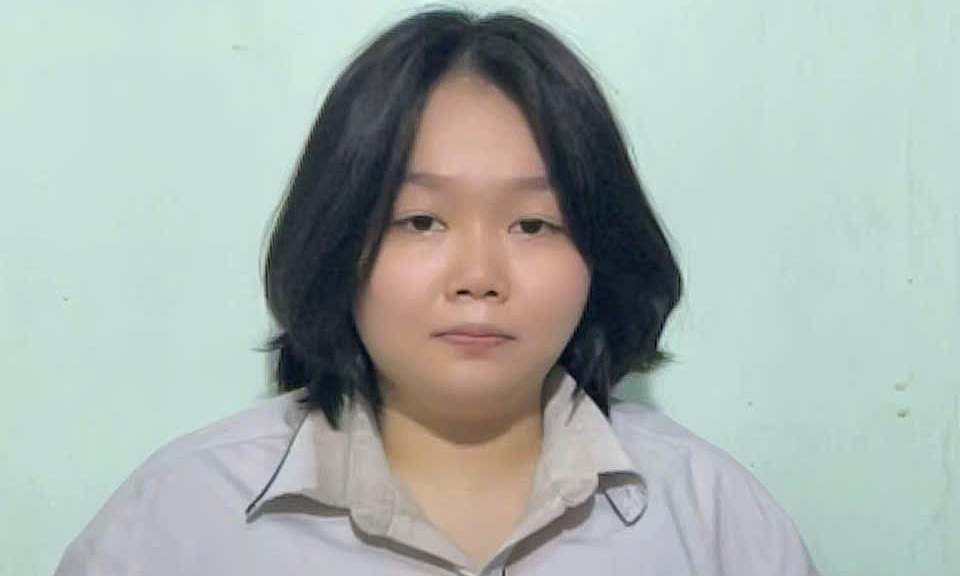
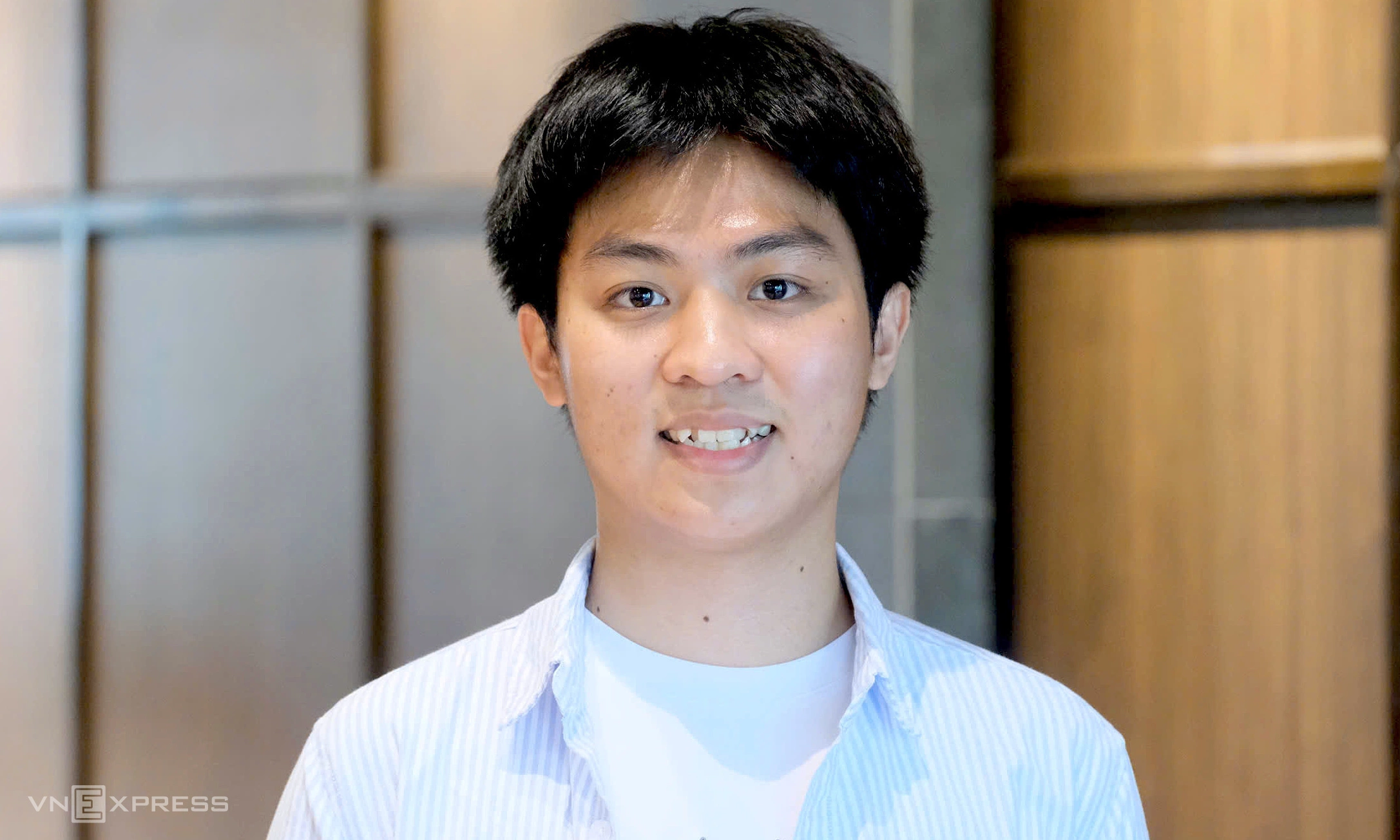
Hoang Hieu, 23, is set to enroll at the University of California, Riverside (UCR) for a PhD program in Applied Statistics. This achievement follows a strategic approach of directly engaging with professors and demonstrating a clear vision for research collaboration.
UCR is ranked among the top 100 universities in the US, according to US News' 2026 rankings. Before this, Hieu earned a bachelor's degree in Data Science and Statistics from the University of California, Davis (UC Davis).
"I decided to pursue a direct PhD to follow a path of in-depth research and become an expert in AI", Hieu stated, explaining his motivation for advanced studies.
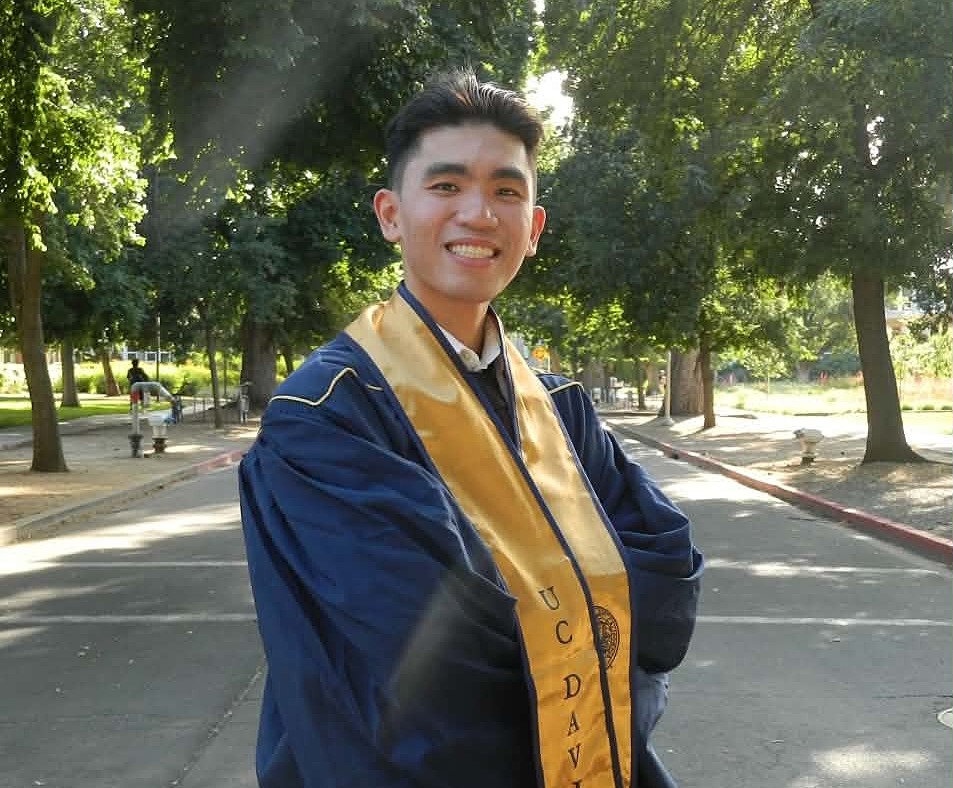 |
Hoang Hieu. *Photo: Provided by subject* |
After graduating from junior high school in TP HCM, Hieu pursued high school studies in the US on a full scholarship. Upon entering university, he was admitted to UC Davis, where he chose Statistics due to his passion for Mathematics, particularly linear algebra and multivariate calculus.
"The world constantly operates and revolves around data, while statistics combines mathematical thinking, machine learning algorithms, and practical application in countless fields like healthcare, technology, and economics", Hieu shared, highlighting the interdisciplinary nature of his chosen field.
During his time at UC Davis, Hieu actively participated in the Google Developer Student Club (GDSC) and a machine learning student network. These engagements helped him enhance his knowledge, teamwork skills, and expand his professional network. In his final year, he served as a research consultant on job search assistance tools. Hieu also contributed to a NASA-sponsored academic training program, helping to write project proposals aimed at optimizing the organization's platform budget.
A pivotal moment that led Hieu to pursue a PhD came from a research project on DNA and cell structure changes led by a professor at UC Davis. Hieu was tasked with data collection and 3D modeling to visualize cell structure transformations. Despite initial struggles due to a lack of practical skills, the experience solidified his academic ambitions.
"The professor recounted their research journey, which greatly motivated me", Hieu said. He realized that overcoming difficulties required self-learning and proactively connecting with lab colleagues to exchange knowledge.
After graduation, Hieu worked at a nonprofit organization. This experience further affirmed his suitability for an academic environment. Confident in the knowledge gained during his four years of university, Hieu decided to apply for PhD programs. His application included transcripts, letters of recommendation, and a research plan.
Hieu was particularly interested in research on large language models, focusing on evaluation aspects such as scalability and real-world interpretability. Consequently, he proactively emailed a professor at UCR who had related projects. In his email, Hieu demonstrated his understanding of the professor's project and attached his curriculum vitae (CV) detailing his contributions to previous research.
"I might not have had outstanding achievements, but I needed to prove my practical personal skills could contribute to completing their project", Hieu concluded. This approach led to his acceptance by the professor before he proceeded to interview rounds with the faculty committee.
"I understood what the professor intended to do with the project and how to expand the research into other fields", Hieu said, considering this an advantage in convincing interviewers. He also thoroughly prepared his research direction for the next 4-5 years, clearly articulating his reasons for choosing the university and his potential advisor. According to Hieu, applicants should avoid overusing complex jargon. Instead, they should explain concepts concisely and clearly to demonstrate a solid foundational understanding, allowing interviewers to easily grasp their research methodology.
Another key tip from Hieu is to proactively ask questions. He inquired about the professor's management style, the number of students involved in the project, and weekly team meeting schedules. He believed this helped him gather information, compare it with the professor's working methods, and find ways to adapt.
In the long term, Hieu stated his ambition to become a researcher and an expert in AI.
Doan Hung