


Desmond Lee, Singapore's Minister for Education, confirmed this before the country's Parliament on 6/5. From 2027, all schools in Singapore will implement caning if other disciplinary measures are ineffective. A maximum of three strokes will be administered per offense.
This regulation is part of an anti-school bullying strategy announced a few weeks ago. The Ministry of Education stated that this measure applies only to male students aged 9 and above.
Caning must be approved by the principal and carried out by authorized teachers. Schools will consider the student's maturity level and the punishment's effectiveness.
Lee stated this disciplinary method is based on research indicating that children and adolescents learn to make better choices when clear boundaries are set, accompanied by strict and meaningful punishments. He believes it will help reduce school bullying.
After caning, schools will "monitor the student's well-being and progress", Lee said.
Meanwhile, punishments for female students include detention, suspension, reduction in conduct grades, and other measures determined by the school, according to the minister.
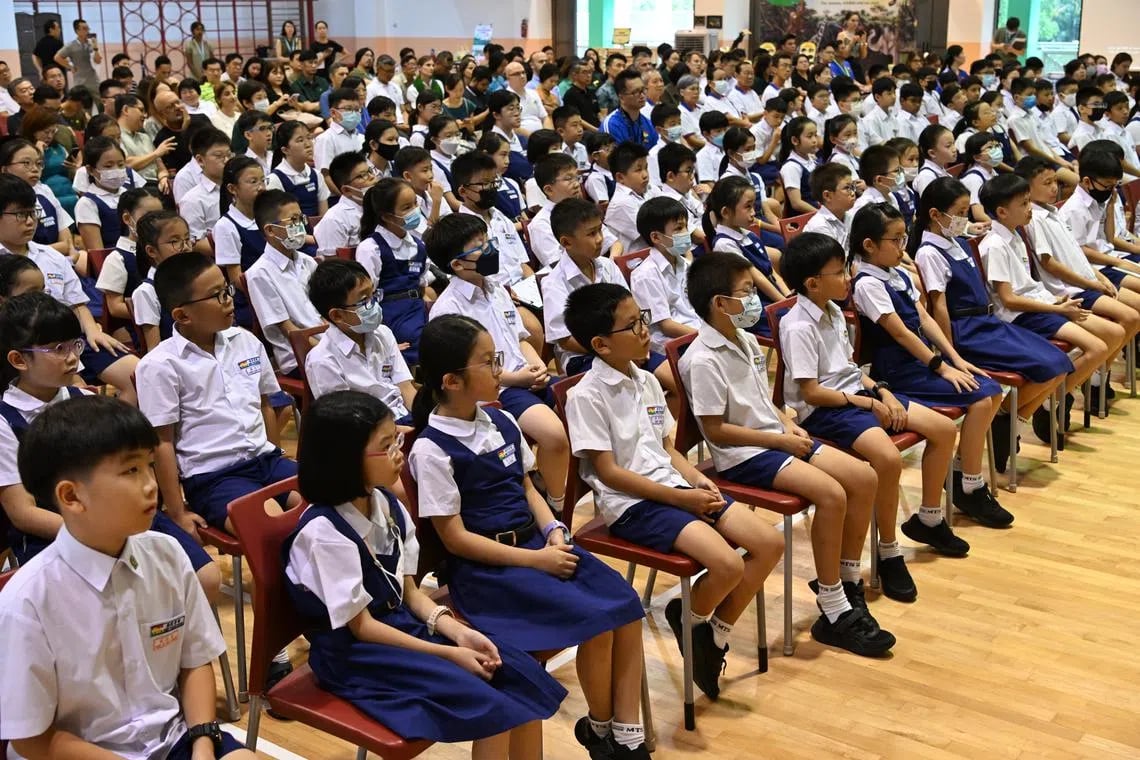 |
Primary school students in Singapore. *Photo: The Straits Times* |
Caning in Singapore, first introduced by British colonialists in the 19th century, remains in effect for male offenders under 50 years old. Offenses include robbery, fraud, or overstaying a visa by 90 days.
In recent decades, the use of corporal punishment in schools has become increasingly rare. However, the World Health Organization (WHO) estimates that about one-fourth to one-half of children globally still experience physical punishment in school, and calls for an end to this practice.
"The consequences of physical punishment can last a lifetime, harming children's physical and mental health, and affecting their academic performance, social communication skills, and career prospects," states a WHO report from 8/2025.
Khanh Linh (According to CNN, The Guardian)


