Doctor Mai Anh Tuan expressed his views at the "Nguyen Huy Thiep and his literary legacy" seminar in Hanoi. The event commemorated the 5th anniversary of the writer's passing and his 76th birthday, coinciding with this year's Book and Reading Culture Day.
The doctor noted that 40 years after Nguyen Huy Thiep's debut during the Doi Moi literary period, his career remains a pinnacle of Vietnamese literature, a frequent subject of discussion among readers and experts.
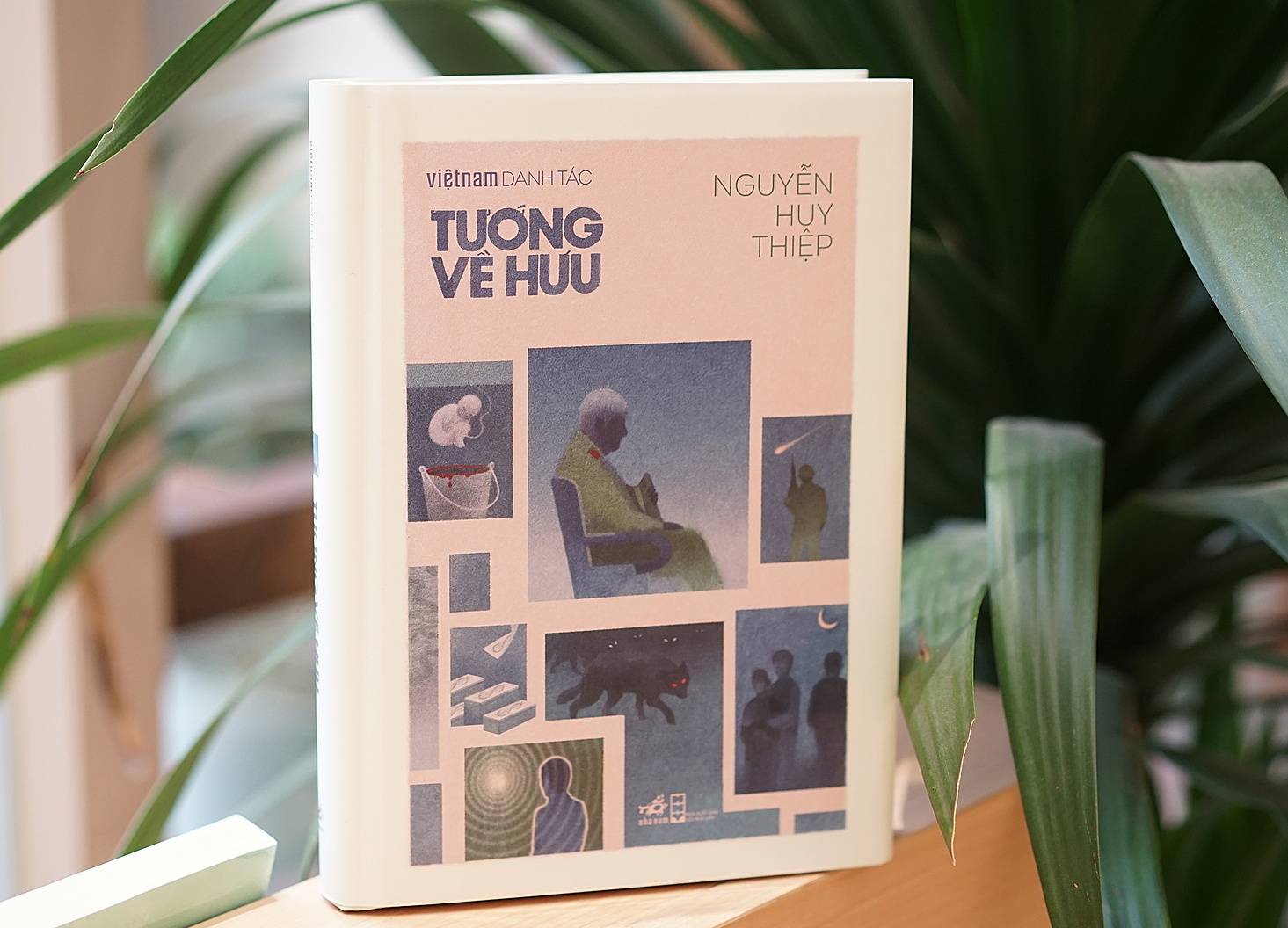 |
A new edition of "The retired general" in Nha Nam's "Vietnamese masterpieces" series. *Photo: Provided by publisher*
Many writers and critics have analyzed the unique qualities that make Nguyen Huy Thiep's literature so compelling. His works address complex issues of humanity, destiny, and ideology. "The retired general," a short story that made Nguyen Huy Thiep a phenomenon, has been translated into multiple languages, including French, Italian, English, German, and Dutch, prompting the question: "What makes this work so globally recognized?" Critics believe that publishers and readers are drawn to "The retired general" and Nguyen Huy Thiep's other works due to their inherent value. A creation with strong intrinsic vitality will naturally find its way to international readers.
Literary critic Pham Xuan Nguyen observed that Nguyen Huy Thiep's writing confronts evil and ugliness directly and intensely. He recalled that in 1987, "The retired general," published in Van Nghe newspaper, quickly caused a stir, shocking readers with its direct and sharp style. Thus, Nguyen Huy Thiep emerged as a fresh voice for Doi Moi literature.
Writer Nguyen Viet Ha stated that the author of "The retired general"'s standing stems from the quality of his works rather than their quantity. He noted that in world literary history, some writers achieved fame with just a few significant short stories, and Nguyen Huy Thiep is one such example. Nguyen Huy Thiep's literature possesses a unique style, reflecting reality with rich metaphors, elements of satire, and profound ideological depth.
At the event, many young readers attended, paying close attention and staying until the end. Despite the social context being quite distant from Nguyen Huy Thiep's era, some young readers remain captivated by his works, feeling strong emotions and contemplating the messages conveyed by the author. Nguyen Viet Ha affirmed that over time, the stories written by Nguyen Huy Thiep continue to hold a firm place in literary life and reader interest.
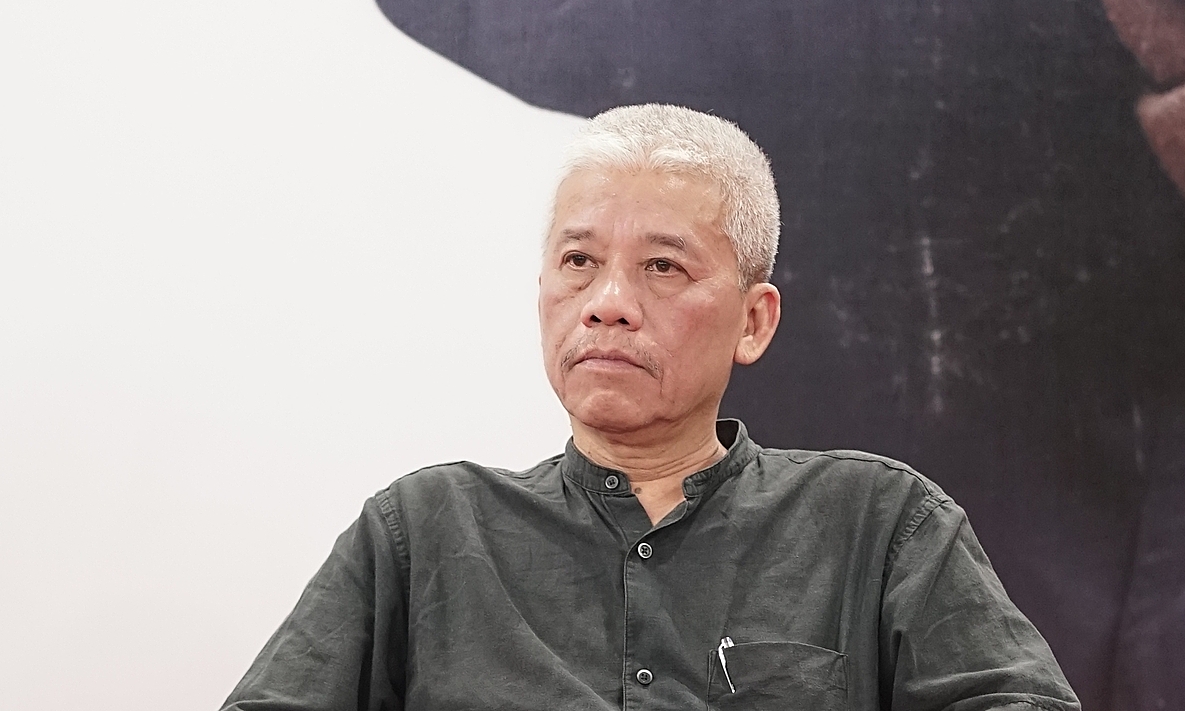 |
Writer Nguyen Viet Ha at the seminar on 24/4. *Photo: Organizer provided*
Writer Tran Thi Truong identified herself as a fan of Nguyen Huy Thiep since 1987, having read his books multiple times. Her family members also admire Nguyen Huy Thiep's literature. According to Truong, his themes are never monotonous because the author offers diverse perspectives and observations of people and events. Artistically, he employed a rapid pace and short sentences, creating an engaging style that was novel in Vietnamese literature in the late 1980s and early 1990s.
Nguyen Huy Thiep was a rare talent. Besides short stories, he wrote plays, novels, essays-criticism, and poetry. In an interview many years ago, he proudly stated that he could make a living from his craft.
Critic Mai Anh Tuan remarked that discussing Nguyen Huy Thiep is "both easy and difficult." He is often referred to as "the king of short stories" or "a controversial figure of Doi Moi literature," yet understanding and evaluating the writer is not simple. "For 40 years, we have continued to search for Nguyen Huy Thiep, but the most plausible answer remains elusive," Mai Anh Tuan said.
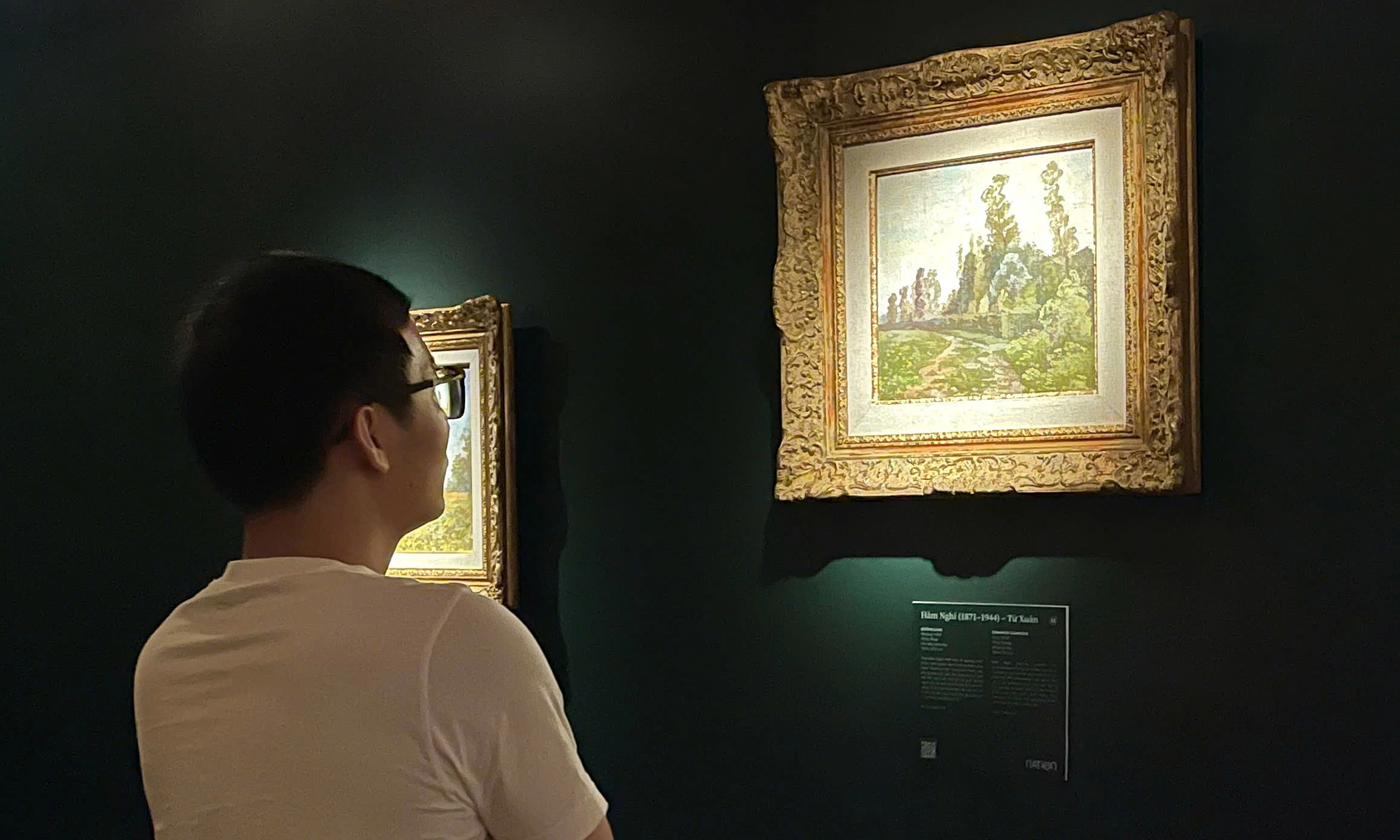
As part of the seminar, Nha Nam and the writer's family organized a small-scale thematic exhibition titled "Manuscripts, Ceramics, and Works of Nguyen Huy Thiep," held from 24/4 to 3/5 at Dong Da Cultural Park, Hanoi. The exhibition features some of the writer's manuscripts, ceramic works, handwritten notes, and a brief history of the domestic and international printing and publishing of his works. This allows visitors to gain insight into his career in literature and painting.
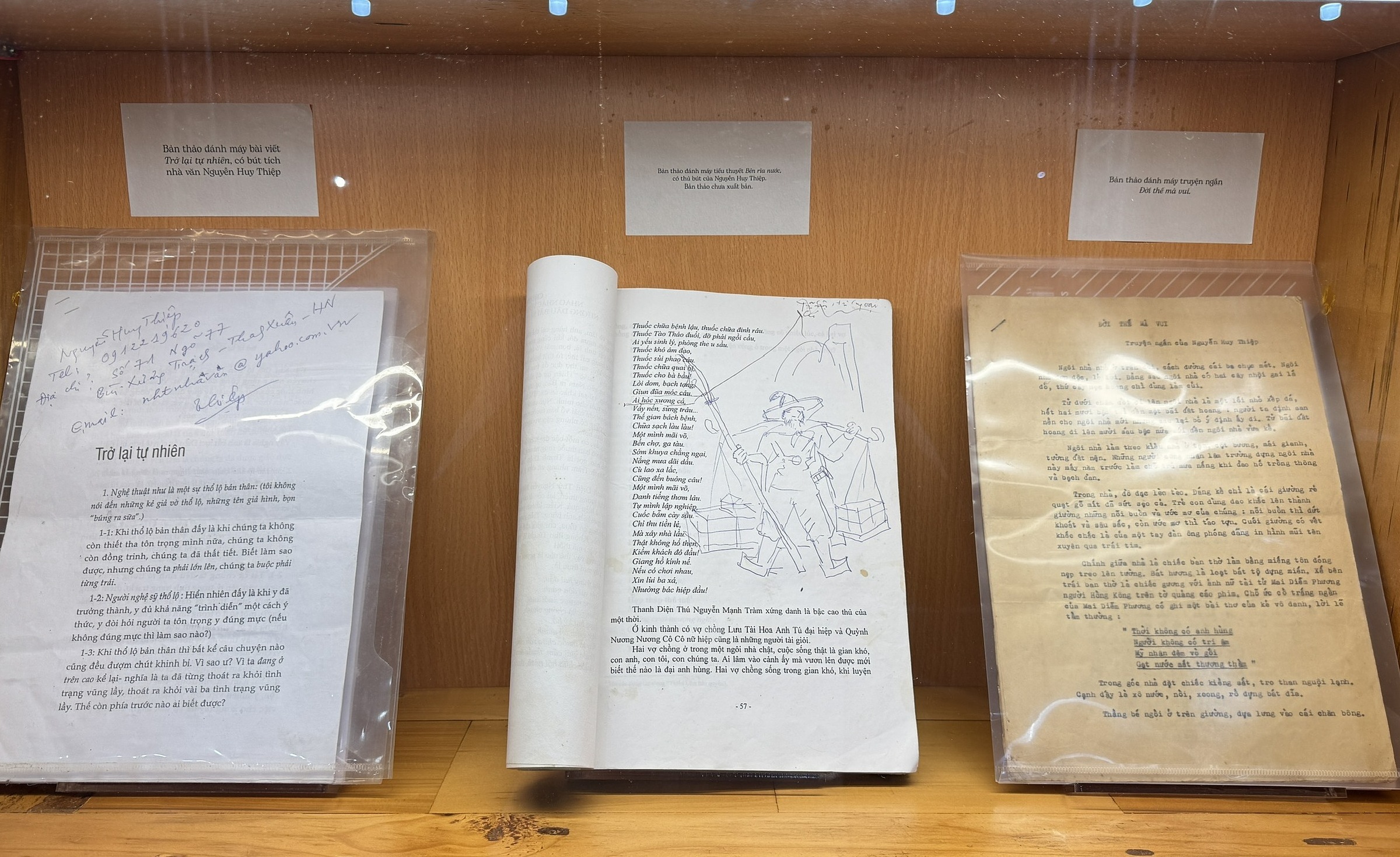 |
Some typewritten manuscripts with handwritten notes by writer Nguyen Huy Thiep. *Photo: Nam Duong*
Nguyen Huy Thiep was born in 1950 in Thai Nguyen, with ancestral roots in Hanoi. He graduated from the history department of Hanoi National University of Education. He debuted in Vietnamese literature in 1986 with several short stories on rural themes published in Van Nghe newspaper. Additionally, the writer penned 10 plays, four novels, and numerous essays and literary criticisms that garnered significant attention, establishing him as a "rare phenomenon" in the nation's literary scene.
He received the French Order of Arts and Letters (2007) and the Premio Nonino award (Italy, 2008). Nguyen Huy Thiep's notable works include the short story "The retired general," adapted into a film of the same name in 1988; "The Hua Tat winds" (a collection of short stories and plays, 1989); "Tieu Long Nu" (novel, 1996); and "Beloved age 20" (novel, published in France in 2002).
The writer passed away in March 2021, after a period of illness. Annually, his family and literary peers organize events to remember and honor his literary legacy.
Phuong Linh