On 27/5, The Guardian reported that American writer Helen Phillips’ novel "Hum", scheduled for release in 8/2024, won the Climate Fiction Prize 2026. The award, valued at 10,000 pounds, honors outstanding works focused on climate change and the future of humanity.
"Hum" portrays a dystopian urban setting where human life, from private spaces to the natural environment, is controlled by algorithms and surveillance camera systems.
Phillips drew inspiration for the book from a personal experience. After walking home from work and thinking she needed to buy dishcloths, she opened her computer to immediately see advertisements for the product. This feeling of being monitored by algorithms prompted the writer to imagine disturbing scenarios where technology controls every aspect of human activity.
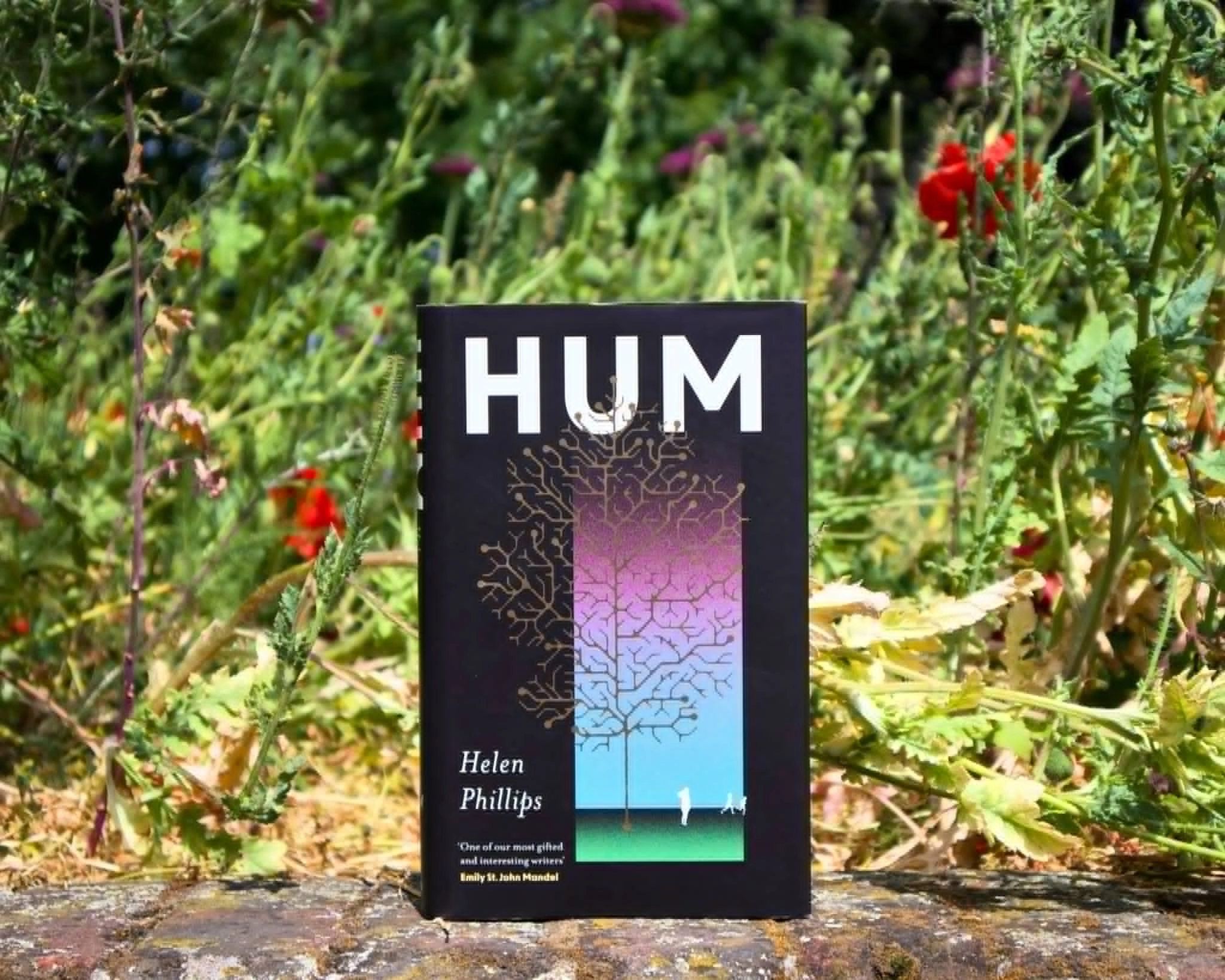 |
Cover of "Hum". Photo: Climate Spring |
The story centers on May, a mother who loses her job due to the same artificial intelligence (AI) system she helped build. Her family struggles with significant debt, and her husband can only find unstable freelance work. Consequently, May agrees to become a "test subject" for a technology project designed to counter surveillance. The book opens with May undergoing facial surgery, which will make her invisible to security cameras, in exchange for a fee to cover her living expenses for the next few months.
With the money, May decides to purchase a three-night visit to the Botanical Garden, a rare green space enclosed by strong walls within the city. She hopes to make amends to her children, Lu, 8, and Sy, 6, and help the family "detox" from wearable digital devices connected to AI-powered virtual rabbits that broadcast advertisements. To prepare, May instructs her husband and children to leave all electronic devices at home.
However, the vacation is not as peaceful as anticipated, as commercial services are still prevalent throughout the reserve. The book's climax occurs when the two children wander into a hidden path and are pushed back into the polluted world outside the city. Having intentionally cut off all tracking tools beforehand, May and her husband are helpless. She is forced to set aside her skepticism and trust the "hum", human-like, intelligent, empathetic robots working there, by initiating an urgent search across their network.
May's children are quickly found safe and unharmed by another "hum" robot. Nevertheless, the incident of May losing her children is publicized and shared on social media, making her a target of public criticism. She is accused of being irresponsible for taking her children away from technological conveniences. The Family Support Bureau even intervenes, investigating her for "neglect of minors". The pressure leads May to a paranoid, tormented, and self-doubting state, questioning her own abilities against the precision of empathetic robots. The novel poses the question: In the future, can machines replace even the nurturing role of humans? It also warns of a cold society where people judge based on rigid, imposed standards.
In the final pages, the investigation concludes that May is not at fault. She is exonerated and recognized as a devoted mother. Though the main character finds her sense of self, the work ends with an open ending. The era's instability, such as ongoing wildfires, increasing technological dominance, and an uncertain future for the next generation, remains unresolved. Through this, the writer warns of an ecological crisis and the pervasive nature of algorithms, a reality that is both beneficial and harmful, which humanity must confront and cannot escape.
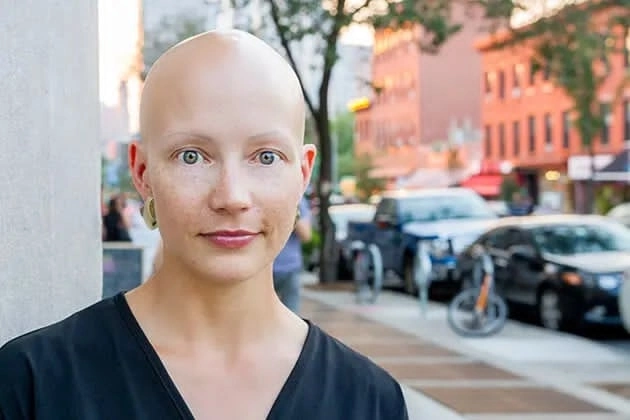 |
Writer Helen Phillips. Photo: Andy Vernon-Jones |
Helen Phillips, 45, is an American writer and lecturer at Brooklyn College, New York. She has received many prestigious literary awards, including a Guggenheim Foundation Fellowship, the Rona Jaffe Foundation Writers' Award, and the Italo Calvino Prize. Her notable works include the novel "The Need" (a 2019 National Book Award nominee), "The Beautiful Bureaucrat" (a 2015 Los Angeles Times Book Prize finalist), two short story collections "Some Possible Solutions" and "And Yet They Were Happy", and a children's adventure story. Many of Phillips' other works frequently appear in major publications such as The Atlantic and The New York Times.
The Climate Fiction Prize, supported by the Climate Spring organization, was first awarded in 2025 to writer Abi Dare for her work "And So I Roar". This year, to achieve this honor, Helen Phillips’ "Hum" surpassed other works on the shortlist, which included: "The Book of Records" (Madeleine Thien), "Dusk" (Robbie Arnott), "The Tiger's Share" (Keshava Guha), "Awake in the Floating City" (Susanna Kwan), and "Endling" (Maria Reva).
Khanh Linh (according to The Guardian)