 |
Over 50 years have passed, yet stories from the subsidy period continue to evoke strong emotions for those who lived through it. Images from this era are frequently shared in online archival groups, stirring nostalgia.
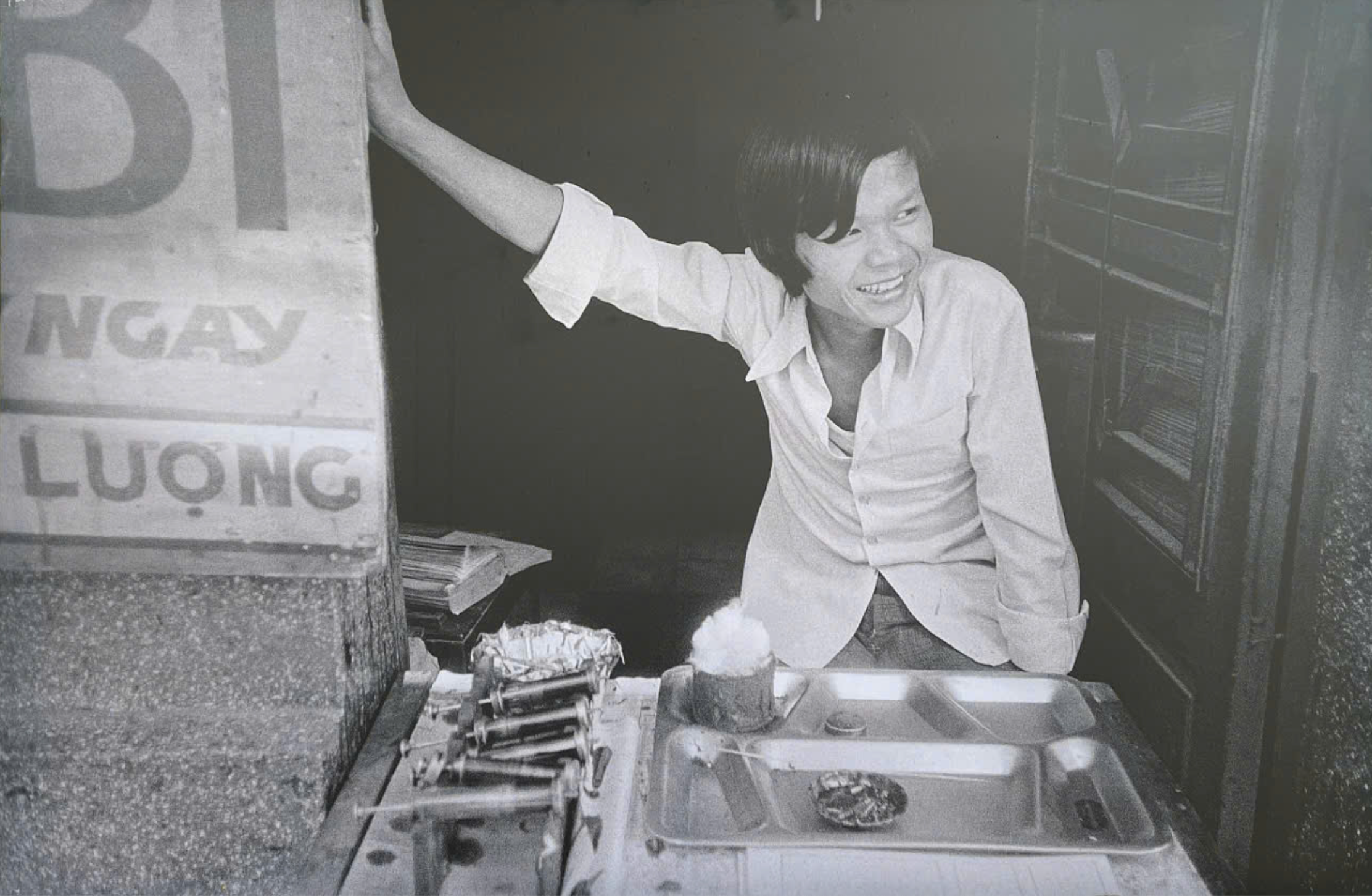
Life was challenging, forcing many to take on various jobs to make a living. Some professions became common because they met the public's needs at the time, including refilling ballpoint pen ink. Journalist Daniel Roussel captured this image in 1985 while serving as a resident correspondent for the newspaper L'Humanite in Vietnam.
During the subsidy period, ballpoint pens were not widespread. When a pen ran out of ink, people sought ways to reuse it. Ink refill shops once appeared on many streets in Ha Noi, such as Hang Ngang and Hang Dao. Here, vendors used syringes to refill ink, offering colors like navy blue, red, and black, depending on customer requests.
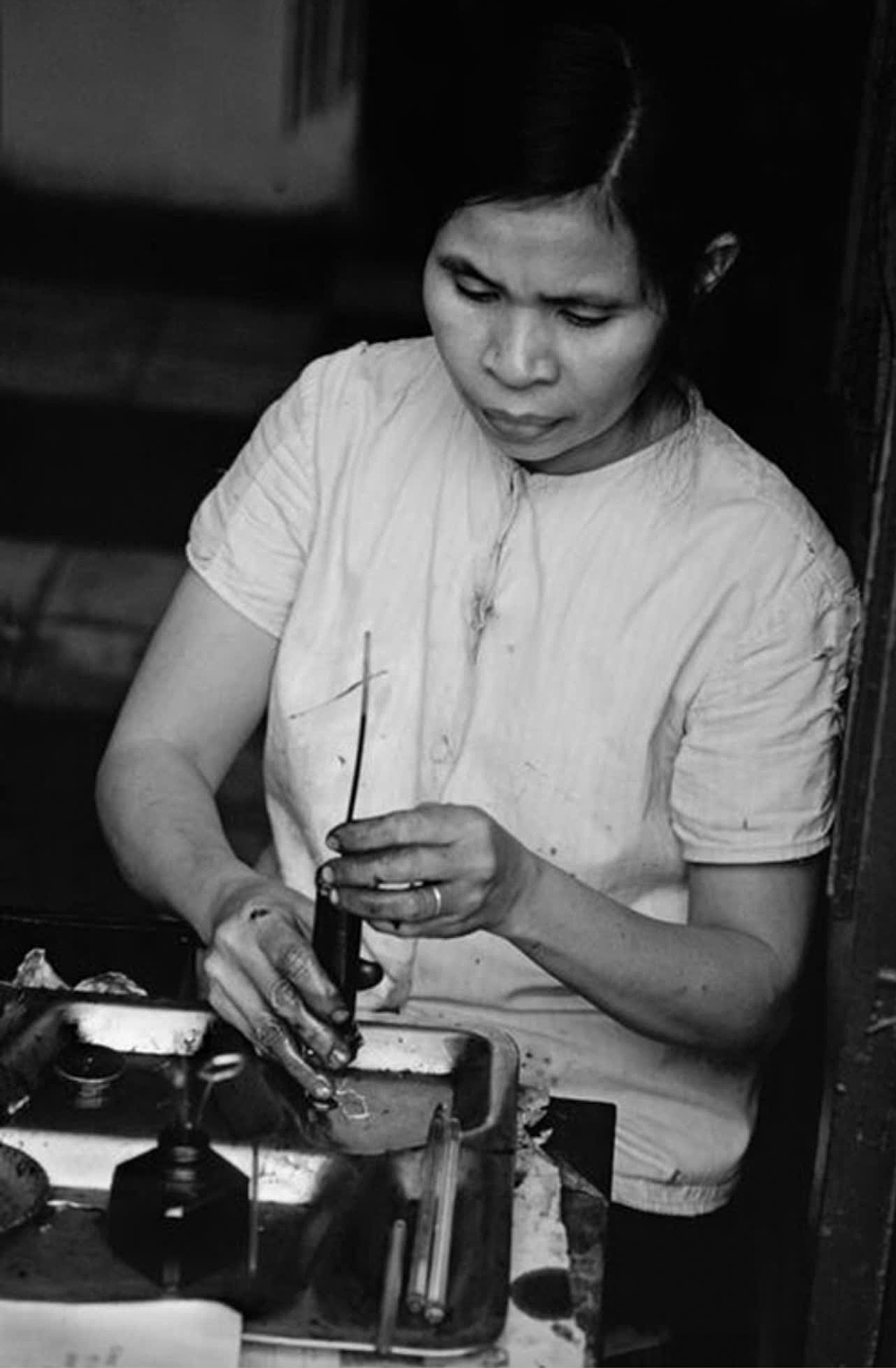 |
A woman refills a ballpoint pen, captured through the lens of journalist and photographer Philip Jones Griffiths.
The subsidy period spanned from 1964-1975 in northern Vietnam and 1976-1986 nationwide. During this time, most economic activities were state-controlled, with goods distributed via ration coupons and rice books.
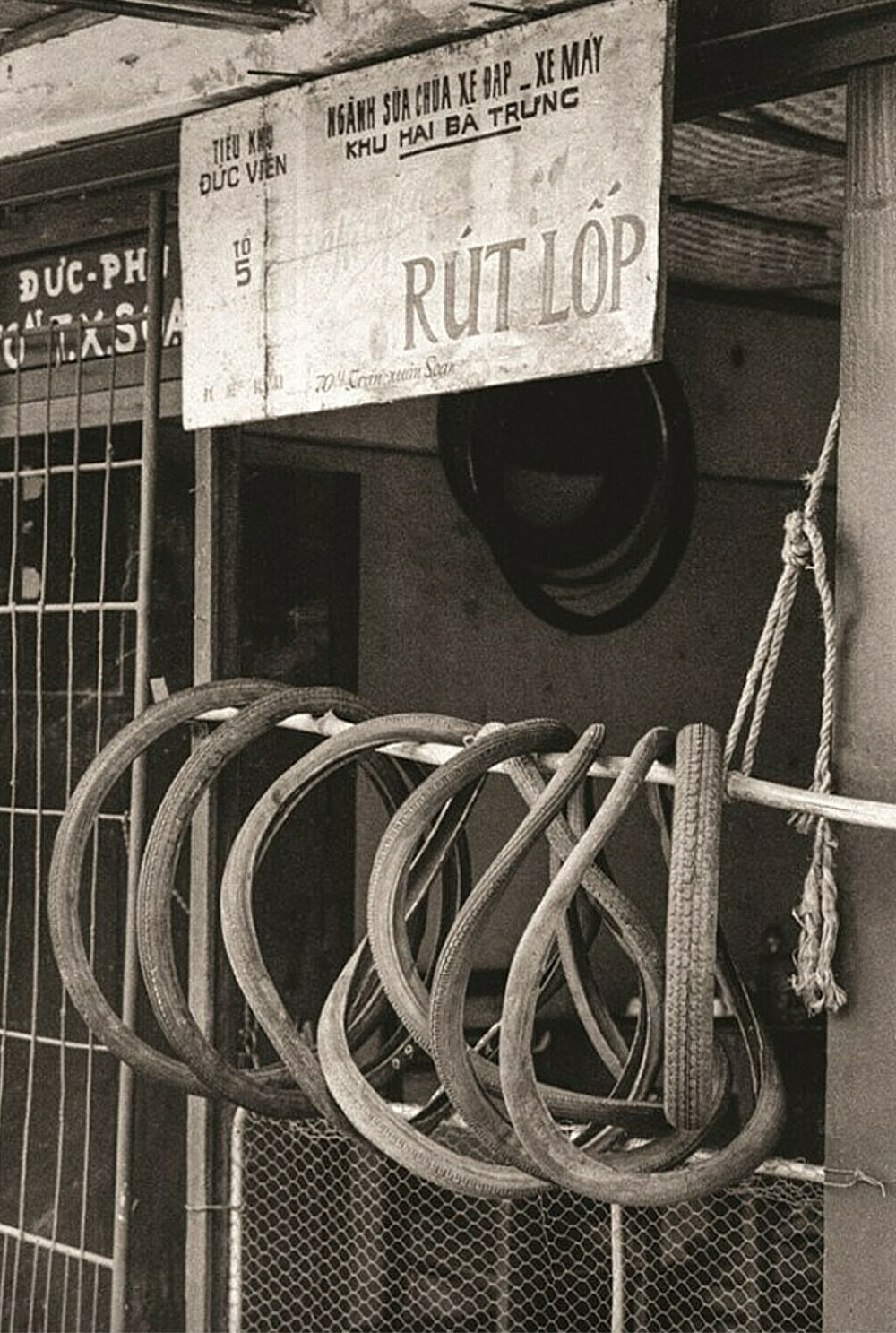 |
Diplomat John Ramsden photographed a bicycle tire repair shop on Tran Xuan Soan Street. This work was featured in his 2016 book, "Ha Noi One Time," depicting the rhythm of life in Ha Noi more than 40 years ago.
In the 1980s, bicycles were the primary mode of transport and a valuable asset for people. However, tires were scarce, sometimes requiring multiple lottery draws to obtain. Therefore, instead of discarding old tires, people often resorted to tire resizing services for reuse.
Historian Duong Trung Quoc once wrote in his book: "Acquiring a bicycle was difficult; buying replacement parts was even harder. Sometimes, a paradox occurred: if your bicycle had 650 mm rims, the agency might allocate 680 mm tires, leading to the need for tire resizing services. This involved shortening the steel bead at the tire's edge to fit the rim. There was also the profession of tire patching: utilizing worn tires or torn beads, applying raw rubber patches, and then hot-pressing them into molds for continued use."
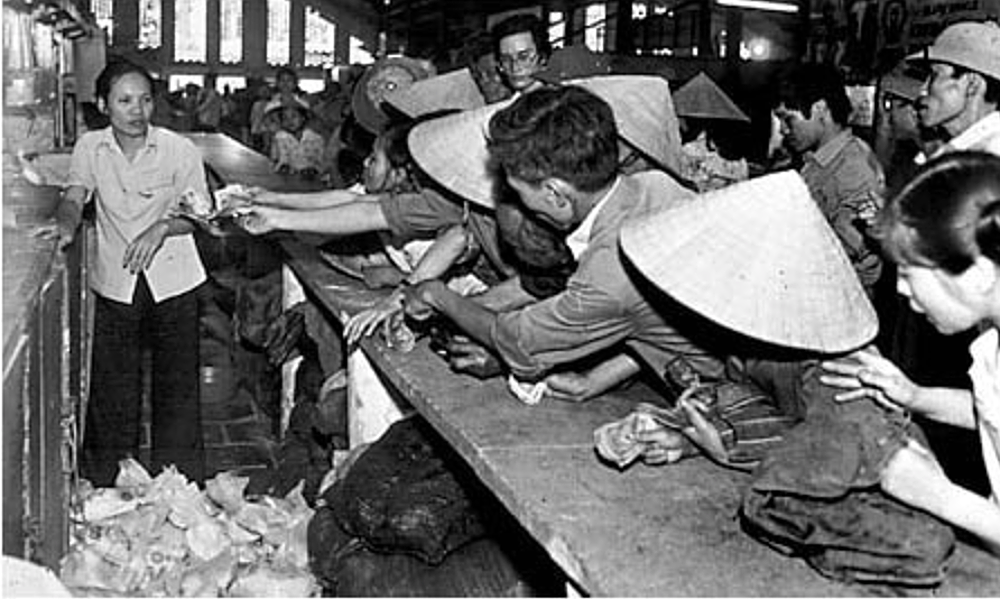 |
People crowded to buy goods at a state-run store.
During the subsidy period, goods were scarce, and all essential items, food, and provisions were distributed via ration coupons. State store employees were once considered influential figures. They were primarily children of those in the trade sector, having completed a two-year elementary trade course, understanding merchandise, weighing goods, managing inventory, and customer service before being allowed to sell.
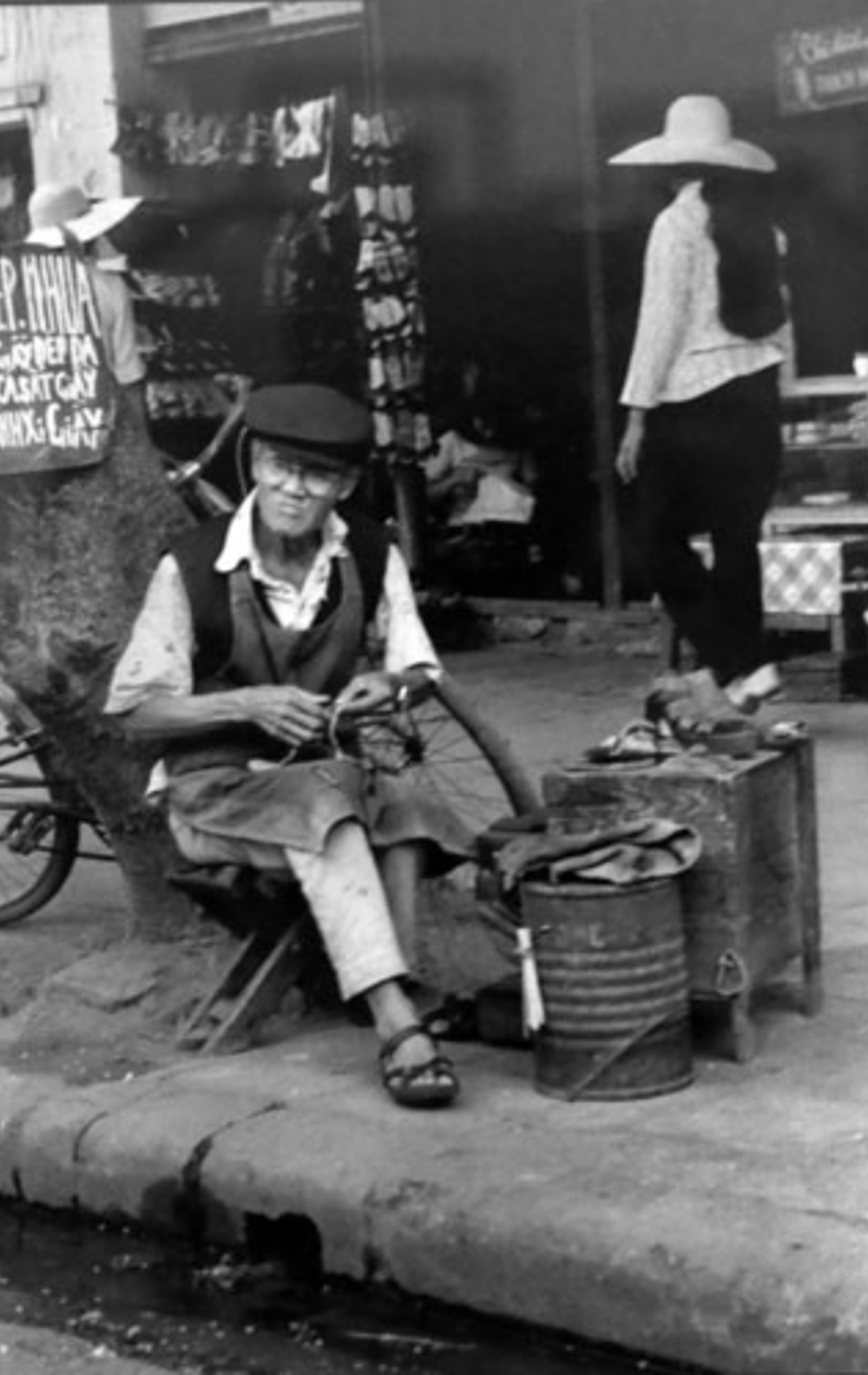 |
An elderly man repairs sandals on the sidewalk, seen through John Ramsden's lens.
Due to shortages, people primarily owned only one pair of rubber or plastic sandals. When they broke, they sought out sandal repairers to continue using them.
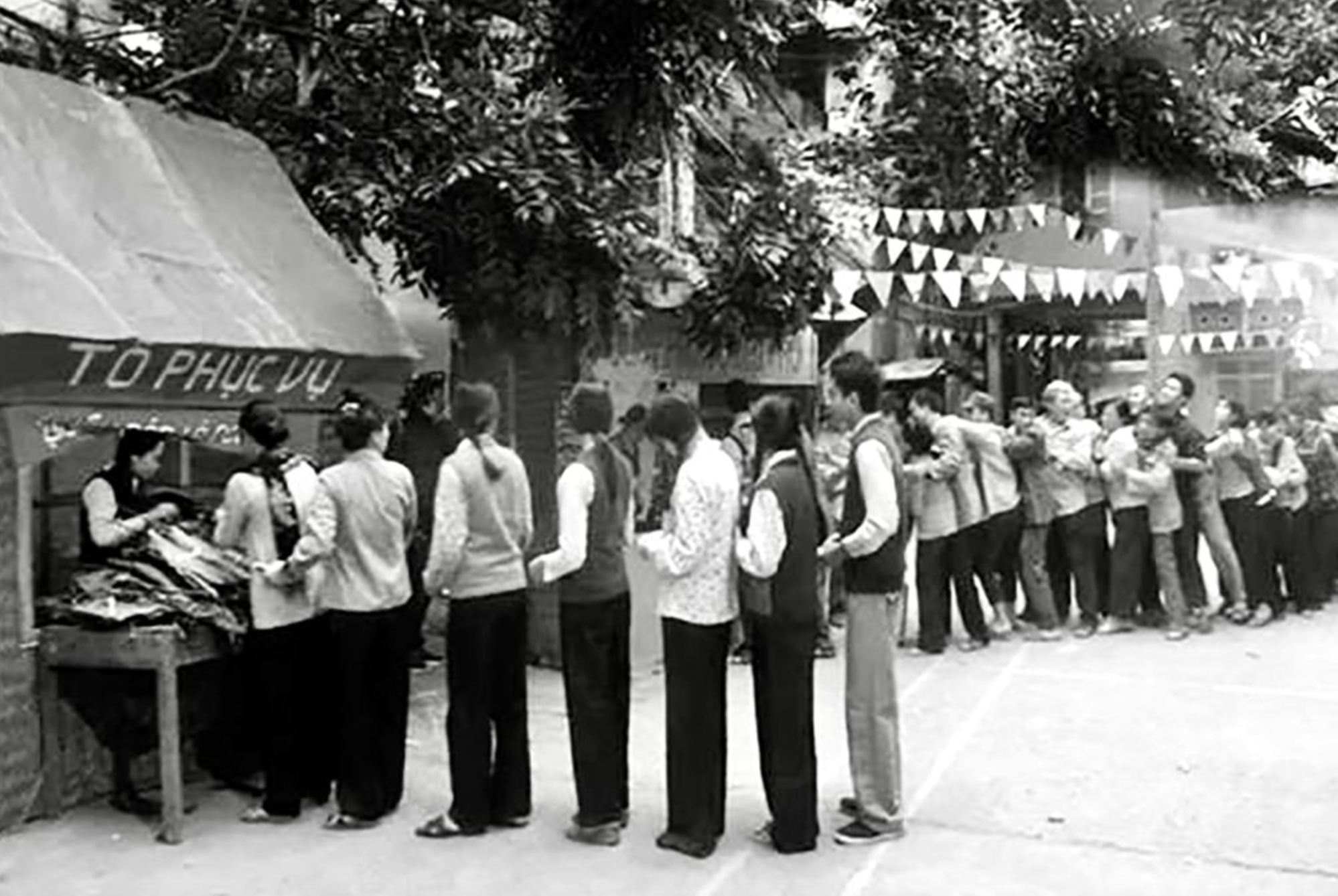 |
Service teams were a common sight in most Ha Noi neighborhoods during the subsidy years. They sold hot water or helped single-person households purchase food and provisions. Additionally, these teams boiled banh chung and assisted with shopping bags during Tet.
Phuong Linh
Photos: Archival, Daniel Roussel, Philip Jones Griffiths, John Ramsden