Ho Chi Minh City is moving forward with plans for a major film studio complex, as announced by the Ho Chi Minh City People's Committee (UBND) on 6/4. The Department of Culture and Sports has been tasked with leading the research into investment options for this large-scale facility, in coordination with departments such as Finance and Planning and Architecture.
The planned complex seeks to meet the development needs of the film and television industry, while also creating conditions to attract various film production projects.
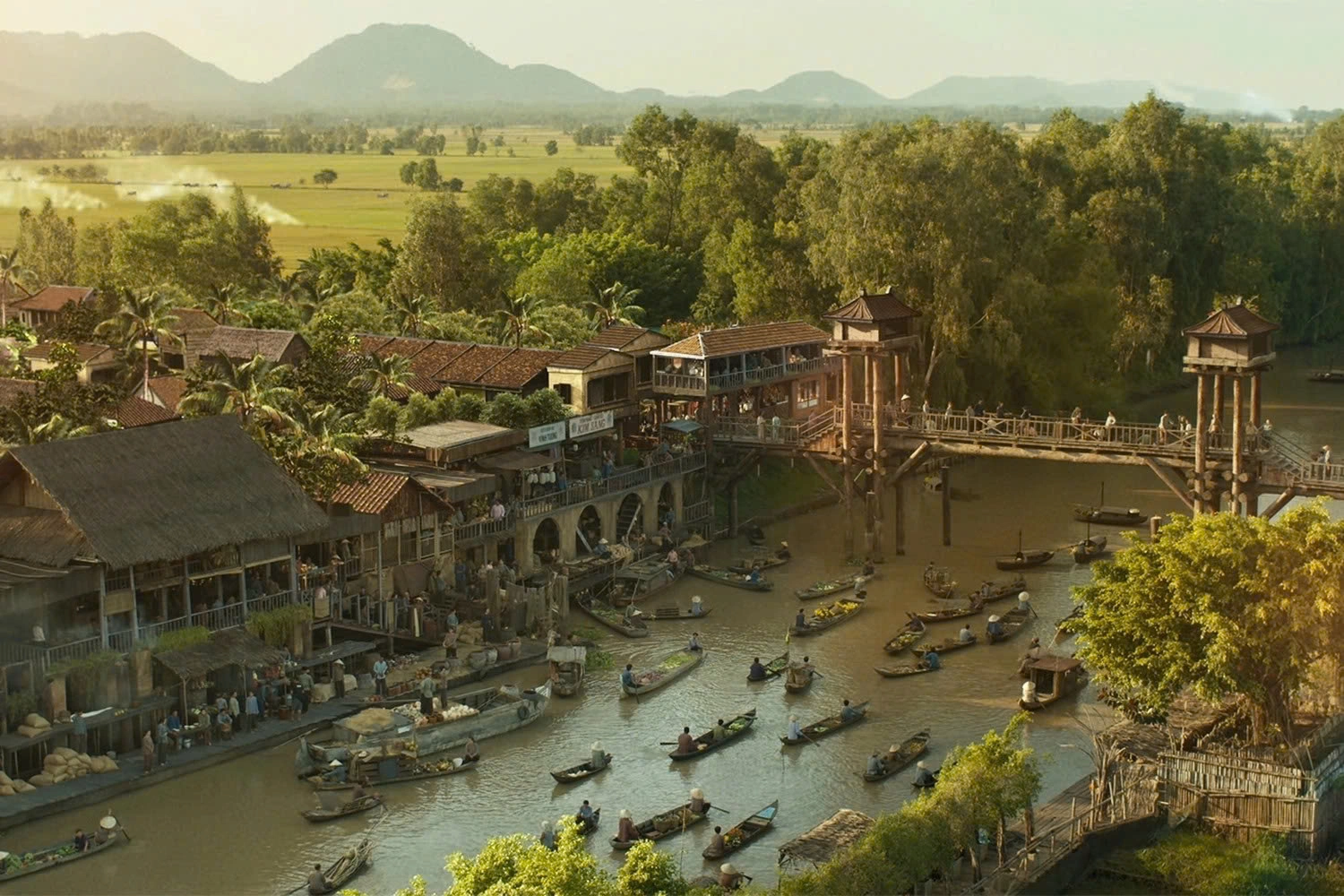 |
An expansive scene depicting an old southern floating market in "Dat rung phuong Nam". Photo: Thanh Huyen |
The demand for a large-scale film studio arises from persistent feedback from businesses and filmmakers regarding a lack of standard facilities. At a meeting with Secretary Tran Luu Quang on 5/2, many enterprises highlighted the absence of modern film studios in the country. This forces production teams to construct temporary sets, which are then dismantled, leading to increased production costs. Additionally, bureaucratic hurdles, administrative procedures, and challenges in land access pose significant barriers to investment in the cultural industry.
Some artists assert that film studios are crucial for shaping a professional film industry. Well-invested film sets can also become tourist attractions, generating additional economic value.
Ho Chi Minh City is already a significant center for cinema in Vietnam, accounting for approximately 40% of the national market share. The city is home to over 900 film businesses and thousands of workers. In 2025, UNESCO is set to recognize Ho Chi Minh City as the first Creative City in Film in Southeast Asia.
Beyond the film studio project, the UBND is also directing departments to review and propose public investment capital for other key cultural infrastructure. The Department of Culture and Sports is specifically tasked with researching a plan to construct a Vietnam Music Museum, incorporating artificial intelligence (AI) and digital transformation in its exhibits to engage the public, especially younger generations.
The Department of Finance is responsible for reviewing unused or underutilized public housing and land. This will facilitate their conversion into creative spaces, performing arts centers, and large-scale theaters. The city is also exploring the establishment of a Cultural Industry Development Fund, modeled after "venture capital", to provide financial support for startup and innovative projects in the cultural and artistic sectors.
Le Tuyet