


The song, released to commemorate Hung Vuong Ancestor Commemoration Day and 30/4, garnered nearly two million views on YouTube within four days of its release. Beyond the elaborate music video production and catchy melody, a specific lyric in the chorus has sparked considerable debate:
"Ripe rice stands tall but never bows its head
How proud to be Vietnamese for so long."
On the social media platform Thread, many viewers reacted negatively to the lyric "ripe rice stands tall but never bows its head." In a post with over 1,000 shares, a user named Chay di song oi stated that the original meaning of the proverb "deep rivers run silent, ripe rice bows its head" refers to highly educated and talented individuals who remain humble, profound, and not arrogant. Therefore, altering this proverb in the song removes its traditional connotation, instead suggesting arrogance.
Writer Giao suggested that the imagery in the lyric is not positive as the author intended, but rather serves as a metaphor for ostentatious, loud individuals. Many also criticized the lyric for being factually incorrect. Tuan Nguyen commented, "Ripe rice that does not bow its head is empty rice. If it is not empty but still does not bow, it goes against natural law."
Some viewers suggested that using the image of bamboo instead of rice would be more appropriate for conveying resilience. However, many opinions also advocated for evaluating the lyrics based on the song's overall message.
On the evening of 27/4, songwriter Chau Dang Khoa, the song's author, stated that he used the lyric with a broader meaning. When writing the chorus, he focused on the message of "pride in being Vietnamese." "This lyric was not written to deny humility, nor to encourage arrogance. Here, 'never bows its head' does not mean arrogant, but rather unyielding, refusing to submit to adversity," Chau Dang Khoa explained.
According to the author, "ripe rice stands tall but never bows its head" represents a beautiful image of the Vietnamese people: enduring storms without falling, suffering losses without losing self-respect, and growing through pain while still living with their heads held high. "If this lyric is taken out of context, different interpretations may arise. But within the song's context, it speaks of fortitude," he stated. The author expressed appreciation for the feedback and thanked the audience for their interest in the new song.
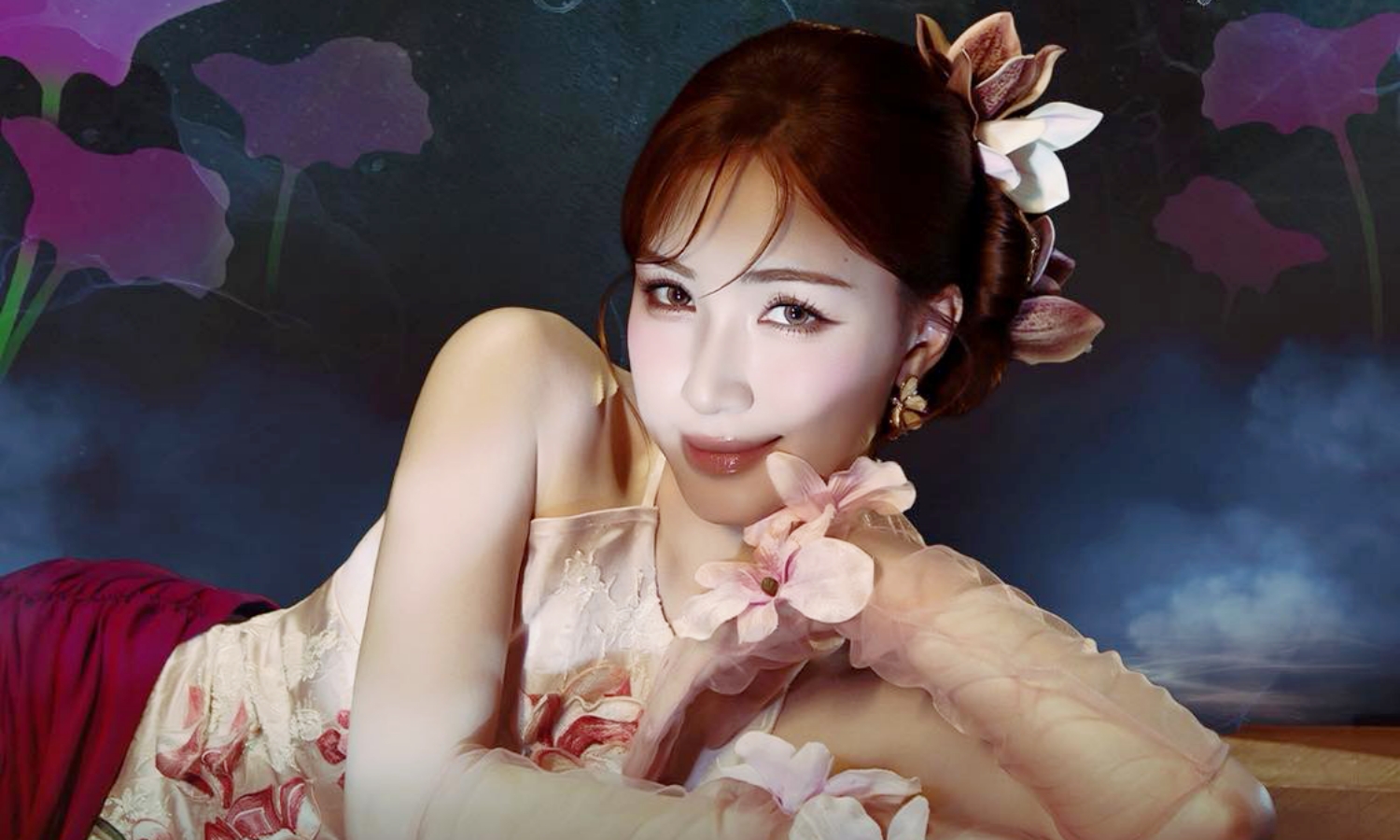 |
Singer Hoa Minzy featured in the music video following her hit "Bac Bling." *Photo: T Production* |
Producer Tran Thanh Trung and his team prepared the project for six months. After hearing the demo, he contacted the two singers to record, believing their duet would create many highlights. They revised the lyrics multiple times and added new sections to suit Hoa Minzy's and Cam Ly's vocal ranges.
Director Dinh Ha Uyen Thu directed the music video, filming for 12 hours in a studio. Baby Winnie, the child of singers Dong Nhi and Ong Cao Thang, appeared as a guest actor. Tran Thanh Trung stated that the song carries a community message, thus revenue was not a priority, allowing other singers to cover it for free.
Chau Dang Khoa, 36 years old, began writing music in 2012, quickly becoming a young songwriter with many hits. Some of his notable compositions include: Nguoi la oi, Toi thay hoa vang tren co xanh, Em khong can anh, Vi me anh bat chia tay, Em thi khong, and I don't care. The hit "Nguoi la oi," performed by Karik and Orange, became a phenomenon in 2018, accumulating 236 million views on YouTube to date.
Mai Nhat


