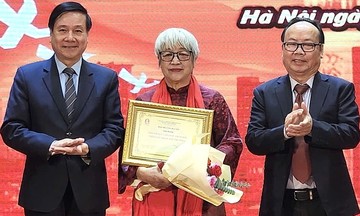
Nguyen Phan Que Mai's acclaimed novel, "Dust Child," has officially launched in Hanoi, marking its "return" to Vietnam after achieving international recognition. The book was initially released in English in the US in 2/2023, where it quickly garnered praise. It won the award for "best historical novel" from She Reads magazine readers and was a finalist for the Dayton Literary Peace Prize in the same year. This year, the work was honored as "outstanding foreign novel" at the Crestail en poche book fair in Paris, France. "Dust Child" has since been published in 20 countries and translated into 14 languages.
At the Hanoi launch on the morning of 12/12, the author expressed her emotion, having always wished for the novel to be published in her homeland. After the book's initial release two years prior, she attempted a Vietnamese translation but felt her rendition did not fully capture the original work. She then collaborated with translator Thien Nga to complete the translation, while also rewriting certain sections to enhance the literary style. She chose the title "Doi gio bui" (Dust Child) instead of "Bui doi" (Dust of Life) to convey a more inclusive message, emphasizing humanity and the desire to live.
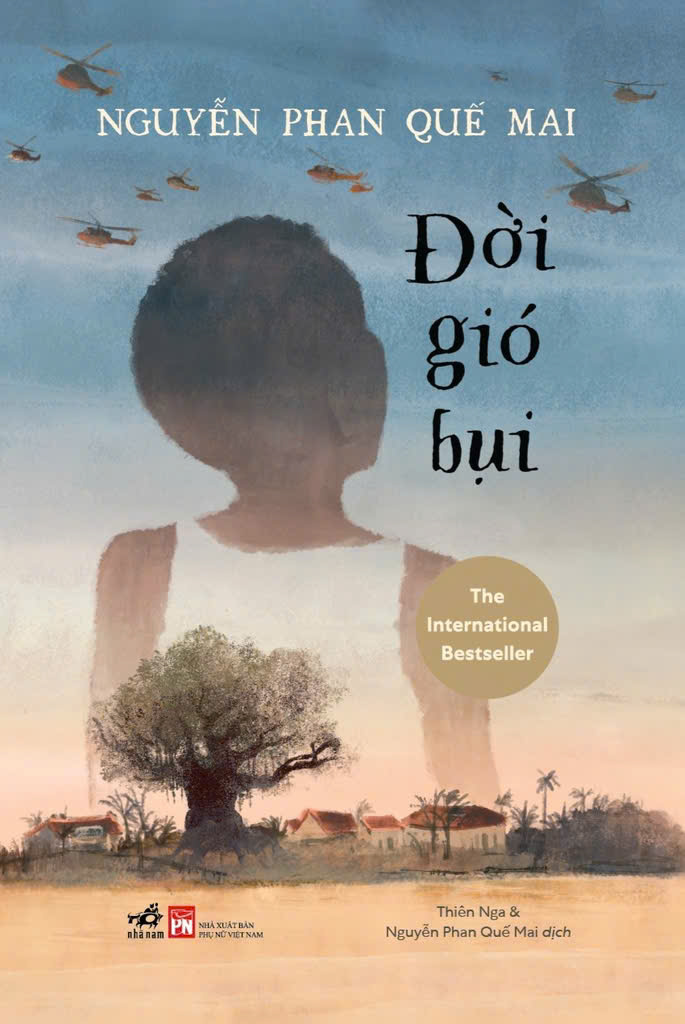 |
The work, published by Women's Publishing House in association with Nha Nam, was seven years in the making for the writer. Photo: Nha Nam
The inspiration for "Dust Child" stems from Nguyen Phan Que Mai's extensive research into the legacies of the Vietnam War. In 2015, she wrote an article titled "The Call of the Past," based on interviews with US veterans who had children with Vietnamese women during the conflict. Through these conversations, the author perceived their lingering regret and sought to help these veterans find their abandoned children. Her article directly and indirectly aided some individuals in reuniting after more than 46 years. However, beyond the joy, these encounters also revealed the profound pain left by the war.
In the same year, the writer initiated a research project on the experiences of Amerasian children in Vietnam. After interviewing individuals within her research scope, she decided to write "Dust Child." Although she heard many real stories, she wrote from her imagination about the war and the lives of its victims, considering it a work of fiction. To complete the novel, the author read many books about mixed-race children and their families, in both English and Vietnamese, and studied post-war psychological trauma.
The novel features interwoven narratives, reflecting the human suffering caused by war. One storyline follows Phong, an Amerasian man abandoned by his mother as a child, who struggles with discrimination throughout his life. As an adult, he strives to find his relatives and hopes to move to the US for a better life for himself, his wife, and their children.
Another narrative centers on sisters Trang and Quynh, who leave their village for Saigon to earn money and help their parents pay debts, only to become bar girls. Amidst the war in the late 1960s, Trang is drawn into a relationship with Dan, an American helicopter pilot. Decades later, Dan returns to Vietnam with his wife, Linda, seeking to heal his psychological trauma and confront the secrets of his past relationship.
The book captivates readers with its emotional, poetic prose that emphasizes human connection. The writer transports readers to the Kien Giang countryside, where Trang and Quynh's humble hut, roofed with dry coconut leaves, stands. Despite their poverty, their parents loved and encouraged their education. Equally moving is the affection of Sister Nha, a Catholic nun who welcomed and raised Phong. Before her death, she made an effort to give Phong information to find his birth parents, entrusting him with her rosary as a protective gesture.
Literary critics have widely praised "Dust Child." Nguyen Thanh Viet, the Pulitzer Prize-winning author for fiction in 2016, described the novel as "an outstanding, powerful, painful, and deeply empathetic achievement." The Washington Post lauded the work for its "sophisticated, ingenious plot," while Library Journal characterized the book's content as "heart-wrenchingly honest and full of hope."
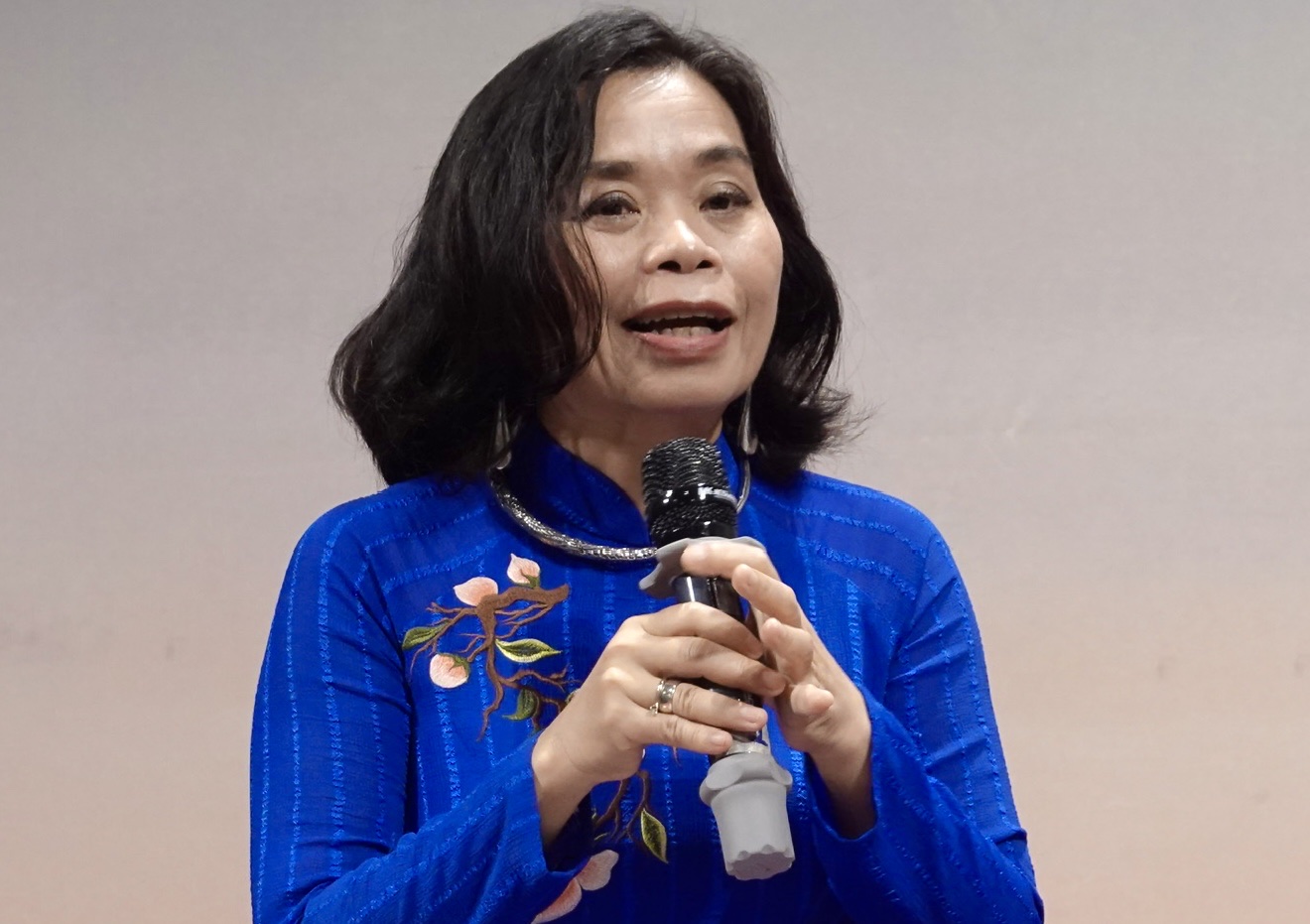 |
Writer Nguyen Phan Que Mai at the book launch event in Hanoi. Photo: Thuy Hanh
Nguyen Phan Que Mai, 52, was born in Ninh Binh and grew up in Bac Lieu (now Ca Mau). She is a prolific writer, poet, journalist, and translator. Many of her poems have been set to music, including the song "To quoc goi ten minh," adapted from her work "To Quoc goi ten." She received first prize in the Hanoi Poetry Contest and the Poetry Award from the Hanoi Writers' Association. Her two English-language novels, "The Mountains Sing" and "Dust Child," have become global bestsellers and have been translated into 25 languages.
Beyond writing and poetry, Nguyen Phan Que Mai is also active in education and development. In 2021, Forbes Vietnam honored her as one of the "20 most inspiring women."
Phuong Linh