The announcement at the closing ceremony on the evening of 25/11 sparked an ovation as director Dang Thai Huyen's work was named. The film surpassed nominees like 'Dia Dao' (Underground Tunnels), 'Tu Chien Tren Khong' (Air Combat), 'Mang Me Di Bo' (Taking Mother Away), and 'Tham Tu Kien' (Detective Kien) to claim the festival's top honor.
"Red Rain" also garnered several other accolades, including best supporting actor for Phuong Nam (as squad leader Ta), best film sound, best visual effects, and best art design.
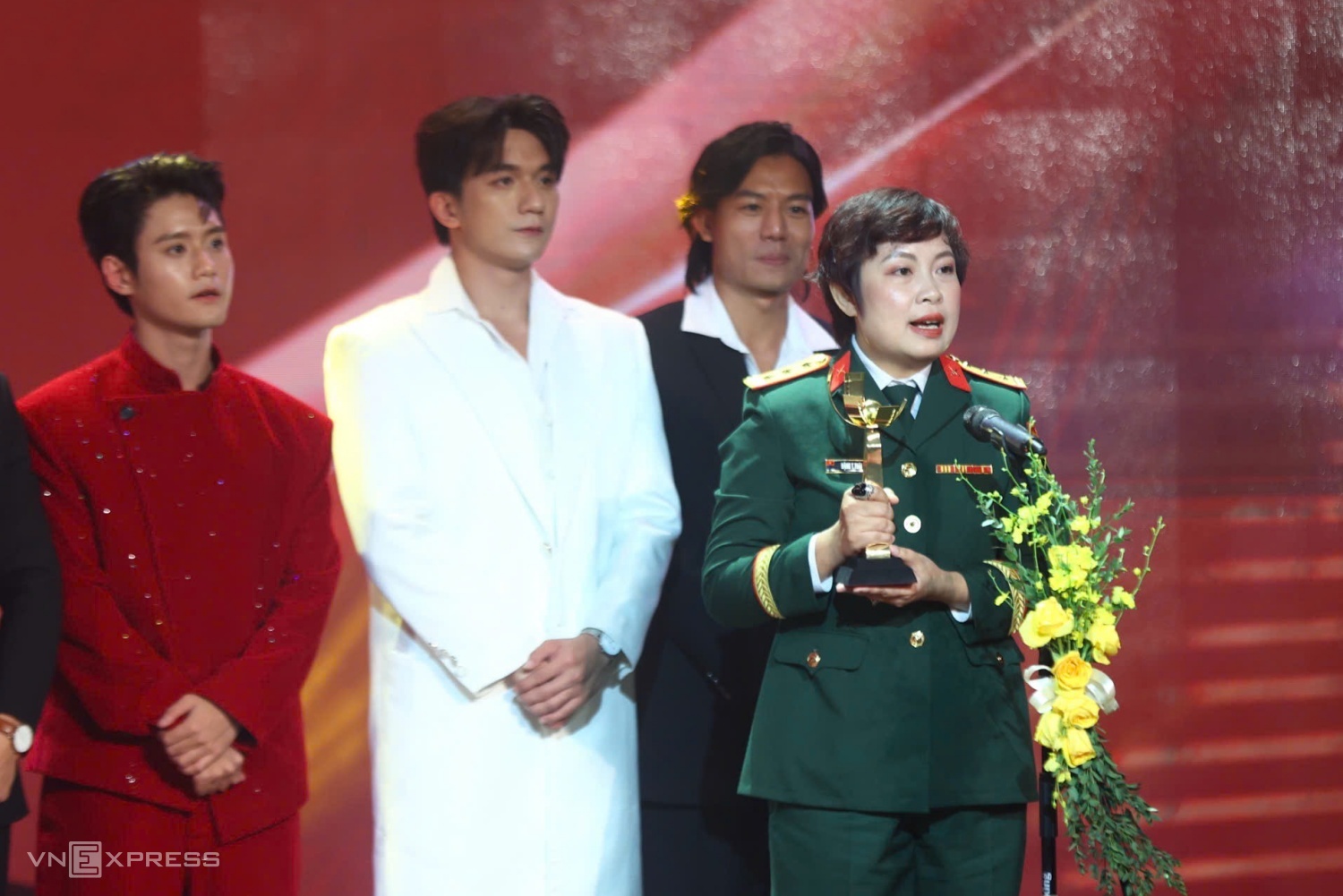 |
Director Dang Thai Huyen receives the Golden Lotus trophy with the film crew. Photo: Quynh Tran |
Leading up to the 24th Vietnam Film Festival's opening ceremony on the evening of 21/11, the film was widely predicted by critics and audiences to win the Golden Lotus. Speaking to media on the morning of 25/11, the director expressed that a win would be "an overwhelming joy for the team." However, she emphasized that the audience's reception had been the most valuable reward. The project had previously drawn 8,3 million viewers, reaching audiences in remote, border, and island regions.
Produced by People's Army Cinema, "Red Rain" features quality content and imagery that evokes emotion. Its script chronicles 81 days of combat defending the ancient citadel. Writer Chu Lai chose to focus on the human element, specifically a squad of young soldiers from Vietnam's three regions.
The central character is Cuong (Do Nhat Hoang), a conservatory student, who is generous and skilled in martial arts. He foregoes an opportunity to study abroad to join the army. During the Quang Tri battle, Cuong fights alongside his squad: Ta, the leader, Binh, Tu, Hai, and Sen. They come from different rural areas, with diverse backgrounds and personalities, yet share a common goal of fighting for peace.
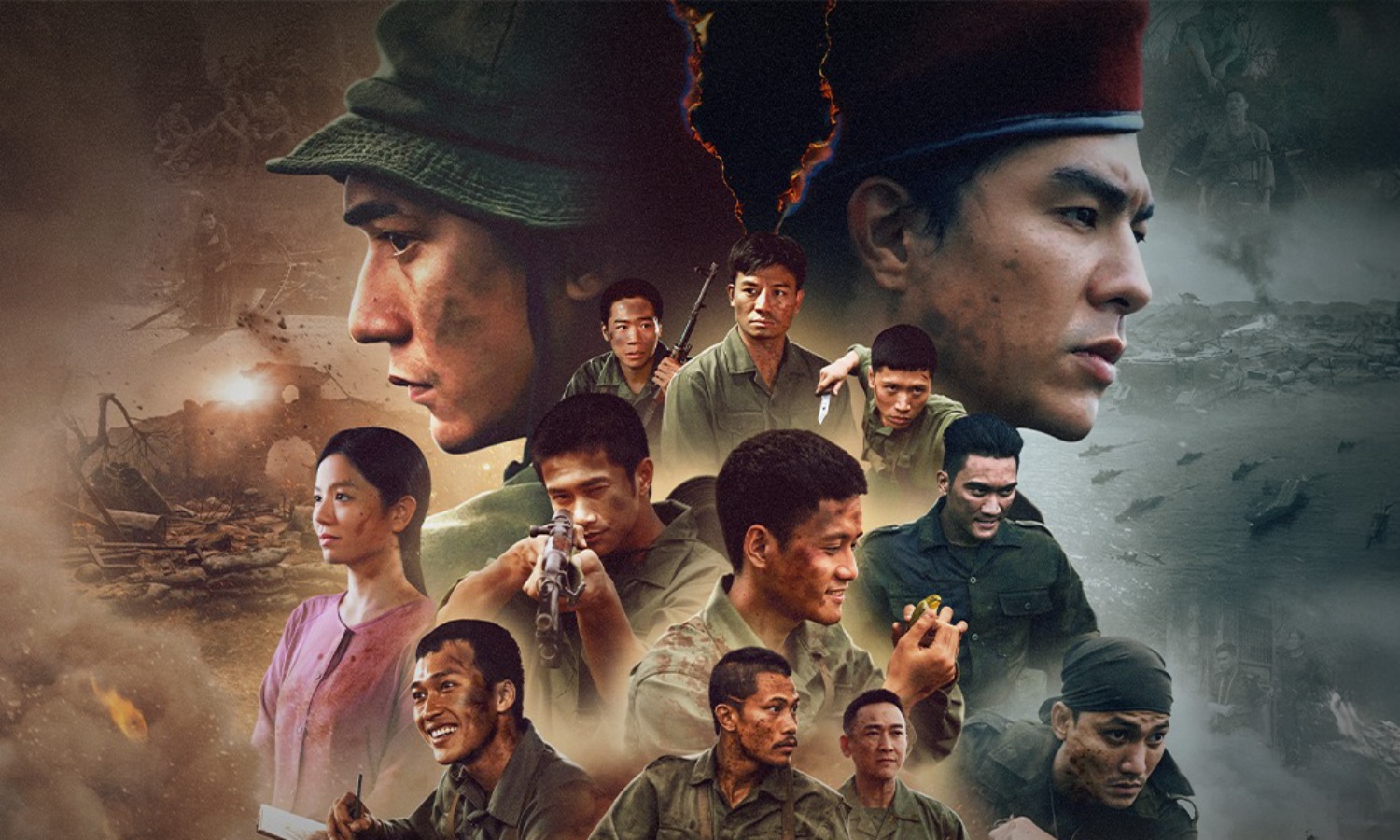 |
"Red Rain" film poster. Video: Film crew provided |
Upon its release in September, the film became a cinematic phenomenon. It marked the first time a historical war film achieved such widespread impact. Numerous agencies and schools purchased thousands of tickets, distributing them to veterans, students, and university attendees.
The work received praise for its grand settings and moving scenes, inspired by true events. However, the film also drew some criticism regarding its combat sequences and character development. At the time, Dang Thai Huyen stated she had considered all feedback but ultimately selected plot details she deemed appropriate.
The 24th Vietnam Film Festival returned to TP HCM after a decade. Nguyen Thi Thanh Thuy, Deputy Director of the Department of Culture and Sports, highlighted the event's significance, especially as the city recently earned UNESCO recognition as Southeast Asia's first "film city." She hopes the festival will foster pride and passion for cinema among the public, affirming Vietnamese cinema's regional standing.
The opening ceremony on the evening of 21/11 at the outdoor grounds of Thong Nhat Hall, Independence Palace, saw hundreds of artists and over 5,000 attendees. Over five days, the festival hosted numerous workshops on film industry development, artificial intelligence applications in film, and strategies to attract international film crews to local areas. Organizers also curated an exhibition honoring classic Vietnamese films at Lam Son Park, where hundreds of students experienced virtual reality technology. Audiences also enjoyed free screenings of many works at three major cinema complexes and interacted with film crews on Nguyen Hue pedestrian street.
Mai Nhat