A 19-year-old girl faced a life-threatening ordeal after being initially misdiagnosed with a mental disorder. Approximately two weeks before hospital admission, the girl exhibited abnormal mental behavior, leading to a diagnosis of schizophrenic-like disorder and subsequent medication. However, her condition quickly deteriorated, marked by profound lethargy, intermittent screaming, and altered consciousness.
Upon transfer to Nguyen Trai Hospital, she received a critical diagnosis: anti-NMDA receptor autoimmune encephalitis. This rare condition often mimics mental disorders due to its ability to induce behavioral changes, seizures, and altered perception, making accurate diagnosis challenging.
Initially, the patient underwent treatment involving plasma exchange, high-dose corticosteroids, anticonvulsants, and antibiotics for accompanying pneumonia. Despite these interventions, her condition worsened significantly within days. She developed a high fever, ranging from 39-40 degrees Celsius, respiratory failure, hypotension, numerous generalized seizures, and facial dyskinesia.
Transferred to the intensive care unit (ICU) in critical condition, the patient required intubation, mechanical ventilation, and vasopressors to maintain blood pressure. Doctors diagnosed septic shock, hospital-acquired pneumonia, suspected fungal sepsis superimposed on autoimmune encephalitis, and prolonged status epilepticus.
On 3/6, Dr. Bui Ngoc Tan, from the ICU, stated that the patient continuously faced severe complications throughout more than two months of treatment. Repeated cultures of sputum and bronchoalveolar lavage fluid identified various multidrug-resistant bacteria responsible for the hospital-acquired pneumonia. The medical team had to adjust the antibiotic regimen to new-generation drugs based on antibiogram results to control the infection effectively.
Concurrently, the patient underwent a total of seven plasma exchanges, received high-dose immunosuppressants, and a combination of multiple anticonvulsants to manage the seizures. Due to a poor response to the initial treatment, the hospital consulted with neurology experts from the University Medical Center Ho Chi Minh City. They decided to administer Rituximab, a second-line immunotherapy reserved for severe cases of autoimmune encephalitis.
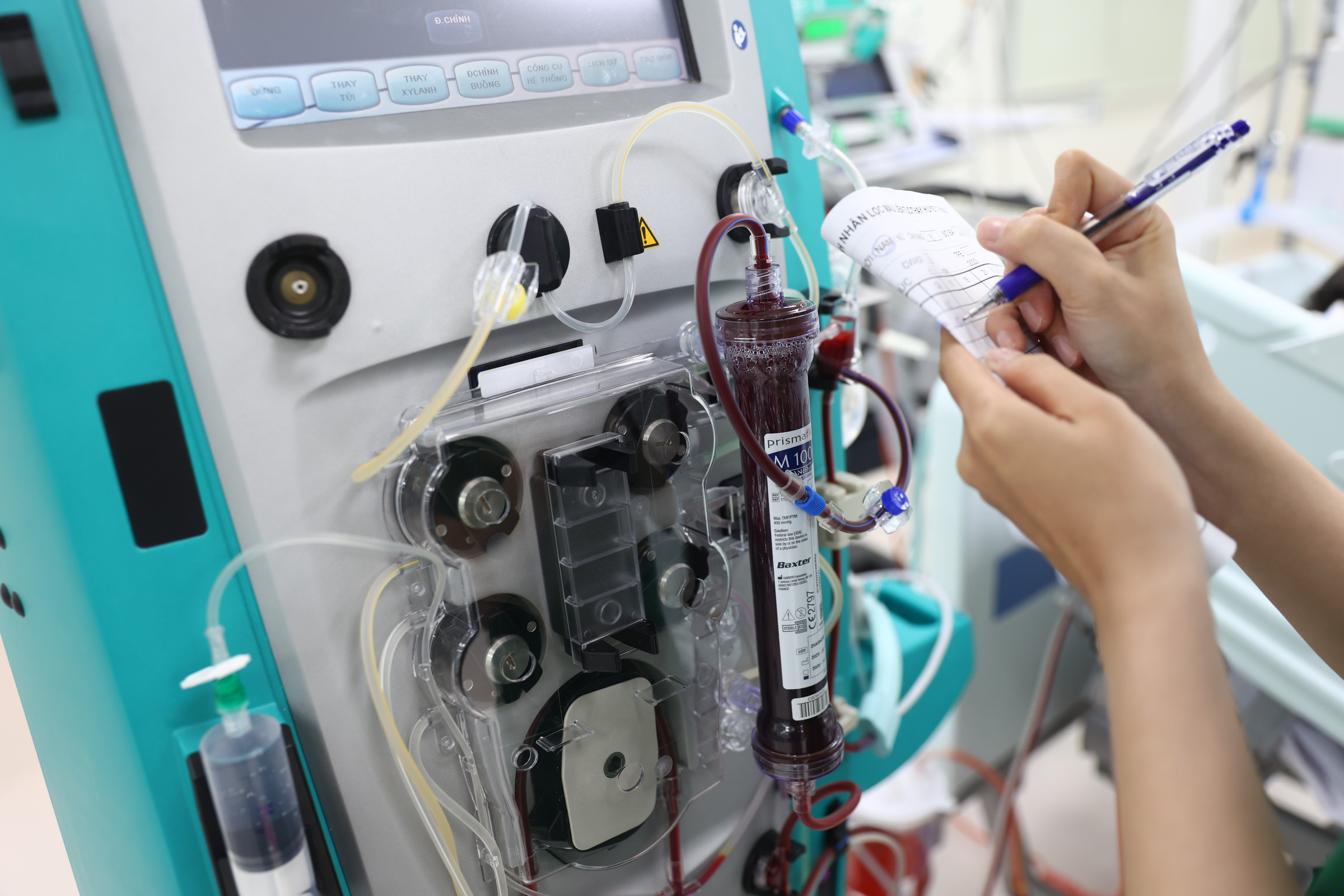 |
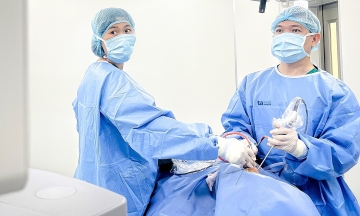
Resuscitation treatment for the patient. Photo: Quynh Tran
After nearly three months of intensive care, the patient's condition significantly improved. She stopped experiencing seizures, her consciousness recovered, and she was successfully weaned off the ventilator before being discharged. During her follow-up appointment, she was alert, able to communicate, breathing well independently, and had her tracheostomy tube removed.
Anti-NMDAR autoimmune encephalitis, though rare, is not uncommon among young individuals, particularly women. The disease often manifests with symptoms such as behavioral changes, agitation, insomnia, screaming, incoherent speech, or profound lethargy, which frequently leads to misdiagnosis as a mental disorder.
Doctors advise that if relatives, especially young people, exhibit prolonged or rapidly worsening abnormal signs, they should be taken to a medical facility with a neurology department for early diagnosis. This proactive approach helps prevent the risk of severe sequelae or even death. Following treatment, patients must adhere to prescribed anticonvulsants, relapse prevention medication, and scheduled follow-up appointments to monitor their recovery.
Le Phuong